


Product images are provided for reference and may not represent the exact model, configuration, or included
components.
Overview
SKU:
AD12612
Condition:
New
Availability:
Usually ships in 24 hours
Warranty
Manufacturer Warranty

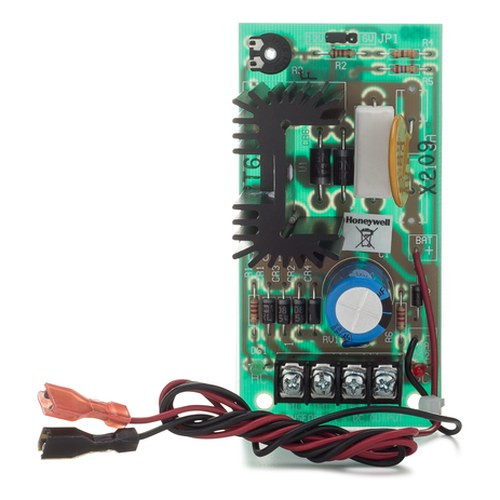
Honeywell AD12612 Auxiliary Power Supply
Honeywell AD12612 Wired 2D Handheld Scanner Overview The Honeywell AD12612 is a wired handheld 2D barcode scanner engineered for fixed installation e…

Honeywell AD12612 Auxiliary Power Supply
$66.99
$31.99
Your recommended setup
Review items below — quantities update pricing automatically.
Item
Qty
Status
Price
Optional Add-Ons recommended
Services optional
Bundle Summary
Bundle Subtotal:
$0.00
Optional Add-Ons:
$0.00
Services:
$0.00
Total:
$0.00
Overview
SKU:
AD12612
Condition:
New
Availability:
Usually ships in 24 hours
Warranty
Manufacturer Warranty
Description

Honeywell AD12612 Wired 2D Handheld Scanner
Overview
The Honeywell AD12612 is a wired handheld 2D barcode scanner engineered for fixed installation environments where auxiliary device power delivery is required. This scanner combines reliable 2D imaging capture with dual-output voltage configuration, making it ideal for security integrations, access control systems, and point-of-sale deployments that demand powered peripheral support. The AD12612 delivers consistent scan performance while simultaneously powering external keypads, sensors, sirens, and other ancillary equipment.
Key Features
- 2D Scan Engine: Captures both 1D and 2D barcode symbologies for versatile code reading across retail, logistics, and security applications
- Selectable Output Voltage: Jumper-configurable 6VDC or 12VDC output accommodates diverse auxiliary device power requirements without additional power supplies
- Maximum Output Current: 1.2A current delivery supports simultaneous scanner operation and peripheral device powering
- Wired Connectivity: Direct cable connection eliminates wireless latency, battery management, and network configuration—ideal for stationary mounting
- Integrated Power Distribution: Built-in auxiliary power output reduces component count and installation complexity by eliminating separate power modules
- Fixed Installation Design: Purpose-built for permanent mounting in access points, checkout stations, and security checkpoints
Integration & Compatibility
The AD12612's wired interface and selectable voltage output make it compatible with legacy and modern security system architectures. The 1.2A maximum current capacity supports standard keypads, magnetic locks, solenoid-activated sirens, and low-power sensor arrays. Integrators can deploy the scanner without auxiliary power conditioning equipment by leveraging the on-board voltage selection. Cable routing directly to host controllers simplifies troubleshooting and eliminates wireless interference concerns common in dense RF environments.
Power and Electrical Specifications
The Honeywell AD12612 features jumper-selectable output voltage (6VDC or 12VDC) and delivers up to 1.2A maximum output current. This dual-voltage design accommodates both legacy 6V sensor networks and modern 12V peripheral equipment. The wired connection eliminates battery-dependent operation, ensuring continuous availability in security-critical installations. Power management is handled through a single cable interface, reducing installation time and maintenance overhead.
Karl Wilson
I evaluated the Honeywell AD12612 during the design phase of a multi-site access control retrofit spanning 40 installation points. The dual-voltage output and integrated power delivery proved valuable when retrofitting legacy security networks that mixed 6V and 12V peripheral equipment. The wired connection eliminated the wireless complexity we encountered with battery-dependent scanners at sites with dense RF interference from surveillance systems.
Technical Highlights:
- Voltage Flexibility: Jumper-selectable 6VDC or 12VDC output allows a single scanner model to support both legacy 6V keypads and modern 12V solenoids without additional conditioning
- Power Budget: 1.2A output current rating supports simultaneous scanner operation plus moderate peripheral loads—sufficient for keypads and single solenoids but not for high-current siren arrays
Deployment Considerations:
- Verify host system cable specifications before installation; wired scanners require proper gauge conductor sizing for the 1.2A maximum current
- Plan voltage configuration during site survey—jumper changes require scanner removal, so default settings should match site-wide peripheral voltage standards
The AD12612 remains a pragmatic choice for fixed-location access control and point-of-sale integrations where wired power delivery and dual-voltage capability justify the installation effort. Confirm peripheral current draw against the 1.2A limit before final specification.
Specifications
Product Type:
Handheld Scanner
Connectivity:
Wired
Scan Engine:
2D
Output Voltage:
Selectable 6VDC or 12VDC (jumper selectable)
Application:
Powers auxiliary devices (keypads, sensors, sirens)
Cable_Category:
Wireless Sensors
Output_Current:
1.2A maximum
Scanner_Type:
Handheld
Have Questions?
Ask an Expert.
Your recommended setup
Review items below — quantities update pricing automatically.
Item
Qty
Status
Price
Optional Add-Ons recommended
Services optional
Bundle Summary
Bundle Subtotal:
$0.00
Optional Add-Ons:
$0.00
Services:
$0.00
Total:
$0.00
RELATED PRODUCTS


System Design, Deployment & Technical Support
Support services and planning resources for commercial surveillance, access control, and infrastructure deployments.
Fixed scope • Fixed price
System Design Assistance
- Get help validating product compatibility
- Coverage requirements
- Storage planning and deployment architecture before you buy.
Deployment & Configuration Support
- Access fixed-scope support for rollout planning
- User setup guidance
- Migration and system standardization across single-site or multi-site deployments
Guides, Tools & Calculators
- PoE requirements
- Storage retention
- Camera selection and deployment methodology