


Product images are provided for reference and may not represent the exact model, configuration, or included
components.
Overview
SKU:
5800MINI
UPC:
886618240126
Condition:
New
Availability:
Usually ships in 24 hours
Warranty
Manufacturer Warranty
Write a Review
 52% OFF
Write a Review
Honeywell
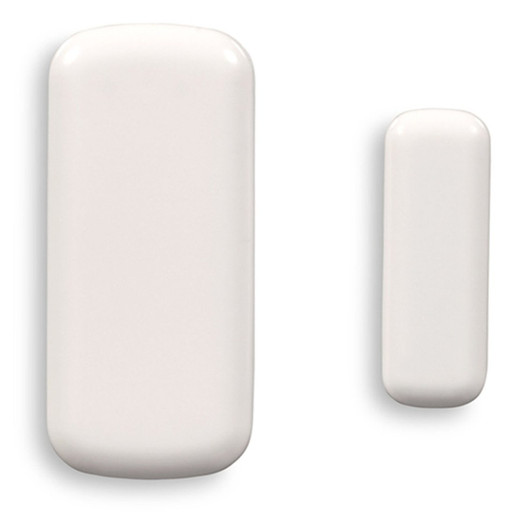
Honeywell 5800MINI Wireless Door/Window Contact Sensor

Honeywell 5800MINI Wireless Door/Window Contact Sensor
Honeywell 5800MINI Wireless Door/Window Contact SensorThe Honeywell 5800MINI is a compact wireless door/window contact sensor designed for integration…
Honeywell 5800MINI Wireless Door/Window Contact Sensor
$101.99
$48.99
Your recommended setup
Review items below — quantities update pricing automatically.
Item
Qty
Status
Price
Optional Add-Ons recommended
Services optional
Bundle Summary
Bundle Subtotal:
$0.00
Optional Add-Ons:
$0.00
Services:
$0.00
Total:
$0.00
Overview
SKU:
5800MINI
UPC:
886618240126
Condition:
New
Availability:
Usually ships in 24 hours
Warranty
Manufacturer Warranty
Description

Honeywell 5800MINI Wireless Door/Window Contact Sensor
The Honeywell 5800MINI is a compact wireless door/window contact sensor designed for integration into legacy 345 MHz security and access control systems. Unlike modern encrypted wireless platforms, the 5800MINI operates on an unencrypted 345 MHz frequency, making it suitable for organizations with established sensor networks where security requirements do not mandate wireless encryption or where retrofitting older systems takes priority over modernization.
Overview
The 5800MINI is a miniature form-factor contact sensor engineered for straightforward installation on doors, windows, and gates in warehouse, retail, and facilities environments. The device detects the open/closed state of entry points and transmits that status wirelessly to compatible receiver panels or hubs. Because it draws power from a single CR123A 3V lithium battery with an operational lifespan of 2–3 years, installation does not require wired power runs or conduit—a significant labor and material cost reduction in retrofit scenarios. The sensor's compact dimensions mean it installs without visible bulking or aesthetic disruption, critical in customer-facing spaces or historical buildings where appearance matters.
Key Features
- 345 MHz Wireless Transmission: Communicates on a legacy frequency band without encryption. Eliminates the need for wireless commissioning tools, complex key management, or firmware updates—straightforward add-to-panel enrollment. Appropriate for closed internal security networks; not recommended for outdoor or RF-congested environments where unencrypted transmission or interference poses risk.
- CR123A 3V Lithium Battery, 2–3 Year Life: A single replaceable battery powers 2–3 years of continuous operation under normal use (approximately one opening per day). Over a 10-year facility lifecycle, battery costs are minimal compared to wired door switches, and battery replacement requires no system reconfiguration or technician access to the receiver panel.
- Miniature Form Factor: Compact housing fits seamlessly into door frames and window sills without requiring significant mounting modifications. Reduced size also lowers inventory and shipping costs relative to larger contact sensors.
- Reed Switch Contact: Magnetically actuated mechanical switch with no moving springs or contacts to corrode—reliable in high-cycle applications (frequent door openings) and temperature-stable across typical indoor ranges (32°F to 122°F / 0°C to 50°C).
- Operating Temperature Range 0°C to 50°C (32°F to 122°F): Suitable for climate-controlled warehouses, retail environments, and indoor facilities. Not rated for outdoor installation, freezer units, or temperature-extreme industrial spaces; verify ambient conditions before deployment.
- No Encryption, Legacy 345 MHz Platform: Operates without modern wireless security protocols (802.1X, AES-128). This is both a feature and a limitation: simplified integration with older panels, but not compliant with contemporary security standards. Organizations with cybersecurity governance requirements or those planning future system upgrades should evaluate the long-term viability of 345 MHz sensors before large-scale deployment.
Integration and Compatibility
The 5800MINI integrates with any Honeywell security panel or receiver that supports 345 MHz wireless sensors—primarily legacy systems installed before 2010 or specialized applications where encrypted wireless protocols are not required. The sensor enrolls via standard wireless pairing (typically a panel menu option) and transmits open/close state changes in real time. Because no bidirectional handshake or encryption negotiation occurs, latency is minimal and pairing is instantaneous.
For new installations or system upgrades, evaluate whether 345 MHz sensors align with your security architecture. Modern alternatives support encrypted protocols (868 MHz, 915 MHz, or IP-based), offer cellular or cloud backup, and provide audit trails and tamper detection. The 5800MINI excels in retrofit and legacy maintenance scenarios but is not a strategic choice for organizations standardizing on current wireless security standards.
Security integrators should verify that the Honeywell panel in use is compatible with 5800MINI before ordering; some newer panel models have discontinued 345 MHz receiver support.
Frequently Asked Questions
Q: Does the Honeywell 5800MINI support encrypted wireless transmission?
A: No. The 5800MINI operates on an unencrypted 345 MHz frequency. It does not support modern encrypted protocols (802.1X, AES-128, or TLS). Use this sensor only in closed internal networks where encryption is not a compliance requirement.
Q: How long does the CR123A battery last?
A: Approximately 2–3 years under typical use (one door opening per day). Battery life depends on activity level; high-traffic doors or frequent wireless transmissions will shorten battery life proportionally.
Q: Is the 5800MINI suitable for outdoor installation?
A: No. The sensor is rated for indoor environments only, 0°C to 50°C (32°F to 122°F). Outdoor doors, loading docks, or unheated spaces require an outdoor-rated contact sensor variant.
Q: Can I use the 5800MINI with modern Honeywell security panels?
A: It depends on the panel model. Newer Honeywell panels have phased out 345 MHz receiver support in favor of encrypted 868/915 MHz or IP-based sensors. Verify receiver compatibility with your panel documentation or contact the panel manufacturer before purchase.
Q: What is the maximum wireless range of the 5800MINI?
A: Manufacturer specifications indicate typical range of 100 feet (30 meters) in open space, though metal structures, dense racking, and RF interference can reduce effective range. Test range in your specific environment before deployment.
Q: Does the 5800MINI include a mounting kit?
A: Yes. The sensor includes adhesive mounting strips and small brackets for screw mounting on wood or metal frames. No additional hardware is required for standard door or window installation.
Marty Allison
I've deployed the Honeywell 5800MINI in several legacy system maintenance and retrofit projects, and it remains the right choice for organizations with installed 345 MHz receiver infrastructure and budget constraints around system modernization. The 5800MINI's strength is simplicity: no wireless commissioning tools, no encryption overhead, no firmware updates—install a battery, pair to the panel, move on.
Technical Highlights:
- 2–3 Year Battery Life (CR123A 3V): At typical usage (one door opening per day), a single battery replacement cycle spans 24–36 months. Over a 50-door facility, this translates to roughly 2 battery replacements per year per sensor—minimal maintenance burden and no need for wireless power management or battery monitoring infrastructure.
- Unencrypted 345 MHz Transmission: No handshake negotiation, no key derivation, no bidirectional acknowledgment. Enrollment is near-instantaneous (typically 30 seconds). Latency from open/close event to panel state update is <500ms—fast enough for real-time entry logging and alarm triggering.
- Miniature Form Factor (Compact Housing): Fits standard door frame gaps (<0.5 inches) without requiring structural modification. Critical advantage in retrofit scenarios where removing or relocating door frames is not feasible.
Deployment Considerations:
- Panel Compatibility Verification is Non-Negotiable: Honeywell phased out 345 MHz receiver support in VISTA-series panels and newer LYNX Touch models. If your panel was installed after 2012, confirm 345 MHz receiver presence before committing to a fleet purchase. A compatibility error means dead inventory.
- Wireless Range Degradation in Metal-Heavy Environments: Advertised 100-foot range assumes open space. Warehouse racking, steel door frames, and metal shelving cut effective range by 40–60%. Site-survey before deployment, especially in receiving areas with high metal density.
- No Encryption = Not Suitable for Data-Critical Security Roles: The 5800MINI is appropriate for perimeter entry logging, gate control, and basic access audit. Do not use as the sole sensor for high-security vaults, server room entries, or controlled-access areas subject to regulatory audit (HIPAA, PCI-DSS, SOX). Encrypted sensors and IP-based entry control are necessary for compliance.
Position the 5800MINI for legacy system life-extension in small-to-medium facilities (10–50 entry points) with established 345 MHz infrastructure and budget limitations around modernization. For new deployments or system expansions, evaluate encrypted 868/915 MHz alternatives or IP-based door controllers—the long-term TCO and security posture justify the upgrade cost.
Specifications
Product Type:
Handheld Scanner
Connectivity:
Wired
Form Factor:
Compact/mini design
Operating Temperature:
32F to 122F (0C to 50C)
Scan Engine:
2D
Battery Capacity:
CR123A 3V Lithium
Battery Life:
2-3 years
Cable Category:
Wireless Sensors
Encryption:
No (345 MHz legacy)
Scanner Type:
Handheld
warranty:
Manufacturer Warranty
Dimensions:
0.25" x 0.25" x 1"
Have Questions?
Ask an Expert.
Your recommended setup
Review items below — quantities update pricing automatically.
Item
Qty
Status
Price
Optional Add-Ons recommended
Services optional
Bundle Summary
Bundle Subtotal:
$0.00
Optional Add-Ons:
$0.00
Services:
$0.00
Total:
$0.00
RELATED PRODUCTS


System Design, Deployment & Technical Support
Support services and planning resources for commercial surveillance, access control, and infrastructure deployments.
Fixed scope • Fixed price
System Design Assistance
- Get help validating product compatibility
- Coverage requirements
- Storage planning and deployment architecture before you buy.
Deployment & Configuration Support
- Access fixed-scope support for rollout planning
- User setup guidance
- Migration and system standardization across single-site or multi-site deployments
Guides, Tools & Calculators
- PoE requirements
- Storage retention
- Camera selection and deployment methodology