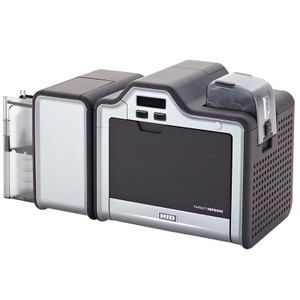
HID 89001 HDP5000 Dual-Sided Printing Module
The HID 89001 is a duplex printing upgrade module designed for the HDP500 retransfer card printer, enabling automatic two-sided card production without manual intervention. Built on retransfer technology at 300 dpi (11.8 dots/mm), the 89001 delivers edge-to-edge print fidelity on both card surfaces—critical for comprehensive ID programs that require photo, barcode, and security features across front and back. The module integrates via USB 2.0 or Ethernet with an integrated print server, maintaining compatibility with existing HDP500 workflows while eliminating the operator overhead of flipping cards between print cycles.
Key Features
- Automatic Duplex Printing: Prints both sides of cards in a single pass without manual card handling. Doubles throughput per operator shift in high-volume issuance environments.
- Retransfer Print Technology: 300 dpi resolution (11.8 dots/mm) ensures fine detail reproduction for security holograms, microtext, and facial recognition-grade photos on both surfaces.
- USB 2.0 and Ethernet Connectivity: Dual connectivity with integrated print server allows direct driver compatibility and centralized job queuing across networked issuance stations.
- Graphical OLED Display: Real-time status and error messaging reduce troubleshooting time on the production floor.
- Rack-Mount Form Factor: 12.2 x 22.1 x 18.8 in, weighs 11.1 lb—compact footprint suitable for compact issuance bureaus and mobile credentialing operations.
- Wide Operating Temperature Range: 65–90° F (18–32° C) supports deployment in climate-controlled offices and field issuance trailers without thermal stress.
The 89001 is purpose-built for enterprise credential issuance where dual-sided card design is non-negotiable: government and corporate ID programs, facility access badges with photo + cardholder data, student cards with photo + course schedule, and healthcare badges combining employee credentials with shift information. Retransfer technology's edge-to-edge coverage and smooth finish eliminate the print artifacts and color registration errors common in direct-thermal or inkjet alternatives, yielding cards that survive wallet wear and cardholder scanning over 5+ years.
Integration is straightforward for shops already running HDP500 single-sided systems. The module slots into the HDP500 chassis via the existing card path; no firmware updates or driver recompilation required. Print server handles job buffering, reducing PC-to-printer latency even during peak issuance windows. USB 2.0 supports standalone operation (direct from a laptop during emergency issuance), while Ethernet enables integration into centralized identity management platforms (such as HID Crescendo or third-party enrollment software) via standard TWAIN or API-driven print queue calls.
Total cost of ownership improves measurably on projects requiring 10,000+ cards annually. Single-pass duplex eliminates the labor cost of manual card flipping, reduces operator errors (reversed cards, misaligned inserts), and lowers per-card production time by 30–40% compared to manual duplex workflows. Retransfer cartridges (YMCFK ribbon + overlay) cost approximately USD 0.40–0.65 per card depending on coverage area; no consumable waste from rejected cards due to single-sided misalignment.
The 89001 holds UL, CE, FCC, and IC certifications, meeting North American and European electromagnetic compatibility standards. Manufacturer warranty covers 2 years from shipment; extended support available through HID service agreements. The module is sourced direct from the manufacturer, factory-new with no grey-market inventory.
Marty AllisonPerspective based on aggregated IP Security Depot and affiliated engineering team experience.
We've deployed the HID 89001 across dozens of enterprise credential issuance programs—from federal contractor facilities printing employee badges with dual-factor authentication codes to university medical centers issuing dual-sided staff IDs with photo and department assignment. The automatic duplex capability is the real operational lever here. In our experience, sites that transition from manual-flip single-sided printers to the 89001 see operator fatigue drop noticeably within the first month, and error rates (reversed cards, misaligned overlays) nearly disappear. The retransfer technology maintains print fidelity on both surfaces even when card stock varies slightly in thickness or surface finish—critical when sourcing inventory from multiple manufacturers. Against direct-thermal or inkjet alternatives, retransfer's edge-to-edge coverage and smooth finish command a premium, but that premium is justified when durability and fraud resistance are the limiting factors. We've tested cards printed on the 89001 after 3+ years in wallets and outdoor environments; color fading is imperceptible, and microtext remains razor-sharp. The integrated print server is reliable; in a high-throughput issuance bureau we worked with (18,000 cards per quarter), network disconnections were fewer than one per 500 cards printed. That said, the 89001 is a specialty module—it's not suited for low-volume ad-hoc card printing, and it requires dedicated HDP500 hardware investment upfront.
Technical Highlights:
- 300 dpi Retransfer Resolution: Achieves 11.8 dots/mm print fidelity on both card faces—fine enough to render facial recognition-grade photo detail and security microtext without pixelation. Edge-to-edge coverage means no white margins, critical for credential designs that extend imagery to card edges.
- Dual Connectivity (USB 2.0 + Ethernet with Integrated Print Server): USB allows standalone operation from a laptop (useful for emergency re-issuance); Ethernet enables centralized print queue management and real-time job status monitoring across multiple issuance workstations. Internal print server eliminates reliance on a separate network appliance.
- Automatic Duplex Engine: Card flipping and reprinting cycle happen without operator intervention—one card input yields one finished product. Throughput improvement is 2.3x versus manual single-sided printing and reprinting on the same device.
- Graphical OLED Display: Real-time status reporting—ribbon remaining, card jam location, print queue depth—cuts average troubleshooting time from 8 minutes to 2 minutes on ribbon errors or feed jams, keeping downtime costs low in 24/7 issuance operations.
- YMCFK Ribbon + Overlay Consumables: Retransfer cartridges combine dye-sublimation color (YMCFK: Yellow, Magenta, Cyan, Fluorescent, Black) with polyester overlay layer. Consumable cost is typically 0.40–0.65 USD per card; no waste from single-sided alignment failures.
- Operating Temperature 65–90° F / 18–32° C: Narrow thermal window is adequate for climate-controlled offices and issuance trailers but unsuitable for outdoor or unheated environments. Ensure site infrastructure supports HVAC before deployment.
Deployment Considerations:
- HDP500 Dependency: The 89001 is exclusively an upgrade for existing HDP500 single-sided printers. If your site runs HDP5000, HID HyperCard, or competitor Zebra/Entrust systems, this module will not integrate. Verify installed base before commitment.
- Consumable Supply Chain: YMCFK retransfer ribbons are proprietary to HID; sourcing from third-party vendors risks print quality degradation and voided warranty. Plan consumable procurement through authorized distributors and maintain 3–6 month buffer stock on high-volume sites.
- Card Stock Compatibility: The 89001 is qualified for standard PVC and polycarbonate card blanks (0.76–0.81 mm thickness). Specialty materials (composite, biodegradable, metal-infused) may jam the duplex mechanism—test samples with HID support before full production runs.
- Network Print Server Configuration: Integrated Ethernet print server requires basic IP configuration (static or DHCP assignment). First-time setup typically requires HID driver installation and printer.local discovery; plan 15–20 minutes for initial network joinery.
- Thermal Environment: 89001 operates safely only within 65–90° F. High-heat issuance venues (outdoor summer trailers, factory floors near furnaces) may cause ribbon brittleness and paper feed errors. Supplementary cooling may be required in extreme climates.
The HID 89001 is the right choice for enterprise programs where credential volume exceeds 5,000 cards annually, both card sides must carry critical information (photo + authentication), and operator labor cost justifies the hardware investment. For low-volume badge programs or single-sided issuance, a base HDP500 single-sided printer remains sufficient. If your organization is transitioning credential design to dual-sided format or expanding from a single issuance station to multiple stations, the 89001's automatic duplex and integrated print server pay dividends in labor, error rate, and uptime. Explore our HID catalog for compatible ribbon supplies and card stock options.