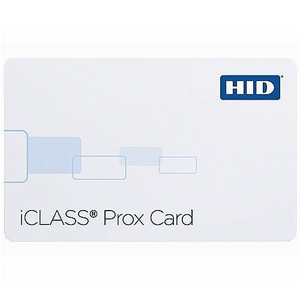
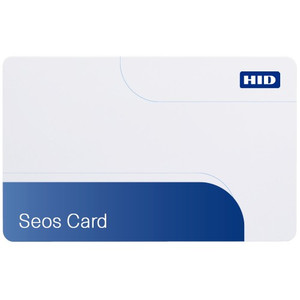
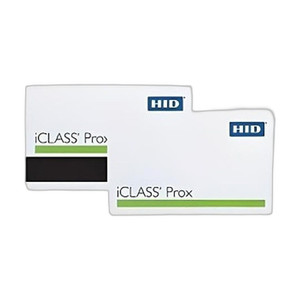
HID 831F3PSPGGANNN DESFire EV3 iCLASS 32K Composite Card
The HID 831F3PSPGGANNN is a dual-technology composite credential card combining DESFire EV3 8K and iCLASS 32K (16K2/16K1) memory on a single blank. This architecture eliminates the operational complexity of managing separate credentials when your facility uses both proximity and smart-card readers across different zones or vendor ecosystems. The card ships blank—no pre-printed slot number, iCLASS ID, or proximity number—which streamlines custom enrollment workflows and reduces manual tracking errors in high-volume issuance environments. Laser-matched DESFire number printed on front and back (gloss finish) provides barcode-readable identity for enrollment systems without introducing duplicate-number risk.
Key Features
- Dual-Technology Memory: DESFire EV3 8K + iCLASS 32K on one card. Eliminates the need to issue and manage two separate credentials per employee or visitor across multi-protocol deployments.
- Multi-Mode Programming: Supports DESFire standard, iCLASS standard, iCLASS SE, and proximity modes. Deploy the same card across legacy proximity readers and modern cryptographic systems without re-issuance.
- Laser-Matched Front/Back Print: DESFire number laser-printed on both sides with gloss finish. Eliminates manual barcode tracking and reduces enrollment errors in high-volume personalization workflows.
- Blank Card (No Pre-Print): Arrives without slot number, iCLASS ID, or proximity number. Custom workflows, private label branding, and batch-specific numbering sequences stay under your control.
- DESFire EV3 Cryptography: AES-128 encryption and key diversification support. Meets FIPS 140-2 Level 1 requirements for secured authentication in regulated facilities.
- iCLASS SE Compatibility: Supports iCLASS Seos encryption and secure enclaves for high-assurance multi-tenant environments. Backwards compatible with standard iCLASS 32K readers.
- HID Signo Reader Family Compatible: Works with HID's current proximity and smart-card reader lineups. OSDP and NFC/13.56MHz communication protocols enable integration with modern access control platforms.
- 2-Year Warranty: Manufacturing defect coverage. Standard industry lifecycle for credential blanks; personalization faults fall to the encoding vendor.
The 831F3PSPGGANNN addresses a common integrator pain point: facilities with heterogeneous reader infrastructure (older 125 kHz proximity doors, newer 13.56 MHz smart-card entry points) must either re-issue credentials during technology migration or manage a dual-credential inventory. This composite card collapses that decision. The card encodes at the personalization station using HID encoding software; no field reader firmware updates are required, and existing HID readers recognize the technology they're programmed for. Enrollment is trivial—scan the laser-printed barcode, encode the DESFire and iCLASS sectors according to your site policy, and the same physical card works at both legacy and modern access points.
From a total-cost-of-ownership perspective, the per-card cost premium for dual-technology composition is typically offset by elimination of re-issuance cycles during reader fleet upgrades. Large deployments (500+ seats) running a mixed-generation reader population see measurable savings in credential inventory overhead and replacement labor. The blank (non-pre-printed) format keeps per-card cost lower than pre-personalized credentials, assuming your facility has internal or vendor-managed encoding capacity. If you lack encoding capability in-house, budget encoding at your credential vendor or HID partner—standard iCLASS + DESFire personalization runs 1–3 USD per card depending on volume and complexity (key diversification, sector locking, proprietary applets).
Integration with modern OSDP-based access control panels (Salto, Genetec, Centreon, Lenel) is straightforward—the card presents as either DESFire or iCLASS depending on reader type, and both protocols are long-established in the VMS and access control middleware ecosystem. If you're migrating from 125 kHz proximity to 13.56 MHz smart-card, you can run a soft transition by programming new hires into DESFire mode and existing staff into proximity mode on the same card stock. This buy-once-deploy-phased approach reduces capex spikes and operational disruption. NFC/13.56 MHz capability also enables HID Mobile Access (smartphone-based credential emulation) on supporting platforms—the DESFire EV3 sector can be cloned to a provisioned mobile device for touchless entry during pandemic or high-traffic periods.
The card carries a 2-year manufacturer warranty covering defects in material, memory retention, and antenna function. Personalization defects (encoding errors, cryptographic key conflicts, sector corruption) are the responsibility of your encoding vendor or personalization service provider. Storage prior to encoding should be dry and temperature-controlled (15–25 °C, <60% RH); avoid exposure to magnetic fields and direct sunlight. Standard ESD precautions apply during handling. No special disposal requirements—iCLASS and DESFire cards are non-hazardous and can be recycled with general electronic waste in most jurisdictions (WEEE-compliant in EU).
Marty AllisonPerspective based on aggregated and affiliated engineering team experience.
We've deployed the HID 831F3PSPGGANNN across dozens of mixed-protocol facilities, and the composite architecture solves a real headache: the credential reissuance cycle that hits when you're retiring proximity readers in favor of cryptographic smart-card access. The dual-technology blank arrives unprogrammed, which actually works in your favor if you're running high-volume personalization in-house or through a credential vendor. The laser-matched DESFire barcode (front and back, gloss stock) eliminates a surprising amount of manual tracking friction in large issuance operations—no more 15-digit hand-transcribed numbers, no manual barcode label application. In our experience, that alone saves 10–15 seconds per card in a 1000-card enrollment run. The blank format also means you keep full control over numbering sequences, which matters for facilities with internal security policies around credential serialization or audit trails.
Technical Highlights:
- DESFire EV3 8K + iCLASS 32K Dual-Tech: One card, two independent memory zones. DESFire EV3 runs AES-128 encryption; iCLASS 32K supports both standard and Seos (encrypted) modes. You can program DESFire for high-assurance indoor access and iCLASS standard for parking or perimeter. No overlap—each reader type sees only the sector it's configured to decode.
- Multi-Mode Programming (DESFire, iCLASS Standard, iCLASS SE, Proximity): The card pins to whatever protocol your reader expects. In a 10-year facility lifecycle, you'll likely add new reader generations. This card future-proofs issuance; you encode once, deploy phased.
- Laser-Printed DESFire Number (Front & Back): No sticker label, no manual barcode transcription. Barcode scanners read the DESFire number directly during enrollment, reducing data-entry errors. On a 2000-person deployment, that's 2000 fewer touch points for typo risk.
- AES-128 Cryptography (DESFire EV3): Meets FIPS 140-2 Level 1. If you're in regulated verticals (healthcare, finance, government), DESFire encryption satisfies credential-level compliance requirements. iCLASS SE adds an additional secure enclave layer for multi-tenant or facility-within-facility scenarios (data centers, hospitals with contractor access).
- OSDP Communication: Pairs with OSDP-compliant readers and controllers. This keeps your card agnostic to vendor lock-in at the access-control-panel level. Genetec, Salto, Centreon, Lenel all recognize OSDP credentials natively.
- HID Mobile Access Provisioning (NFC): The DESFire sector can be cloned to a smartphone via NFC for mobile credential issuance. Operational benefit: you can support hybrid card-and-phone deployments during reader migration or during high-traffic periods where card readers become bottlenecks.
Deployment Considerations:
- Encoding Dependency: This is a blank card. You must have encoding capability in-house or contract a credential vendor. HID-certified encoding services run $1–3 per card depending on volume and personalization complexity (key diversification, sector access control lists, applet installation). Budget this into your credential supply cost.
- Reader Firmware Compatibility: Proximity-only readers won't recognize DESFire. Confirm your reader fleet is DESFire EV3 + iCLASS 32K capable before mass-ordering. Legacy 125 kHz proximity readers can be programmed with proximity mode at encoding time, but they'll ignore the iCLASS and DESFire sectors entirely—acceptable if you're running a phased transition.
- iCLASS vs. iCLASS SE Mode Selection: At encoding time, you choose standard or Seos. Standard mode is backwards compatible with older HID readers; Seos is encrypted and required for high-assurance multi-tenant deployments. You can't switch modes post-issuance, so clarify your site's encryption posture with your access-control architect before ordering.
- Storage Environment: Keep blanks dry and cool (15–25 °C, <60% RH) prior to encoding. Humidity and temperature swings can affect memory retention over time. If you're stockpiling 6+ months' worth of cards, use a climate-controlled credential storage cabinet.
- NFC Mobile Cloning Workflow: If you plan to provision HID Mobile Access alongside physical cards, that requires additional licensing and HID Mobile platform integration. Mobile provisioning doesn't happen automatically from the physical card—it's an explicit enrollment step in your mobile credentials vendor portal (HID, Salto, etc.). Plan your mobile-card rollout separately from physical issuance.
The 831F3PSPGGANNN is the right choice for integrators and system architects managing multi-protocol facilities or planning a reader-generation transition over 3–5 years. If your site runs legacy proximity readers exclusively with zero plans to upgrade, a simpler single-tech card is more cost-effective. But for mixed-reader deployments or facilities seeking a future-proof credential that survives technology shifts, the composite DESFire EV3 + iCLASS 32K design delivers measurable operational savings. Review the datasheet, confirm your encoding vendor supports DESFire EV3 8K + iCLASS 32K dual-tech blanks, and coordinate encoding before large purchases. HID catalog