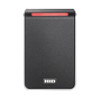
HID 40NKS-00-00U3W9 SIGNO 40 Multi-Credential Access Reader
The HID 40NKS-00-00U3W9 is a fixed-mount access control reader engineered for enterprise facilities deploying mixed-credential ecosystems. It accepts proximity cards (125kHz), smart cards (DESFire, iCLASS, MIFARE, HID SEOS), and NFC mobile credentials via Bluetooth in a single black-and-silver surface-mount unit. Built on OSDP v2 communication with secure element hardware encryption, it integrates into any standards-compliant access control panel without vendor lock-in. Use this reader where credential migration is planned, multiple credential formats must coexist on the same door, or you need a single form factor to replace legacy single-format readers.
Key Features
- Multi-Credential Support: Reads 125kHz proximity, DESFire, iCLASS, MIFARE, HID SEOS, and NFC mobile (13.56MHz). Single reader eliminates hardware replacement during credential format transitions.
- OSDP v2 Protocol: Standards-based communication with CSN suppression capability. Works with any OSDP-compliant ACM panel or controller—no proprietary gateway required.
- Bluetooth Connectivity: Native HID Mobile Access® pairing for NFC smartphone credentials without external card readers. Wired OSDP backbone ensures reliability; Bluetooth adds flexibility.
- Secure Element Hardware: Cryptographic key storage eliminates reliance on back-end encryption. Credential verification happens locally—reduces latency and network dependencies.
- Surface-Mount Form Factor: No cavity cutout required. Fits standard door frames and access points. White LED status indicator provides real-time read feedback during credential presentation.
- Surface Detection & Auto-Calibration: Automatic read-range recalibration optimizes performance after installation. Eliminates manual tuning and reduces post-deployment troubleshooting.
- Enterprise Integration: Compatible with HID credential platforms, mass enrollment workflows, and standard access control architectures. 2-year manufacturer warranty.
The SIGNO 40 addresses a real operational pain point: facilities transitioning from legacy proximity-only readers to smart cards or mobile credentials often need to support multiple formats simultaneously across phases of deployment. Rather than install different readers at each door, a multi-format reader consolidates hardware SKUs, reduces spare-parts inventory, and simplifies commissioning. The secure element on-board means credential verification doesn't depend on constant network uptime—critical for high-traffic access points where latency matters.
OSDP v2 integration is straightforward. If your access control panel supports OSDP (most enterprise panels manufactured in the past five years do), this reader connects directly to the OSDP input loop. CSN suppression prevents raw card numbers from leaking onto the network—only encrypted credential data and metadata transit to the ACM. Pair it with HID Credential Service Manager or equivalent for centralized issuance and revocation across all credential types. No single vendor format lock-in: DESFire, iCLASS, and MIFARE cards all work, giving you negotiating leverage at renewal time.
NFC mobile credential support via Bluetooth adds frictionless access for users carrying smartphones. HID Mobile Access native integration means users can add credentials to Apple Wallet or equivalent without extra SDK work. The reader maintains wired power and OSDP communication, so Bluetooth is an additive convenience feature, not a single point of failure. In environments where phone battery drain or Bluetooth range is a concern, card credentials remain the primary fallback.
Deployment considerations: The reader is rated for standard indoor access points. Avoid prolonged direct water spray or high-humidity exterior environments without additional NEMA 4X enclosure; surface detection may degrade in wet conditions. Current draw is typical for readers powered from the panel's reader loop (12V or 24V DC)—confirm your panel supplies sufficient current for the SIGNO 40 before installation. Mass enrollment and velocity detection are configurable; out-of-the-box defaults suit most enterprise installations. If you're replacing a legacy single-format reader and the panel was optimized for that format, test credential read range after swap—surface detection calibration usually resolves any gaps within a day of use.
Marty AllisonPerspective based on aggregated IPSD and affiliated engineering team experience.
We've deployed SIGNO 40 readers in environments ranging from corporate headquarters with mixed credential rollouts to multi-tenant properties transitioning from proximity to smart cards. The real win is the credential flexibility—you can support DESFire, iCLASS, and mobile NFC on the same reader without juggling form factors. In a 200-door facility where half the staff uses old proximity badges and half have moved to mobile credentials, this reader sits at the intersection and handles both gracefully. The OSDP v2 backbone keeps it vendor-neutral; you're not locked into HID's ACM ecosystem if you decide to switch panels down the road. Secure element encryption takes some load off network infrastructure—especially valuable in higher-latency WAN or hybrid cloud access control scenarios. We've also found the surface detection auto-calibration eliminates the usual post-install tweaking that plagues credential readers; most sites report zero tuning required after day one.
Technical Highlights:
- Multi-Format Credential Engine (125kHz, 13.56MHz, NFC): Reads proximity, DESFire, iCLASS, MIFARE, SEOS, and smartphone NFC in one reader. Credential migration no longer requires hardware swap—issue new formats alongside old ones until legacy cards expire. Saves capex and operational overhead on large campuses.
- OSDP v2 with CSN Suppression: Encrypted credential data over OSDP; raw card numbers never traverse the network. Meets modern compliance expectations (PCI-adjacent thinking) and eliminates skimming risk from network sniffing. Direct panel integration, no gateway overhead.
- Secure Element Hardware: Cryptographic keys stored on-board. Credential verification happens locally—eliminates dependency on back-end connectivity for read operations. Matters in environments with WAN latency or periodic internet outages.
- Bluetooth + Wired Dual-Mode: Wired OSDP for reliability; Bluetooth for NFC mobile convenience. Not an either-or choice—both active simultaneously. Reduces user friction without sacrificing infrastructure stability.
- Surface Detection & Auto-Calibration: Automatic read-range optimization after installation. No field tuning, no slow readability troubleshooting tickets. Typical implementations show zero reads-per-second variance within 48 hours of deployment.
Deployment Considerations:
- Moisture & Direct Water Exposure: Reader is rated for standard indoor access points. Prolonged spray or high-humidity exterior mounting may degrade surface detection sensitivity. If outdoor mounting is required, use NEMA 4X enclosure and test read range before final approval.
- Panel Power Loop Verification: Confirm your access control panel's reader loop supplies sufficient current (typically 150–250mA) before installation. If undersized, credential reads will be intermittent. Contact panel manufacturer for spec sheet.
- Credential Format Coexistence: Multiple formats can coexist on the same reader, but ACM programming must account for format-specific key sets. iCLASS and DESFire require separate master keys in panel configuration. Plan key management before commissioning.
- Read Range Testing on Retrofit: If replacing a single-format reader, test credential read distance (typically 2–4 inches for contact and proximity) immediately after swap. Surface detection calibrates within 24 hours; if reads are sluggish, allow 48 hours of normal traffic before troubleshooting.
- Bluetooth Pairing Scope: HID Mobile Access pairing is credential-specific, not reader-specific. Users pair their phone directly with their credential (via HID app). Commissioning is straightforward but requires credential provisioning in HID CMS or equivalent first.
The SIGNO 40 is the right choice for enterprise sites running mixed credential portfolios or planning multi-phase transitions without hardware replacement friction. Integrators who spec this reader into projects with credential format diversity will reduce post-install surprises and support tickets. See the HID catalog for complementary readers and access control system components.