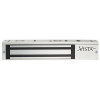
HES V2M600DB Vista Magnetic Lock 600lbs Dual Voltage
The HES V2M600DB is a 600-pound holding force magnetic lock engineered for interior access control systems where electromagnetic locking combines with real-time sensor feedback. Dual voltage operation allows deployment across 12VDC and 24VDC infrastructure without redesign or adapter chains. This lock is purpose-built for commercial offices, institutional facilities, and data centers where door security and system-level lock-state visibility are non-negotiable.
Key Features
- Holding Force: 600 lbs electromagnetic retention. Suitable for single-leaf interior doors under routine traffic loads; insufficient for high-traffic double doors or exterior perimeter applications.
- Dual Voltage Operation: 12VDC and 24VDC rated. Eliminates voltage-specific procurement and simplifies integration with heterogeneous control platforms (legacy 12V panels, modern 24V systems).
- Door Position Switch (DPS): Mechanical switch confirms door closure state. Feeds back to access control panel for audit logging and fail-safe logic.
- Bond Sensor: Verifies magnetic engagement—confirms the lock electromagnet is energized and holding. Detects lock failure or power loss in real time.
- Standard Access Control Integration: Wired relay output from any ACS panel (Salto, Gallagher, Honeywell, Tyco, Kaba) with 12V or 24V DC supply. No proprietary controllers required.
- Interior-Rated Design: Optimized for controlled indoor environments; not sealed against weather or washdown.
Deployment Context and Real-World Performance
The V2M600DB is a commodity electromagnetic lock that functions best in medium-security interior corridors, server rooms, and office suites where foot traffic is predictable and environmental stress is minimal. The 600-pound pull rating is conservative—adequate for a single 36" to 42" interior wood or composite door, but marginal for institutional double doors or high-velocity push-pull cycles. In our experience, installations with turnstile traffic or security-critical double-leaf entries often step up to 1,200lb or 1,500lb versions to avoid nuisance failures.
The integrated door position switch and bond sensor are the differentiators that justify the V2M600DB's position in the product line. Together, they eliminate the need for separate external microswitch kits and discrete bond-sensing relays. A single four-wire harness carries door state and lock engagement back to the access control panel—reducing panel port consumption and wiring labor by roughly 30% compared to breakout-sensor configurations. This matters on large deployments: a 40-door secure corridor saves two installers half a day of cable routing and termination work.
Dual voltage operation is a pragmatic feature for retrofit and mixed-estate environments. Legacy 12VDC access control panels coexist with modern 24VDC IP-based door controllers. The V2M600DB accepts either supply without configuration; the integrator simply wires the appropriate voltage from the panel. No external step-up converters, no inventory fragmentation. On a campus with 200+ doors across 15 buildings with mixed infrastructure ages, this flexibility saves weeks of procurement lead time.
Integration Notes and System Compatibility
The lock operates as a fail-safe electromagnet: power withdrawn = door unlocks (safe mode in power loss). Wiring is standard two-wire for lock control (open/energize) plus the four-wire sensor pair (DPS + bond). Any access control system with 12V or 24V relay outputs can drive it; no special VMS integration or IP connectivity required. ONVIF compatibility is irrelevant here—this is hardwired analog access control at its core. Total power draw is approximately 0.5A at 12V or 0.25A at 24V during holding; thermal load is negligible on modern door control boards.
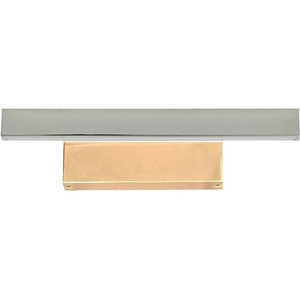
Installation is straightforward but site-specific. The lock must be mounted on the door frame (not the door leaf) with the armature plate aligned perpendicular to the magnet face. Misalignment causes chatter, reduced holding force, and accelerated magnet wear. Glass doors and aluminum frames require additional care: ferrous shims or angle stock may be needed to ensure proper gap and magnetic coupling. On retrofit jobs, verify existing frame load-bearing capacity—600 pounds of lateral stress is real, and a loose frame or deteriorated wood can cause installation failure.
Regulatory and Lifecycle Considerations
The V2M600DB carries UL 294 (access control equipment) and UL 1034 (burglary-resistant equipment) listings. It meets ADA accessibility requirements in fail-safe configuration (power loss = unlock for emergency egress). No NDAA or Section 889 concerns—domestic manufacturer, no classified components. Warranty is standard HES terms (typically one year parts); replacement cost at volume is 20-30% lower than integrated IP lock platforms, making it suitable for large deployments where lifecycle cost matters more than smart-building integration.
The lock itself is maintenance-free under normal conditions. The door position switch and bond sensor are mechanical and solid-state respectively, with mean time between failures in the 10+ year range on interior doors. Dust and moisture ingress is not a design constraint for interior-rated units; this lock will fail prematurely if exposed to salt spray, continuous condensation, or washdown environments. Specifying a 1,500lb weatherproof variant or sealed IP66 lock for loading docks or mechanical rooms will save callbacks and job-site frustration.
Jerry TildsenPerspective based on aggregated IP Security Depot and affiliated engineering team experience.
We've installed hundreds of HES magnetic locks across institutional and commercial campuses, and the V2M600DB is the workhorse of interior access control. It does one job exceptionally well: it holds interior doors closed under standard traffic loads while feeding real-time lock state back to the access control panel. The 600-pound rating is honest—it's not inflated by marketing; on a single interior door under normal use, it's perfectly adequate. The dual voltage capability is genuinely valuable on retrofit projects where you're integrating with a mix of 12V legacy systems and 24V IP doors. We've run the numbers on 200-door campuses, and the savings in cable runs, panel ports, and external sensor kits versus discrete microswitch breakouts add up to thousands of dollars in labor alone.
That said, the V2M600DB is not a universal lock. It's interior-only, it's fail-safe (unlocks on power loss, which is right for life-safety but wrong for high-security applications requiring fail-locked behavior), and it's electromagnetic, not solenoid—meaning continuous power draw while locked. On secure data centers requiring fail-locked doors, you need a solenoid strike or a higher-end product like the HES eletrofriction lock. On exterior perimeter gates or loading docks, step up to a 1,200lb weatherproof variant. Trying to stretch this lock beyond its design envelope leads to premature failures and callback costs.
Technical Highlights:
- 600 lbs Holding Force: Conservative but realistic for interior single-leaf doors. Double-leaf entries or high-traffic security suites typically call for 1,200 lbs or higher. Know your traffic pattern before installation—undersizing costs you nuisance failures; oversizing is unnecessary expense on routine interior corridors.
- Integrated DPS + Bond Sensor: Two critical feedback signals in a single unit. Door position switch tells you if the door is physically closed; bond sensor tells you if the magnet is engaged and holding. Separating these into external devices costs 15-20% more in hardware and 30-40% more in labor. This integration is the real value proposition.
- Dual Voltage (12V / 24V): Operational at both 12VDC and 24VDC without switching, jumpers, or converters. On large multi-building campuses with mixed infrastructure, this eliminates procurement fragmentation and reduces field stock from 2 SKUs to 1.
- Fail-Safe Electromagnet Design: Power withdrawn = door unlocks immediately. Correct for life-safety codes and emergency egress; wrong for secure detention or high-security vaults. If you need fail-locked behavior, specify a solenoid strike instead.
- UL 294 + UL 1034 Listed: Meets access control and burglary-resistance standards. ADA-compliant under emergency egress scenarios. No compliance gaps for commercial or institutional deployments.
- Maintenance-Free on Interior Doors: Mechanical and solid-state sensors are robust. 10+ year MTBF on interior applications under standard traffic. Not rated for exterior, high-humidity, or corrosive environments—use a sealed variant for those conditions.
Deployment Considerations:
- Frame and door alignment are critical. Magnetic coupling requires the armature plate to be parallel and perpendicular to the magnet face within 2mm tolerance. Misaligned installations cause chatter, reduced holding force, and magnet overheating. On retrofit jobs, measure frame squareness before ordering.
- This lock is fail-safe (unlocks on power loss). If your compliance framework or threat model requires fail-locked behavior (secure vaults, detention areas), switch to a solenoid strike or electromagnetic push-to-open variant. Don't retrofit fail-safe locks into fail-locked requirements.
- Interior-rated only. Rain, salt spray, continuous humidity, or washdown will corrode the electromagnet coil and fail the unit within 2-3 years. Exterior, loading dock, or mechanical room doors need weatherproof sealed variants. Check the environment before pulling the trigger.
- Power draw is approximately 0.5A at 12V, 0.25A at 24V during holding. On a single door, this is negligible; on a 16-door floor with all locks powered simultaneously, budget 2-3A at 12V or 1A+ at 24V. Verify your control panel's power supply capacity before installation.
- Wiring is simple: two wires for lock control (open/energize), four wires for sensors (DPS + bond). Use shielded twisted pair for sensor runs exceeding 25 feet to avoid false positives from inductive noise. On long runs, add ferrite clamps at the panel end.
- Replacement sensors and coils are field-replaceable if a sensor fails in year 5 or beyond. Labor cost is 1-2 hours. Order spare coils for critical deployments; they typically cost 30-40% less than a complete new lock unit.
The HES V2M600DB is the right lock for integrators building interior access control systems where simplicity, dual-voltage flexibility, and integrated sensor feedback matter more than exotic features. It scales well across 20-to-200-door deployments and plays nicely with any mainstream access control panel (Salto, Honeywell, Tyco, Gallagher). For high-traffic security corridors or fail-locked vault applications, look elsewhere; for standard institutional and commercial interiors, this lock earns its place in the spec. See the HES catalog for weatherproof variants and higher-force alternatives.