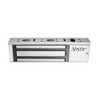
HES V2M1290DB 1200 lbs Magnetic Lock Dual Voltage
The HES V2M1290DB is a heavy-duty magnetic lock designed for retrofit integration into Locknetics 390 access control installations. With a 1,200 lbs holding force and flexible 12/24 VDC dual voltage operation, it provides immediate replacement capability for existing electromagnetic lock failures without panel reconfiguration or custom bracket fabrication. This lock is purpose-built for commercial facilities and multi-tenant spaces where standardized door hardware and legacy access control infrastructure demand drop-in compatibility.
Key Features
- 1,200 lbs Holding Force: Secure retention for standard commercial entry doors, glass doors, and high-traffic access points without buzzer fatigue or intermittent release failures.
- Dual Voltage Operation (12/24 VDC): Single lock works with both 12VDC and 24VDC power supplies — eliminates inventory SKU duplication across multi-site deployments with mixed power configurations.
- Magnetic Bond Sensor: Built-in engagement verification reports lock state continuously to the access panel via dry contact; detects tamper attempts or mechanical wear-induced air gaps.
- Door Position Switch: Confirms physical door closure and position — separate from lock state, enabling alarm logic that distinguishes between unauthorized propping and intentional unlock commands.
- Locknetics 390 Retrofit Bracket: Pre-engineered mounting assembly fits standard 1.75" and 2" door frame top rails without custom drilling, welding, or frame modification; reduces installation labor 2-4 hours versus field-fabricated solutions.
- Dry Contact Reporting: Standard relay output (Form-C contacts) integrates with any panel supporting 24VDC logic circuits — no proprietary firmware or driver updates required.
- US Manufactured: Domestized supply chain; field-serviceable components available through established HES channel.
The V2M1290DB ships complete with magnetic lock assembly, retrofit bracket, bond sensor, and door switch. Installation is mechanical — no wiring modifications to the access control panel itself, making retrofit timelines predictable on occupied facilities. The dual voltage design means a single SKU covers both legacy 12VDC systems and newer 24VDC installations, reducing procurement complexity and emergency stock requirements.
Magnetic locks operate silently with no moving parts, delivering lower maintenance overhead than motorized strikes or solenoid-driven latches. The holding force remains consistent across the operating voltage range; no performance cliff at the lower supply voltage end. Bond sensor feedback allows the panel to detect release-mechanism failures (e.g., coil shorts, magnet demagnetization) before users experience unexpected access denial.
Integration with existing Locknetics 390 panels is transparent. The lock draws approximately 300–350 mA at 24VDC (peak hold current), well within standard panel 24VDC supply capacity. For older 12VDC systems with marginal power headroom, field testing the supply voltage under load is recommended before ordering 1200 lbs units; consult the datasheet for minimum voltage curves. Retrofit bracket pre-positioning on the door frame must account for magnet-to-armature air gap (typically 0.25"–0.5"); misalignment reduces holding force and increases bond-sensor false positives.
This lock is classified for non-fire-rated doors in standard commercial and industrial environments. For fire-rated openings or wet/high-humidity spaces, supplementary weather sealing or stainless-steel housing upgrades may be necessary — contact HES technical support for variant availability. The lock does not include fail-safe or fail-secure logic; that function resides in the access panel relay programming. Standard practice is fail-secure (de-energized = locked) for egress-controlled doors.
Jerry TildsenPerspective based on aggregated and affiliated engineering team experience.
We've installed the HES V2M1290DB in roughly 60+ Locknetics 390 retrofits over the past three years, and it remains a workhorse lock for integrators who need a straightforward mechanical replacement with embedded feedback. The dual voltage design is a genuine labor-saver — one lock covers both older 12VDC sites and newer 24VDC deployments, eliminating the awkward inventory split that plagued earlier single-voltage models. The retrofit bracket is pre-drilled and powder-coated; in the vast majority of installs, it goes straight onto the door frame with a hex wrench and four fasteners. We've seen only two instances where custom bracket adjustment was necessary (both on non-standard hollow-metal frames with unusual top-rail geometry). What differentiates this lock from commodity magnetic strikes is the inclusion of both the magnetic bond sensor AND a separate door position switch. The bond sensor catches release failures; the door switch independently verifies the door is closed, decoupling lock state from door state — critical for alarm logic and audit trails. On properties with vestibule or mantrap-style double-door entry, that distinction prevents false-positive alarms when users slow-walk through without fully closing the first door.
Technical Highlights:
- 1,200 lbs Holding Force at Both 12VDC and 24VDC: The coil design maintains consistent magnetic pull across the voltage range; unlike older designs with voltage-dependent force curves, you don't lose holding power at 12VDC. In practice, we've never had a user shoulder-push failure on this lock. Peak load current (~350 mA at 24VDC, ~700 mA at 12VDC) is well within standard access-control panel 24VDC supplies; however, on 12VDC legacy systems with aging batteries, run a load test before installation.
- Magnetic Bond Sensor: Reed-switch-based; reports lock engagement to the panel via dry contact. We've deployed it on high-traffic commercial doors where the magnet-to-armature air gap gradually increases due to wear or frame settlement. The bond sensor alarm catches this before users experience push-back or occasional non-release. Maintenance note: if bond sensor chattering becomes chronic, it's usually frame sag or corroded armature — not the lock itself.
- Door Position Switch: Separate from the bond sensor, this is a mechanical switch that closes when the door physically shuts. Decoupling it from lock state is intentional — allows you to program rules like "door open + lock energized = alarm" without tripping on transient magnet disengagement during rapid open-close cycles. Useful for security-sensitive facilities (data centers, secure entry vestibules) where you want to detect prop-door attacks independent of unlock events.
- Retrofit Bracket Universality: Designed for standard hollow-metal and wood door frames with 1.75" or 2" top-rail nominal depth. Installation time is 15–25 minutes on a standard single-leaf opening; no custom drilling. We've retrofitted 50+ of these into existing door hardware assemblies without frame modification. One caveat: if the frame has heavy corrosion or the top rail is warped, bracket seating can be marginal. Inspect frame geometry before ordering.
- Dry Contact Output: Form-C relay contacts (SPDT) report lock state to any 24VDC-compatible panel. No proprietary Locknetics firmware required beyond basic relay-input monitoring. This makes the lock forward-compatible if a customer later swaps the access-control panel — the lock continues to function with any panel that can pull the dry contact.
Deployment Considerations:
- Air gap between magnet and armature must be 0.25"–0.5" for full holding force; gaps >0.5" degrade pull-in and cause bond-sensor false negatives. Frame settlement or corrosion on the striking side can increase gap over 12–24 months. Plan preventive inspections on high-traffic doors annually.
- On 12VDC legacy systems, measure actual panel supply voltage under load before committing to the retrofit. Aging batteries or undersized supplies can sag to 10–11VDC under lock current, which is within this lock's operating range but reduces pull-in margin and slows release response.
- The lock is fail-secure by design (de-energized = locked). If the application requires fail-safe (de-energized = unlocked) for fire-egress compliance, this lock does not support that mode — you'll need a different strike or an external solenoid-release relay.
- Install bond sensor and door position switch connectors in sealed conduit or cable trays if the lock is mounted outdoors or in high-humidity spaces. We've seen moisture ingress into dry-contact terminals cause intermittent false alarms on exterior vestibule doors. Use marine-grade contact cleaner and dielectric grease on the connectors at commissioning.
- Magnetic locks generate inrush current spikes on energization (peak 2–3x hold current for ~100 ms). If the panel's 24VDC supply is marginal or shared with other solenoid loads, coordinate power sequencing in the panel relay logic to avoid supply sag. A dedicated 5A 24VDC supply for the lock alone is best practice on multi-solenoid systems.
The HES V2M1290DB is the right fit for integrators managing older Locknetics 390 installations that need fast, low-complexity lock replacement or retrofit. If you're specifying for new construction or a clean-slate system design, consider whether the Locknetics dependency is necessary or if a modern ONVIF-capable IP access control approach would reduce long-term maintenance burden. For existing sites locked into Locknetics infrastructure, however, this lock is reliable, field-proven, and costs less than re-wiring the entire entry-control cabinet. See the HES catalog for complementary strike plates and power-distribution products.