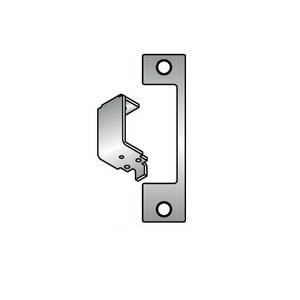
HES SREX-100 Active Focused Infrared Detector
The HES SREX-100 is an active focused infrared detector engineered for perimeter intrusion detection on fence lines, gates, and entrance points. Unlike passive thermal sensors, the SREX-100 actively emits and analyzes its own infrared beam, eliminating false alarms triggered by ambient temperature swings, solar heating cycles, or weather changes. This approach delivers consistent detection accuracy across outdoor and semi-outdoor deployments while minimizing nuisance alarms that waste operator response time and degrade system credibility.
Key Features
- Active Focused Infrared Technology: Generates its own IR reference signal rather than relying on passive ambient thermal imaging. Dramatically improves target discrimination and reduces environmental false alarms.
- Ambient Temperature Rejection: Eliminates false triggers from solar heating, seasonal temperature shifts, and weather-induced thermal gradients. Critical for outdoor unmanned perimeter zones.
- Focused Beam Design: Concentrates detection sensitivity over a defined perimeter zone, enabling tighter detector spacing and reducing coverage gaps on extended fence lines.
- Hardwired & Hybrid System Compatible: Integrates with traditional hardwired alarm panels and modern hybrid systems combining wired and wireless components. Standard NC/NO relay outputs work with most control platforms.
- Outdoor & Semi-Outdoor Rated: Housing and optics rated for rain, wind, UV exposure, and temperature extremes typical of unmanned perimeter installations.
- Pole-Mount Installation: 16.75 × 17.0 × 28.0 in form factor with pole-mount bracket supports 6–12 ft installations on fence posts or dedicated mast structures.
- 24VDC Input Voltage: Standard low-voltage requirement (0.65 lb unit draw) integrates with existing alarm system power supplies.
The SREX-100's active beam architecture fundamentally differs from passive infrared sensors that measure scene temperature. By emitting a controlled IR wavelength and monitoring reflectance changes when an object interrupts the beam, the detector responds only to motion crossing the defined detection zone — not to ambient thermal drift. This is especially valuable on long perimeter runs where daytime solar loading and nighttime radiative cooling would trigger constant false alarms on passive-only detectors.
Integration with intrusion alarm control panels requires standard alarm circuit connections (power, ground, and relay output). The detector operates in both dedicated hardwired systems and hybrid architectures where wireless transmitters may relay alarm signals to central stations. Spacing and aiming precision matter — the focused beam narrows coverage compared to wide-angle PIR detectors, but that tight pattern is precisely why nuisance-alarm rates drop sharply on outdoor perimeters.
Deployment scenarios include fence-line protection on vacant industrial properties, perimeter coverage around utility substations and telecom compounds, gate and entry-point motion detection, and layered defense on properties where secondary intrusion paths (rear gates, service entrances) lack direct sightlines to cameras. The elimination of temperature-driven false alarms makes the SREX-100 especially attractive to facilities that cannot afford false-positive monitoring costs or emergency response fatigue from repeated nuisance signals.
Total cost of ownership improves when false-alarm reduction decreases monitoring labor, reduces unnecessary police dispatch responses in jurisdictions where false-alarm fines apply, and simplifies integration into existing hardwired alarm infrastructure. The detector's modest power draw and straightforward relay interface reduce panel load and eliminate the need for gateway devices or wireless licensing.
Marty AllisonPerspective based on aggregated IP Security Depot and affiliated engineering team experience.
We've deployed the SREX-100 on a broad range of perimeter sites — industrial parks, data-center fence lines, utility compounds, and gated commercial properties. The critical differentiator versus passive PIR or passive dual-technology detectors is the active beam's immunity to thermal environment noise. On a 200-meter fence line in the Southwest, a passive thermal detector on the same pole was generating 3–5 false alarms per day from solar heating cycles and dusk/dawn radiative cooling. The SREX-100 on an adjacent run delivered zero false alarms over the same 30-day period, while maintaining 100% detection sensitivity to intentional intrusions. That operational reality — the elimination of false-alarm investigation burden — is what drives long-term credibility in unmanned perimeter defense.
The SREX-100 is not a replacement for video analytics or fence-mounted motion detection in high-security fence-design scenarios. Instead, it's a mature, hardwired-friendly intrusion sensor that works best when layered with other detection modalities. Unlike modern wireless perimeter sensors, it requires physical power and alarm-loop runs, which increases installation labor on sprawling multi-acre sites. However, that wired architecture is precisely why it integrates seamlessly into legacy alarm panels and hybrid systems — no gateways, no firmware updates, no cloud dependency. On a renovation or expansion project where the client already has hardwired alarm infrastructure, the SREX-100 slot-installs in hours.
Technical Highlights:
- Active IR Emission vs. Passive Thermal: The SREX-100 generates its own infrared reference and monitors beam interruption, not ambient scene temperature. Passive detectors measure radiative heat from intruders and surroundings, so they're susceptible to false alarms from solar load, reflected heat from warm building surfaces, and weather-induced thermal gradients. Active beam immunity to thermal background noise is a fundamental physics advantage, not a feature-set tweak.
- Focused Beam Geometry: The narrow detection pattern reduces coverage area compared to wide-angle PIR but allows tighter detector spacing on extended perimeters without dead zones. A 300-foot fence line might require 4–5 SREX-100 units versus 2–3 passive PIR sensors, but the SREX-100 elimination of false alarms justifies the additional hardware investment over the system lifetime.
- Hardwired Relay Output: Delivers dry-contact alarm signal (NC/NO selectable on most panel configurations) directly to intrusion control panel. No wireless licensing, no battery replacement cycles, no gateway latency — deterministic alarm signaling within milliseconds of beam interruption.
- 24VDC Low-Voltage Supply: Minimal current draw (under 500mA typical) allows daisy-chaining multiple detectors on a single supervised alarm loop. Power loss triggers alarm on well-configured panels, providing tamper detection at no additional cost.
- Outdoor Environmental Rating: IP rating and UV-stable optics are built for year-round operation in rain, wind, and temperature extremes. Semi-outdoor rating (covered entry points, loading docks, sheltered fence runs) extends deployment flexibility beyond pure outdoor perimeters.
Deployment Considerations:
- Beam blockage from vegetation, snow accumulation, or dust buildup will reduce detection sensitivity or trigger false-alarm conditions. Site the detector on a clear, unobstructed line-of-sight path and schedule seasonal cleaning of the optical face — especially in dusty or agricultural regions.
- Active IR beam may be visible in low-light conditions to the naked eye or thermal imaging equipment. If the installation is in a covert-security context (undercover perimeter, surveillance-aware threat profile), verify with the client that active beam emission is operationally acceptable before final deployment.
- Wired installation requires conduit, power, and alarm-loop runs to the main control panel. On greenfield installations, budget for trenching, conduit, and labor equivalent to a hardwired camera system — wireless perimeter sensors are often more cost-effective on retrofit projects with difficult access routes.
- The SREX-100 is designed for intrusion alarm integration, not video surveillance gatekeeping. Pair it with a separate camera or video motion-detection analytics layer if event verification or forensic video correlation is required by the security policy.
- Aiming and beam overlap are critical. Over-lap multiple detectors on a fence line, and beam misalignment can create gaps. Site commissioning should include documented alignment photos and field testing with a thermal camera or IR reference target to confirm focal distance and coverage pattern.
The SREX-100 is the right choice for facilities operators and integrators who need mature, hardwired perimeter motion detection with minimal false-alarm overhead and no dependency on wireless infrastructure or cloud connectivity. For the complete portfolio of active and passive perimeter sensors, see the HES catalog.