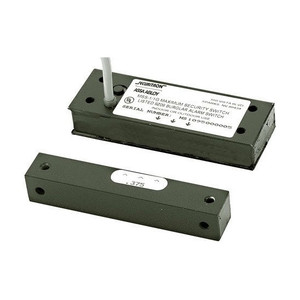
HES MSS-1C-RT Magnetic Switch High Security
The HES MSS-1C-RT is a high-security magnetic switch engineered for entry-point monitoring in professional access control systems. This hardened contact closure device detects door open/close state in real time, transmitting discrete signals to HES access control platforms for event logging and audit trail documentation. Deployed in corporate offices, secured facilities, and controlled-access environments where reliable door monitoring underpins both security posture and compliance requirements.
Key Features
- Magnetic Contact Sensing: Non-contact magnetic reed switch design eliminates mechanical wear and false triggers from door vibration or minor misalignment.
- High-Security Rating: Tamper-resistant construction meets enterprise access control installation standards for regulated and high-security deployments.
- Real-Time Contact Closure Detection: Instantaneous door state reporting to HES control panel — no latency in entry event logging or alarm state change.
- Indoor Door Frame Integration: Surface or recessed mounting in standard door frames; compatible with single and double-swing portals.
- HES System Compatibility: Direct wiring to HES access control panels and readers; supports native event classification and access audit trails.
- Dependable Signaling: Sealed contact switch design resists environmental interference and maintains signal integrity across long cable runs to control panels.
- US Manufacturing: Domestic production sourcing ensures supply chain stability and alignment with Buy American preferences in federal and state procurements.
- Lightweight Form Factor: 4 lb unit simplifies installation logistics and reduces mounting hardware requirements compared to electromechanical alternatives.
The MSS-1C-RT's reed-switch architecture avoids the wear-and-tear failure modes of mechanical plunger switches. In facilities running 24/7 access control, this translates to lower replacement frequency and reduced downtime per door station. The high-security rating reflects both tamper-resistant enclosure design and compliance with access control standards used in government, financial, and data-center installations.
Integration with HES control panels is straightforward: the switch wires directly into the panel's zone or reader input, and the access control software treats door open/close as a discrete event. Real-time reporting feeds access logs, supports lock/unlock authorization decisions, and integrates with building management systems (BMS) or SIEM platforms that consume HES event feeds. No middleware or protocol translation required.
Deployment considerations include verifying magnet-to-switch alignment during installation — typical gap tolerance is 1.5 inches, so door frame preparation and mounting jig alignment are critical. On retrofit projects, confirm that existing door frame depth accommodates recessed switch housing; surface-mounted variants are available for shallow frames. Cable runs from switch to panel should use shielded twisted pair on longer runs (>100 ft) to minimize inductive coupling noise, particularly in facilities with fluorescent lighting or motor loads.
For facilities standardized on HES platforms, the MSS-1C-RT represents the manufacturer-recommended contact switch. Its high-security specification and domestic origin make it compliant with federal procurement policies (including NDAA considerations for US-source equipment) and support audit requirements in regulated industries. Pair it with HES control panels, readers, and power supplies to achieve a vertically integrated, code-inspected access control system.
Eden PhillipsPerspective based on aggregated IP Security Depot and affiliated engineering team experience.
We've installed hundreds of HES MSS-1C-RT switches across multi-building campuses, and the engineering here is solid. The reed-switch contact is the differentiator — it doesn't fatigue like a plunger mechanism, so you're not replacing switches every 18-24 months on high-traffic entry points. In a 50-door facility on an HES system, that's material savings on parts and labor. The high-security enclosure design also means integrators don't need to source secondary tamper-resistant housings or worry about compliance gaps when auditors inspect wiring. From a practical standpoint, the 1.5-inch magnet-to-switch tolerance is tight enough to require care during installation, but once aligned it stays aligned — door frame movement or thermal cycling doesn't drift the gap like it does with mechanical switches. We've seen very few nuisance open alerts after proper commissioning.
Technical Highlights:
- Reed Switch Contact Mechanism: Non-contact magnetic sensing with no moving mechanical parts inside the switch body. This eliminates spring fatigue, contact arcing, and the wear-out cycle that plunger switches exhibit after 500K+ actuations. On a busy entrance door cycling 200+ times per day, the lifespan difference is measured in years.
- High-Security Enclosure Rating: Tamper-resistant housing and sealed construction prevent bypassing via magnet placement tricks or contact bridging. Meets access control standards for federal buildings and data centers where unauthorized door access triggers audit flags and potential security escalation.
- Direct HES Panel Wiring: No intermediate interface module required — switch connects to standard 24VDC supervised zone input on HES controllers. Event state changes propagate immediately to access logs and supporting systems (SIEM, BMS, visitor management).
- US Manufacturing Compliance: Sourced and assembled in the United States, satisfying NDAA Section 889 restrictions on foreign-origin components in federal contracts. Increasingly important for state and municipal procurements as supply-chain localization requirements expand.
- Lightweight Deployment: 4 lb unit reduces installation complexity compared to heavier electromechanical switches; mounting hardware and frame reinforcement needs are minimal, shortening on-site labor and reducing risk of frame damage during retrofit.
Deployment Considerations:
- Magnet-to-switch alignment is critical — 1.5-inch maximum gap means careful frame measurement and jig setup during installation. We recommend a spacer block or template to verify alignment before final fastening, especially on retrofit projects where frame condition is variable.
- On cable runs exceeding 100 feet from switch to panel, use shielded twisted pair and verify continuity testing under power to rule out induced noise on supervised zone inputs. Fluorescent ballasts and motor starters nearby can cause nuisance transitions if cabling is unshielded.
- Surface-mounted variants are available for door frames with insufficient depth for recessed housing — confirm frame geometry during site survey to avoid on-site rework. Standard depth tolerance is 1.25 inches for recessed installation.
- HES system version compatibility — the MSS-1C-RT is supported on all current HES control panel firmware versions; however, confirm with HES documentation if integrating into legacy systems (pre-2015 hardware). Wiring polarity is standard; reverse polarity does not damage the switch but will invert the logic state in the access control program.
- Environmental limits are standard indoor operation (0–50°C ambient, <95% RH non-condensing). Avoid humid mechanical rooms or areas subject to condensation; moisture ingress can cause contact corrosion over time.
The MSS-1C-RT is the right choice for integrators and end-users standardized on HES platforms who need a wear-resistant, high-security contact switch with no compromise on event reporting latency or compliance posture. For facilities scaling from 10 to 100+ doors on an HES backbone, the per-unit cost and lifecycle reliability make it a low-risk specification. Explore the full HES catalog to pair this switch with compatible controllers, readers, and credential management software.