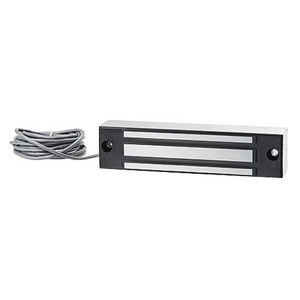
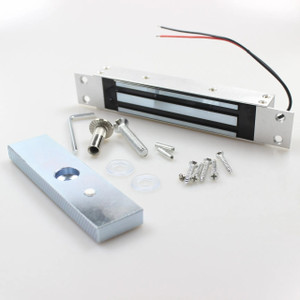
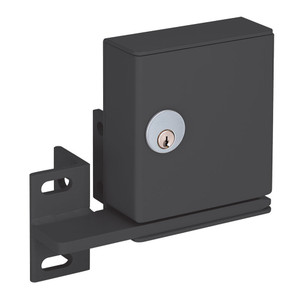
HES GL1-FL 12/24VDC Fail-Locked Gate Lock
The GL1-FL is a professional-grade electromagnetic gate lock engineered for perimeter security applications where an unplanned power loss cannot grant access. This device operates in fail-locked mode—the gate remains locked whenever power is removed, whether due to intentional shutdown, circuit failure, or extended outage. This architecture eliminates a critical liability: power loss accidentally unlocking a high-security gate. If your deployment requires default-to-secure behavior, the GL1-FL is the baseline choice for automated vehicle barriers, sliding gate systems, swing gate operators, and turnstile controls.
Key Features
- Fail-Locked Design (De-Energized = Locked): The GL1-FL holds the gate locked at rest. You energize the coil to unlock; when power drops, a spring-return mechanism re-engages the latch. This means a transformer failure, breaker trip, or intentional shutdown immediately secures the perimeter without operator intervention. Compare this to fail-unlocked designs (where power loss opens the gate for emergency egress)—this is the opposite safety model, and picking the wrong one creates a compliance or liability nightmare.
- Dual Voltage Input (12VDC or 24VDC): Configure the GL1-FL to match your existing control system's power rail. No separate voltage converter needed. On mixed-voltage sites (some panels 12V, some 24V), this flexibility reduces wiring complexity and eliminates the cost and footprint of external buck-boost supplies. If you later upgrade your access control system voltage, you do not need to replace the lock.
- Electromagnetic Locking Mechanism: No exposed moving parts means fewer maintenance callouts than mechanical latches exposed to weather. The coil responds instantly to control signals from your access control panel or barrier operator. Typical actuation time is under 100 milliseconds—fast enough for high-throughput vehicle barriers where dwell time matters.
- Standard Access Control Integration: The GL1-FL wires directly to any commercial access control system that provides 12 or 24 volts DC switching output. Connect the lock coil to a relay output on your access control panel, power supply, or gate operator control board. No proprietary controllers, no firmware integration, no special licensing. Technicians trained on standard access control wiring can troubleshoot and deploy this lock without specialized training.
- Gate Lock Form Factor: Geometry and mounting are purpose-built for gate installation. The lock body withstands repeated actuation cycles and the thermal cycling, rain, dust, and salt spray typical of outdoor perimeter gates. No performance degradation across temperature extremes or weather exposure.
- Weather-Resistant Operation: Designed for outdoor installations. The electromagnetic mechanism functions reliably across temperature ranges common to North American and international climates without special environmental conditioning or seasonal recalibration.
Integration & Compatibility
Integrate the GL1-FL into any access control system that sources 12 or 24 volts DC. Wire the lock coil to a relay or direct switching output from your access control panel or gate operator control board. When the access control logic sends a command to unlock (energizing the coil), the lock disengages; when the command clears (de-energizing), the spring return re-locks. This binary, no-intelligence control interface integrates cleanly into barrier operator platforms and turnstile controllers that already provide fail-safe logic at the panel level.
When to Choose a Different Model
The GL1-FL is correct if your security policy requires the gate to lock on any power loss. Do not use this lock if you need fail-unlocked behavior—where a power failure must automatically release the gate for emergency egress. That scenario calls for a different mechanism. Consult the manufacturer's product family if your use case involves manual-override or battery-backup unlocking; the GL1-FL is not designed for those requirements.
Frequently Asked Questions
Q: What happens if power fails while the motorized gate is mid-cycle?
A: The GL1-FL de-energizes and locks immediately. A motorized gate operator in motion will stall; the gate will not coast to a close or open. Coordinate the lock timing with your gate operator's motion-control logic. Many commercial gate operators include a safety relay that halts motion before lock engagement to prevent binding or creating a mechanical hazard.
Q: Can I install the GL1-FL with a 12VDC system and upgrade to 24VDC later without replacing the lock?
A: Yes. The GL1-FL accepts either 12 or 24VDC input without field modification. When you upgrade your control system voltage, simply re-wire the lock coil to the new 24VDC supply. No replacement hardware required.
Q: Does the GL1-FL work with my barrier operator control board?
A: Yes, if the operator board provides 12 or 24VDC switching output. The lock is not proprietary; it integrates into any standard barrier operator platform (sliding gate, swing gate, vehicular boom gate, turnstile) that sources DC switching. Verify your operator's output voltage and relay capacity before wiring.
Q: What is the typical hold time or release time for the GL1-FL?
A: Actuation occurs in milliseconds upon power application or removal. Release (unlocking) occurs immediately when the coil energizes; re-locking occurs immediately when power drops. Mechanical latch engagement is near-instantaneous. Consult the manufacturer datasheet for precise millisecond tolerances if your application requires deterministic timing.
Q: Does the GL1-FL require special wiring or conduit?
A: Standard low-voltage wiring practices apply. Use twisted pair or shielded cable for the lock coil leads, route away from high-voltage or RF sources, and terminate into a relay or switching contact rated for the coil current draw (typically under 1 amp for 12/24VDC locks). No special EMI filtering or surge protection is required beyond standard access control panel practices.
Ted PerryPerspective based on aggregated IP Security Depot and affiliated engineering team experience.
The GL1-FL (often searched as GL1 FL) is a straightforward electromagnetic fail-locked gate lock—no firmware, no intelligence, just a coil and spring latch that default-to-locked when de-energized. That simplicity is its strength. On a high-security perimeter where an unplanned power loss cannot become a security breach, this is the lock you specify.
Technical Highlights:
- Dual Voltage Input (12VDC or 24VDC): No voltage converter needed on mixed-system sites. Eliminates a point of failure and reduces wiring labor. If you're managing a multi-building campus with legacy 12V panels and new 24V infrastructure, this flexibility cuts integration cost and complexity.
- Fail-Locked Spring Return: Power loss = lock. No battery backup required, no complex logic needed at the panel. The mechanism is passive and mechanical—it will lock even if the access control system is offline or corrupted.
- Millisecond Actuation: Energize the coil, lock disengages; de-energize, lock re-engages. Fast enough for high-throughput vehicle barriers where gate dwell time affects traffic flow. On a 100-vehicle-per-hour barrier, slow actuation becomes a bottleneck.
Deployment Considerations:
- Coordinate with your gate operator's motion control. If the operator is mid-cycle when power drops, the lock engages and the motor stalls. Some operators include a safety relay to halt motion before lock engagement; others don't. Verify this in your operator's wiring diagram.
- The GL1-FL is not a fail-safe unlock device. If your code or security policy requires fail-unlocked behavior (power loss = gate opens for emergency egress), this is the wrong mechanism. Do not force it into that role.
The GL1-FL fits government facilities, critical infrastructure gates, and high-security commercial perimeters where the default-to-secure posture is non-negotiable. If your risk profile requires the gate to lock harder when power fails, this lock is the right baseline.