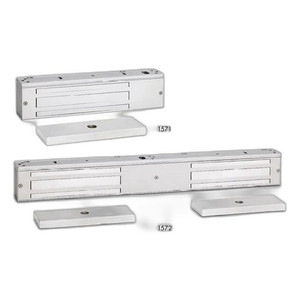
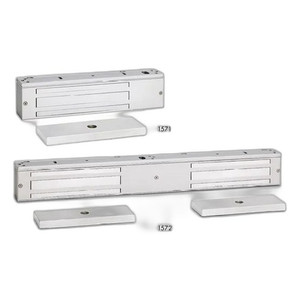
HES M32F Electromagnetic Lock 12/24VDC Face-Drilled
The M32F is a dual-voltage electromagnetic lock engineered for fail-secure access control on standard commercial door frames. This magnalock accepts either 12VDC or 24VDC operation, meaning you can standardize procurement across multi-site deployments without SKU duplication — a real cost lever when managing dozens of doors across multiple facilities. You select your voltage at installation time without swapping the lock itself.
Key Features
- Dual-voltage operation (12VDC or 24VDC): Set your voltage at installation without needing multiple lock models in inventory. Reduces parts complexity across enterprise deployments. If your access control panel runs 12VDC but a future installation standardizes on 24VDC, you pair the same M32F lock with the appropriate power supply — no internal jumpers, no reconfiguration required. This flexibility pays for itself on medium to large multi-site rollouts where voltage standardization may shift over time.
- Fail-secure design: The lock remains engaged if power is lost. This is the correct fail-safe mode for spaces where unauthorized access during a system outage poses an unacceptable risk — think server rooms, secure storage, or high-security institutional areas. If your access control system goes down, the door stays locked, not unlocked. Verify your emergency egress requirements before deployment; some codes require fail-safe (release on power loss) rather than fail-secure, so confirm with your AHJ and safety officer first.
- Face-drilled surface mount configuration: Installs directly onto the door frame face without complex cutouts or mortising. On retrofit jobs, this cuts labor significantly because you're not routing the frame or filing frame mounting pockets. On new construction where frame carpentry is already tight, face-drilled eliminates one step from the critical path. Faster commissioning, lower installation cost.
- Electromagnetic magnalock form factor: Provides robust electromagnetic holding force for single and multi-door commercial installations. Standard electromagnetic lock architecture integrates directly with card readers, keypads, and networked access control panels without intermediary devices or specialized relay logic if your panel outputs 12/24VDC directly to an electromagnet control circuit.
- Direct integration with 12/24VDC access control outputs: The M32F works with standard fail-secure access systems that energize the lock during normal operation and release on authorized access events. Connect the control output from your access panel directly to the lock power input — no special relay, no MOSFET driver required if your panel drives 12/24VDC electromagnet outputs natively. Simplifies wiring and reduces single points of failure in the control chain.
- Commercial-grade construction: Built for high-traffic commercial offices, institutional facilities, and multi-tenant environments where durability and code compliance matter. Handles repeated cycle loading in busy facilities without degradation. Suitable for environments where access control must remain reliable under regular use.
Integration & Compatibility
The M32F connects to any access control system that outputs 12VDC or 24VDC to an electromagnet control circuit. Common integration patterns include card reader or keypad trigger outputs routed through an access panel relay or MOSFET driver, or direct wiring to the access panel electromagnet output when your panel drives 12/24VDC directly.
Before installation, confirm your access control panel's output voltage and current capacity. Most commercial access control panels supply adequate amperage for standard electromagnetic locks; verify the panel datasheet if uncertain. Undersized power supplies will cause the lock to buzz or chatter under load, reducing holding force reliability and potentially failing to hold during an access attempt.
Shielded cable is recommended when running the control signal alongside data lines (card reader connections, network cables) to avoid noise coupling that can degrade reader performance. Test your unlock logic and emergency release procedures during commissioning — verify that authorized access events trigger the unlock signal and that manual release mechanisms work as intended.
Installation Essentials
Mount the M32F directly to the door frame face using the face-drilled holes. Ensure your power supply delivers the chosen voltage (12VDC or 24VDC) with sufficient sustained current for holding force under load. Wire the control signal from your access panel or reader to the lock's power input. The fail-secure mode means the lock defaults to locked when power is removed, so verify your access panel's unlock logic and emergency procedures before final commissioning. Document your voltage selection (12VDC or 24VDC) and control wiring in your system commissioning notes for future technicians.
Frequently Asked Questions
Q: Can I switch the M32F between 12VDC and 24VDC operation after installation?
A: Yes. The voltage is set by your power supply, not by the lock itself. If you need to change voltages, swap the power supply — no internal reconfiguration needed. This is one of the key benefits of the dual-voltage design for multi-site deployments where voltage standards may differ between facilities.
Q: What happens to the M32F if power is lost?
A: The lock defaults to fail-secure — it remains locked when power is removed. This protects the space during system outages but requires manual unlocking or a backup power source if emergency egress is needed. Verify your emergency egress requirements and facility codes before relying on fail-secure behavior.
Q: Do I need a separate relay or driver to control the M32F from my access panel?
A: Not if your access panel outputs 12/24VDC directly to an electromagnet control circuit with sufficient amperage. If your panel uses low-voltage logic signals (5VDC or TTL), you'll need an intermediary relay or MOSFET driver. Check your panel's output specification in the datasheet to confirm compatibility.
Q: Is the M32F suitable for outdoor doors?
A: The M32F is designed for commercial indoor environments. Outdoor applications require weather-sealed enclosures and corrosion-resistant construction. If you need outdoor fail-secure locking, consult your access control integrator about weatherproof variants or additional protective housing.
Q: What cable and connectors do I need for the M32F?
A: Use shielded control cable (typically 18–16 AWG) rated for your chosen voltage and the panel's output current. Connectors depend on your panel and reader equipment — your integrator will specify based on the control system architecture. Use shielded cable if running alongside data lines to avoid noise coupling into your card readers.
Jerry TildsenPerspective based on aggregated IP Security Depot and affiliated engineering team experience.
I've specified a lot of electromagnetic locks across office campuses and institutional builds, and the M32F's dual-voltage flexibility is exactly what you need when you're managing access control across multiple sites with different power infrastructure. The fail-secure default is appropriate for any space where unauthorized access during an outage is unacceptable — but don't gloss over the egress requirements before you commit. I've seen integrators forget to check local fire code, which sometimes mandates fail-safe behavior (unlock on power loss) instead. Read your AHJ's guidance before you order.
Technical Highlights:
- Selectable 12/24VDC operation: Set voltage at installation time via power supply selection — no internal jumpers or firmware reconfiguration. On multi-site rollouts with mixed voltage standards, this cuts your spare parts count from 2 SKUs to 1. Real cost savings on larger deployments.
- Fail-secure energize-to-hold design: Lock is engaged during normal operation and releases only on an authorized access event. If your access control system loses power, the door stays locked. This is the correct fail mode for server rooms, secure storage, and high-security institutional areas. Verify your emergency egress code requirements before relying on it.
- Face-drilled surface mount: No mortising, no frame routing, no complex carpentry. On retrofit jobs, this saves a half-day per door compared to mortise-mount locks. On new construction, it simplifies the frame-preparation sequence. Labor savings compound across dozens of doors.
Deployment Considerations:
- Confirm your access control panel's 12/24VDC output amperage before ordering. Undersized supplies will cause audible buzzing and chatter under load, reducing holding force reliability. Check the panel datasheet; most commercial panels supply adequate current, but verify rather than assume.
- The fail-secure behavior is a feature, not a limitation — but only if your egress code permits it. Some jurisdictions require fail-safe (unlock on power loss) for certain areas. Coordinate with your AHJ and facility safety officer before commissioning.
- Run shielded cable if your control wiring parallels card reader connections or network lines. Noise coupling can degrade reader performance. A few dollars in shielded cable saves hours of troubleshooting later.
Position the M32F for commercial office buildings and institutional facilities with standardized 12/24VDC access control infrastructure where fail-secure behavior meets code requirements. It's a solid, straightforward choice when you need cost-effective, audit-friendly access control without complexity.