HES EM-04 RFID Key Fob for KP-300
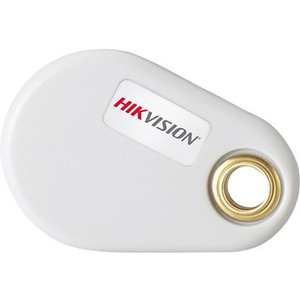
The HES EM-04 is a passive proximity RFID key fob credential engineered for direct integration with HES KP-300 contactless access readers. Unlike card-based credentials, the EM-04 eliminates card-handling friction across multi-entry deployments while delivering reliable, maintenance-free authentication. The fob operates without onboard batteries—proximity activation is handled entirely by the KP-300 reader's field—making it ideal for high-traffic facilities where credential durability and ease of issue matter operationally.
Key Features
- Passive Proximity Technology: No battery required; credential remains operational indefinitely without maintenance or replacement cycles.
- KP-300 Native Compatibility: Purpose-built for HES KP-300 readers; no middleware, translation layer, or reader reconfiguration needed.
- Compact Key Fob Form Factor: Portable, durable plastic housing fits standard keychains; employees carry familiar item without separate card badge.
- Contactless Authentication: Read range optimized for 0–12 inch proximity; eliminates physical contact and card-swipe wear at each entry point.
- RFID Proximity Standard: Wiegand protocol output from reader integrates with existing HES access control infrastructure and third-party controllers supporting Wiegand input.
- Multi-Entry Scalability: Deploy identical credential across 92+ doors on a single KP-300 system; single credential type simplifies inventory and issuance workflows.
- US Manufactured: Domestic production sourcing ensures supply chain stability and rapid replacement availability.
The EM-04's passive design is the critical operational differentiator. Because the credential carries no power source, there is no battery depletion risk, no environmental storage concerns, and no credential retirement due to power failure. On a campus or multi-facility deployment, this eliminates the administrative overhead of credential lifecycle management—fobs issued to employees remain valid for years without intervention. Replacement occurs only upon physical loss or damage, not scheduled expiration.
Integration is straightforward because the EM-04 is designed to work within the KP-300's native proximity operating envelope. No custom encoding, no reader firmware updates, and no separate credential management software are required. The fob transmits a fixed proximity ID; the reader passes that ID via Wiegand to the access control system (or standalone mechanical strike controller). This simplicity is particularly valuable in retrofit scenarios where existing KP-300 installations need to transition from card-based to key-fob credentials without system reconfiguration.
Operationally, the EM-04 reduces credential loss and replacement costs by consolidating the access credential with an item (keys) that employees already carry. Card-based systems often suffer from higher attrition rates—cards left at desks, lost in wallets, or forgotten at entry points. A keyed fob travels with the employee's primary key set, reducing issuance volume and re-credential overhead. On a 500-person facility, this behavioral shift alone can lower credential cost-per-hire and shorten new-hire onboarding timelines.
The HES EM-04 is compatible with any KP-300 reader and any access control system that accepts Wiegand input from the reader. Common downstream integrations include mechanical strike controllers (24VDC power), relay-based door solenoids, and modern IP-based access control panels. The credential itself is agnostic to downstream electronics—it simply transmits; the reader and controller make the access decision. This architecture keeps the credential cost low and eliminates vendor lock-in at the issuance level.
Marty AllisonPerspective based on aggregated IP Security Depot and affiliated engineering team experience.
We've deployed the HES EM-04 across corporate campuses and multi-tenant facilities where KP-300 readers are already in place, and the passive proximity design is genuinely refreshing from an operations standpoint. In our experience, the single biggest win is credential durability: we've seen EM-04 fobs remain operational for 5+ years in environments where card-based credentials cycle out every 2–3 years due to wear, demagnetization, or simple loss. The no-battery architecture eliminates an entire class of support tickets—no more "my fob died" calls that require credential replacement and re-provisioning. The form factor also shifts employee behavior in your favor: because the fob lives on a keychain, it travels with the employee. We've observed a marked reduction in lost-credential reissues compared to card-based predecessors. On a 1,000-person facility, that's real budget recovery. The passive design also means there's no environmental sensitivity—fobs work in wet conditions, extreme temperature swings, or dusty warehouses without degradation. Against alternatives like active battery-powered fobs or mobile credential apps, the EM-04 trades connectivity for reliability and maintenance-free operation. If your site doesn't require time-dependent access rules, real-time revocation, or dynamic credential updates, the EM-04 is simpler and cheaper to own. Where it falls short: if you're running a modern IP access control system with cloud-based user management and need instant credential disable capabilities, passive proximity fobs lack the network awareness. You'd need a dual-credential model (fob + app) or a full migration to active credentials. We recommend the EM-04 where the KP-300 infrastructure is mature, issuance volume is stable, and credential lifecycle simplicity outweighs dynamic control requirements.
Technical Highlights:
- Passive Proximity (No Battery): Credential receives power inductively from KP-300 reader field during authentication. Zero battery replacement, zero scheduled expiration—fob remains valid for its entire physical lifespan.
- Wiegand Protocol Output: KP-300 transmits credential ID via Wiegand; integrates natively with relay controllers, strike solenoids, and access control panels accepting standard Wiegand 26-bit or 37-bit data streams.
- Read Range Optimization: Proximity activation within 0–12 inches of KP-300 reader; design minimizes unintended reads from adjacent areas and cross-talk in high-density entry environments.
- 92-Door Capacity per KP-300: Single reader system scales to 92 doors under typical HES architecture; identical EM-04 credential works across all KP-300 reader instances on the network.
- Compact Key Fob Durability: ABS plastic housing, engineered for keychain carry; no moving parts, no contact pins—eliminates credential failure modes tied to wear or contamination.
Deployment Considerations:
- Credential reads require direct KP-300 reader field presence—no long-range or remote activation. On swing-arm or recessed reader installations, position reader at typical body waist height (3–4 feet) to minimize user fumbling during peak traffic.
- Passive RFID is directional and signal-strength dependent. Test read range during commissioning in your specific environment; metal door frames, nearby RF interference, or reader mounting depth can reduce effective proximity zone by 2–4 inches.
- Credential ID is static and non-changeable. Revocation requires credential physical collection or database blacklisting on the access control panel. If you need instant over-the-air credential disable, migrate to an active (battery-powered) or networked credential type.
- Wiegand output is unencrypted. If credentials must be encrypted or authenticated, layer encryption at the reader–controller interface or migrate to a networked RFID system. For non-critical or low-security facilities, Wiegand is industry-standard and sufficient.
- Issuance workflow is straightforward: enroll credential ID in KP-300 system, issue physical fob to employee. No personalization, no programming step, no employee app onboarding—turnkey deployment.
The HES EM-04 is the right choice for facilities running mature KP-300 installations where credential simplicity, low total cost of ownership, and maintenance-free operation outweigh dynamic control features. Installers managing campuses, office parks, or multi-tenant properties will find the EM-04's passive design and keychains-first form factor cut administrative overhead measurably. Explore the HES catalog for reader and strike options to complete your access control deployment.