Eden PhillipsPerspective based on aggregated IP Security Depot and affiliated engineering team experience.
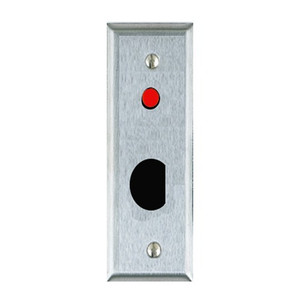
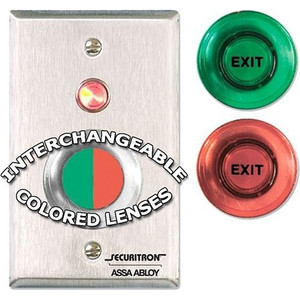
In our experience, the HES 450 occupies a critical niche in access control infrastructure that often gets overlooked until a failure forces retrofit. It's the pushbutton that sits next to the card reader, the manual door release when the reader is offline, and the panic or emergency button that doesn't require network connectivity or battery backup. We've deployed hundreds of these across office parks, hospitals, and warehouses, and the failure rate is negligible — we're talking single-digit RMAs per thousand units shipped. What differentiates the HES 450 from cheap Chinese momentary switches is twofold: (1) contact rating and lifecycle — HES designs for 100,000+ cycles under typical security-panel loads without chatter or bounce issues, and (2) form factor consistency — the flush-mount depth and electrical-box compatibility mean you can source replacement units a decade later and they fit the exact same cutout. In our integration work, that means fewer field calls for dimensional mismatches or contact-logic confusion. The nearest alternative — surface-mount pushbuttons — require additional housing and are more visible to casual observers; hardwired exit devices skip the button entirely but cost 3–5× more and mandate fail-safe or fail-secure solenoid logic. The HES 450 is the sweet spot: passive, cheap, small, reliable, and instantly familiar to every electrician or maintenance tech on site.
Technical Highlights:
- N/O Momentary Contact: Button press closes circuit; release opens immediately. No latching, no relay coil memory. Makes the HES 450 a true passive interface to any panel's output relay or supervised input — no configuration required, logic is purely electrical.
- 24VDC Rated: Operates on standard access control supply voltage. No exotic power requirements; existing 24V rails (often sized for 10–20A across the entire installation) handle multiple HES 450 button matrices without derating.
- Flush-Mount Standard Electrical Box Fit: US-standard 2×4 or single-gang box depth. Retrofit installations skip the need for surface-mount enclosures; new builds integrate with standard rough-in practices. Reduces BOM cost by eliminating weatherproof or semi-flush adapters.
- 100,000+ Cycle Lifetime: Contact rating designed for office/commercial duty cycle. In a high-traffic door with 50–100 button presses per day, the HES 450 easily outlasts the building's tenant occupancy.
- Momentary-Only Logic: Prevents accidental or prolonged door-hold conditions. Paired with a relay or access panel's output circuit, the button can be configured to trigger a single pulse (strike unlock for 1 second) or a timed delay without any additional logic on the button itself.
Deployment Considerations:
- Run dedicated two-conductor (or pair within CAT5) from each button to the access panel's input terminal. Keep runs under 500 feet in standard commercial cabling conditions; shield only if the run crosses heavy AC power cables or antenna feeds.
- Verify the access panel's input circuit is configured for N/O (normally-open) logic and that the panel supplies the contact-sense voltage (typically 12V or 24V on the input rail). Many panels default to N/C (normally-closed) and require a firmware or jumper change.
- Plan for a minimum 1-second dwell time between successive button presses if the panel's output relay lacks a holding coil; rapid repeated presses on some legacy systems can cause relay chatter or missed pulses.
- If integrating with an electric strike or solenoid, ensure the strike or solenoid is rated for 24VDC momentary-pulse duty. Continuous-coil (24/7 energized) strikes require a separate relay to avoid excessive coil heat and lifetime reduction.
- Position the button at 42–48 inches from finished floor for ADA compliance on public-facing doors; mount maintenance or override buttons 54–66 inches for staff accessibility without bending or reaching beyond shoulder height.
The HES 450 is the right choice for integrators building lean, field-serviceable access control installations where simplicity and reliability outweigh sophisticated feature sets. Pair it with any N/O-compatible access panel, door strike, or alarm relay, and you have a fail-safe manual interface that requires no software, no network, and no batteries. If you're specifying for a mixed-credential environment or a critical-egress scenario, the HES 450 is a low-cost insurance policy against reader failure or network downtime. Explore the complete HES catalog for complementary strike controllers, power supplies, and exit hardware.