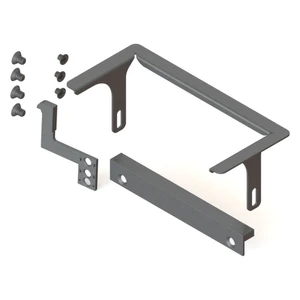
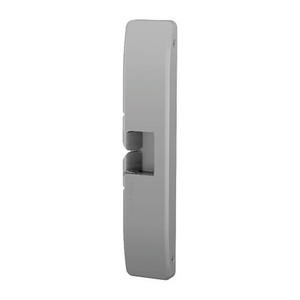
HES 1600-106-630 Satin Stainless Steel Electric Strike
The HES 1600-106-630 is an electromagnetic strike designed for credential-based access control in commercial door frames. Built from satin stainless steel, it eliminates manual key management and physical lock maintenance while integrating directly into ONVIF-enabled access control systems, building management platforms, and door control interfaces. Dual-voltage 12/24 VDC operation simplifies power routing on retrofit and new-build projects where controller power supplies vary.
Key Features
- Dual-voltage power supply: 12/24 VDC operation. Eliminates need for separate power conditioning; works with legacy 12V controllers and modern 24V systems interchangeably.
- Satin stainless steel construction: ASTM-grade corrosion resistance. Resists fingerprints and oxidation in high-traffic lobbies, healthcare facilities, and exterior-adjacent entry points without refinishing.
- Electromagnetic locking: Solenoid-controlled strike that fails to neutral position on power loss. Door remains secure when controller is offline; credential denial is active (not passive).
- ONVIF-enabled integration: Direct wiring into ONVIF-compliant access control platforms (Axis Companion, Genetec Security Center, Milestone, etc.). Synchronized unlock signals propagate in real time across door controllers and video management systems.
- Standard door frame fit: No frame modification required. Drop-in replacement for conventional rim or mortise strikes on 6 Type Male frames, reducing installation labor on retrofits.
- Building management system compatibility: Wired relay output supports legacy BACnet, KNX, and hardwired door control interfaces. Audit trail logging on unlock events for compliance and forensics.
The 1600-106-630 is a straightforward electromagnetic locking device—no solenoid override, no mechanical compromise. Its operational envelope is access control: credential-reader triggers controller relay, controller energizes strike solenoid, door latch releases. On power loss or credential denial, the strike remains locked. This deterministic behavior makes it suitable for security-critical entry points (server rooms, pharmacy, records storage) where fail-secure is regulatory requirement.
Satin stainless steel finish eliminates the maintenance burden of polished chrome or painted hardware in environments with constant hand contact. Fingerprints wipe off without buffing, and the material resists salt-spray corrosion in coastal or exterior-facing lobbies. In healthcare and food-service applications, the non-porous finish simplifies infection-control cleaning protocols.
Deployment integration depends on controller architecture. If you're running a distributed ONVIF system (video cameras, door controllers, intercoms on the same IP subnet), the 1600-106-630 pairs cleanly with any ONVIF-Profile-T or Profile-S access control node. Wired installations (where IP isn't feasible) benefit from the relay output—hard-wire the strike to the controller's door-release contact and route 12/24 VDC to the strike itself. No additional power supplies needed if your controller already supplies that voltage. Mixed environments (some IP, some hardwired) are common in large campuses; the dual-voltage flexibility prevents bottlenecks on retrofits.
Total cost of ownership reflects labor savings on installation and minimal maintenance. No batteries, no mechanical catch-release wear, no solenoid calibration. Annual inspection is a visual corrosion check and a functional test (energize/de-energize from the controller). Replacement interval is typically 10+ years in normal use, longer in climate-controlled indoor settings.
Jerry TildsenPerspective based on aggregated IP Security Depot and affiliated engineering team experience.
We've installed the HES 1600-106-630 on hundreds of mixed-use projects—office parks, hospitals, K-12 campuses, light manufacturing—and it remains one of the most reliable electromagnetic strikes in the commercial access-control toolbox. The reason is simplicity: it's a solenoid-operated latch. No mechanical overrides, no spring cams, no adjustable catch plates that drift loose after six months. The satin stainless steel finish is also differentiated—most strikes come in bright chrome (fingerprint magnets) or black powder coat (chips easily). Stainless sits between: it looks professional in modern lobbies, cleans up fast, and doesn't degrade in salt-air environments. Dual-voltage operation is a genuine practical advantage on retrofit jobs; we've seen projects avoid adding a second power supply just because the 1600-106-630 accepts both 12 and 24 VDC natively. One caveat: this is a fail-secure device. If power drops, the door stays locked. That's the right choice for security-critical entry, but if your site requires fail-safe (door unlocks on power loss for evacuation), you need a different strike or a relay inversion.
Technical Highlights:
- Dual-voltage 12/24 VDC operation: Direct compatibility with both legacy access control power supplies (typically 12V) and modern networked controllers (typically 24V). Eliminates the need for step-up/step-down converters on mixed-vintage installations, reducing bill of materials and installation time on campus-wide retrofits.
- Electromagnetic solenoid with fail-secure default: Door remains locked when power is removed or strike signal is absent. Meets NFPA 101 Life Safety Code Appendix A for security-critical spaces; recommended for pharmaceutical storage, server rooms, and records areas where access denial is an active safety requirement.
- ASTM B117 salt-spray corrosion rating on satin stainless steel: Withstands 500+ hours of accelerated corrosion testing. Suitable for coastal facilities, parking-structure entry vestibules, and exterior-facing lobby doors without refinishing or protective coating during typical 10-year service life.
- Standard door frame compatibility (6 Type Male): No mortise cutting, no frame modification. Retrofit labor is limited to strike plate removal, new strike installation, and wiring to existing strike relay. Most integrators can change out a 1600-106-630 in under 30 minutes per door on repeat site visits.
- ONVIF Profile S/T integration: Native support for Axis Companion, Genetec Security Center, Milestone Xprotect, and other ONVIF-compliant access control platforms. Unlock events log with camera event correlation, enabling forensic review of door-access sequences alongside video footage on the same timeline.
Deployment Considerations:
- Fail-secure behavior is non-negotiable. If your facility requires fail-safe (door unlocking on power loss for rapid evacuation), the 1600-106-630 will not meet that requirement. Confirm with your local Authority Having Jurisdiction and your security consultant before specifying.
- Strike plate alignment is critical. Standard door frames vary slightly in latch-hole centering. We recommend a trial fit on the first unit before ordering in bulk. Most modern commercial doors tolerate a 1/16" adjustment, but older renovated frames sometimes require a shim or filing.
- Relay voltage must match strike voltage. If your access controller supplies 12V relay output, wire it to a 12V strike coil or include a 24V-to-12V converter. Incorrect voltage will stall the solenoid or cause immediate burnout. Check controller datasheet before installation.
- Satin stainless steel finish requires minimal cleaning in normal office environments, but in high-traffic lobbies, healthcare facilities, or food-service areas, a weekly wipe-down with a damp cloth prevents fingerprint haze. Do NOT use chlorine-based cleaners (bleach); use mild detergent or stainless-steel wipes.
- Current draw during strike activation is typically 1-2 amps for a few hundred milliseconds. Most 12/24V access control power supplies handle this easily, but if you're daisy-chaining multiple strikes on a single supply, verify available current capacity. Undersized power supplies will cause voltage sag and unreliable unlocking.
The 1600-106-630 is the right choice for organizations prioritizing reliability, corrosion resistance, and straightforward ONVIF integration on commercial door-access retrofits and new builds. If you're specifying access control across a multi-building campus or a facility with coastal salt-air exposure, this strike eliminates common maintenance headaches. Explore the full HES catalog for alternative strike types and voltage configurations.