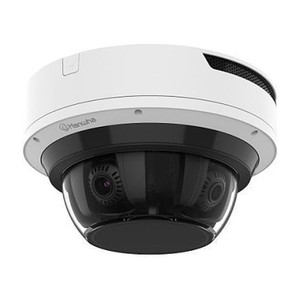
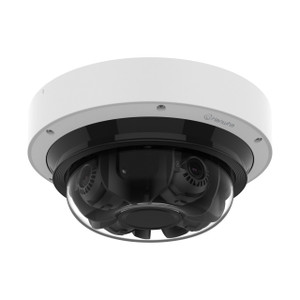
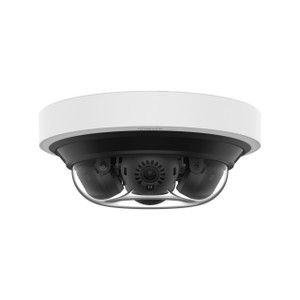
Hanwha PNM-C32083RQZ 32MP Quad-Sensor Outdoor AI PTZ Camera
The Hanwha PNM-C32083RQZ is a four-channel, 8-megapixel outdoor network camera engineered for large-area perimeter surveillance where license plate capture and facial recognition at distance are non-negotiable. Unlike single-lens PTZ systems that rely on pixel interpolation to claim high resolution, this platform deploys four independent 1/1.8" CMOS sensors, each with motorized varifocal optics (4.38–9.33mm), delivering genuine 32MP aggregate resolution without interpolation artifacts. Remote pan, tilt, rotate, and zoom capabilities let you optimize field-of-view post-installation—a practical advantage when site surveys are incomplete or environmental constraints limit initial placement options.
Key Features
- Quad 8MP Sensors (32MP Combined): Four independent 1/1.8" CMOS sensors deliver true 32MP resolution across the full frame, preserving fine detail essential for forensic searches and license plate OCR accuracy.
- Motorized PTRZ Control: Pan/tilt/rotate/zoom mechanism with varifocal motorized lenses (4.38–9.33mm) allows field-of-view adjustment from wide coverage to telephoto framing without returning to the installation site, reducing commissioning timelines and late-project rework.
- AI-Driven Analytics: On-camera object detection (people, faces, vehicles, license plates) processes locally in real time, reducing backend processing load and enabling instant alerting on critical events—no waiting for video to reach the NVR.
- Virtual Line Crossing & Area Intrusion: Perimeter-crossing and boundary-breach detection triggers alerts before threats reach restricted zones, critical for campus perimeter security or industrial site boundaries.
- Integrated IR Illumination (25m Range): Built-in 850nm IR LEDs extend effective coverage to 25 meters in complete darkness without external spotlight infrastructure, lowering installation labor and power requirements at remote locations.
- WiseNRⅡ & Adaptive Shutter: Dynamic noise reduction and exposure control handle dramatic lighting transitions (sun glint, shadow, overcast) without blooming or ghosting artifacts that would degrade AI detection accuracy in marginal light conditions.
- IP66/IK10/NEMA4X Rating: Housing and dome construction withstand direct rainfall, salt spray, coastal corrosion, and vandal impact without sealed enclosure modifications—ship the unit to site and mount.
- Dual PoE++ (IEEE 802.3bt): Powers the quad-sensor array and motorized mechanics from a single network connection (Class 4 delivery), eliminating separate power supplies and reducing cable runs into the dome.
- H.265 Compression: H.265 codec cuts bandwidth and storage overhead roughly in half compared to H.264 on equivalent quality targets—meaningful when archiving 24/7 across multiple units on constrained network or storage budgets.
- TPM 2.0 & FIPS 140-2 Level 2: Secure-boot and cryptographic module certification meet enterprise security audit requirements; firmware signatures prevent unauthorized modification.
Integration & Compatibility
The PNM-C32083RQZ supports ONVIF Profile S, T, G, and M, ensuring interoperability with Milestone XProtect, Genetec, Axis Camera Station, and other third-party network video recorders and VMS platforms without vendor lock-in. Hanwha's SUNAPI protocol extends native integration with Hanwha Hanwha IP cameras and recorders. Advanced streaming profiles and codec options let you optimize bandwidth per application—high-quality forensic recording to NVR storage, reduced-bitrate secondary streams to remote mobile clients or cloud archival.
Typical Deployments
Perimeter security for critical infrastructure (power, water, telecom), university campuses, and industrial yards where 32MP resolution and license plate capture justify the multi-sensor investment. Parking lot and facility entrance monitoring, where vehicle identification and occupancy analytics drive both security and operations. Traffic corridors requiring license plate recognition (LPR) accuracy across long sight lines. Installation in coastal, desert, or industrial environments where IP66/IK10 durability eliminates sealed enclosure costs.
When to Consider a Different Model
If your site requires only single-camera wide-area coverage with simple motion detection (not AI or LPR), a lower-cost single-sensor outdoor PTZ may suffice. If installation constraints mandate a smaller physical footprint or lower power draw, inquire about fixed-optics outdoor IP cameras in the Hanwha portfolio. If PTRZ mechanics are unnecessary and coverage is fixed, compare fixed varifocal alternatives to reduce cost and moving-parts maintenance risk. Consult a camera selection guide to validate resolution and analytics requirements against actual scene depth and object size targets before committing to quad-sensor architecture.
Frequently Asked Questions
Q: What does the PNM-C32083RQZ's quad-sensor design deliver compared to single-lens PTZ cameras?
A: Four independent 8MP sensors (32MP combined) provide true, non-interpolated resolution across the full frame. Single-lens PTZ systems cannot simultaneously zoom and maintain 32MP detail; they scale pixels artificially, introducing artifacts that degrade license plate and facial recognition accuracy. The PNM-C32083RQZ trades physical size for genuine forensic resolution and independent field-of-view optimization per sensor.
Q: Does the PNM-C32083RQZ work with third-party NVRs and VMS platforms?
A: Yes. ONVIF Profile S, T, G, and M support ensures seamless integration with Milestone XProtect, Genetec, Axis Camera Station, and most enterprise VMS systems. No proprietary NVR lock-in required. Advanced codec and streaming profiles are fully configurable via ONVIF.
Q: What's the maximum infrared range, and do I still need external lighting?
A: Integrated IR illumination extends to 25 meters (82 feet) in complete darkness. For scenes beyond 25m, external IR or white-light infrastructure remains necessary. IP66 rating allows sealed light fixtures in wet environments without compromising the camera's own housing.
Q: Is the PNM-C32083RQZ NDAA Section 889 compliant?
A: Hanwha is a South Korean manufacturer; the camera does not carry explicit NDAA Section 889 compliance. Verify restricted procurement status with your security officer before deploying in federal facilities or federally funded projects.
Q: What power consumption should I budget for PoE++ switches?
A: The unit draws power via dual PoE++ (IEEE 802.3bt Class 4) connections. Exact wattage depends on IR intensity, zoom position, and sensor load; consult the datasheet for precise budgeting. Plan for 50–70W per camera when sizing switch capacity.
Q: Can I integrate the PNM-C32083RQZ with a PoE switch rated for standard PoE (802.3af)?
A: No. This camera requires PoE++ (802.3bt) to power quad sensors and motorized mechanics. Standard PoE switches cannot deliver sufficient current. Upgrade to PoE++ or install a dedicated external power supply (if supported by the manufacturer).
James EverettPerspective based on aggregated IP Security Depot and affiliated engineering team experience.
The PNM-C32083RQZ's quad-sensor architecture fundamentally changes how you approach perimeter surveillance at distance. Most engineers think PTZ = single 1/1.8" sensor with optical zoom. This unit breaks that mold by deploying four independent sensors, each with its own motorized varifocal lens (4.38–9.33mm). That translates to 32MP without interpolation—meaning forensic crops at 4x or 8x magnification don't blur into pixel soup the way they do on single-sensor systems. For license plate capture and facial recognition, that's not a luxury, it's a necessity. The varifocal optics let you dial in the exact field-of-view per sensor post-installation, cutting commissioning risk when site surveys are vague or site conditions shift.
Technical Highlights:
- 32MP Aggregate Resolution (Four 8MP Sensors): No pixel scaling or interpolation. Every pixel in the final image is captured native sensor data. At 200 feet, you still resolve license plate characters without software upsampling artifacts.
- Motorized Varifocal 4.38–9.33mm: Equivalent focal length flexibility lets you shift from wide perimeter coverage (4.38mm) to telephoto threat identification (9.33mm) without swapping lens packs. Reduces on-site troubleshooting and late-project retrofits.
- WiseNRⅡ + Adaptive Shutter: Handles sun glint and shadow transitions that would typically blow out or crush contrast on fixed-shutter outdoor cameras. Keeps AI object detection (people, vehicle, plate) accurate across dynamic lighting, not just in studio-lit conditions.
- 25m IR Range (850nm): Built-in illumination covers most parking lots and perimeter zones without external spotlights. Saves electrical service to remote poles and eliminates visible-light IR spillover that alerts intruders.
- IP66/IK10/NEMA4X: Direct rain ingress, salt spray, and vandal impact are handled by the dome and housing design. No conformal coating field repairs or sealed acrylic enclosures that compromise optical clarity.
- Dual PoE++ (802.3bt Class 4): Single network drop powers all four sensors and motorized mechanics. Eliminates dual power feeds and 12VDC supply runs to the dome, cutting installation labor and cable clutter in high-density deployments.
Deployment Considerations:
- Quad-sensor scaling: Physical footprint is larger than single-lens PTZ. Verify mounting pole diameter and vibration dampening at the installation site; larger domes demand heavier brackets and potentially larger conduit.
- PoE++ dependency: Standard PoE (802.3af) and PoE+ (802.3at) will NOT power this unit. Plan for dedicated PoE++ switches or managed power distribution. Budget 50–70W per camera on your power-budget spreadsheet.
- Motorized lens tuning: Field-of-view calibration per sensor takes time during commissioning. Pre-install survey with detailed scene measurements (distances to gates, parking lot lanes, building facades) accelerates setup and reduces on-site iteration.
Deploy the PNM-C32083RQZ on perimeter boundaries, toll plazas, parking entries, and facility gates where forensic detail and license plate accuracy justify the cost and complexity. If your site is a simple single-door warehouse with motion-only alerting, a fixed-optics outdoor camera is the better call. For large campuses, critical infrastructure, and traffic corridors where 32MP and AI detection are core to your security posture, the quad-sensor investment pays off in reduced false alerts and admissible forensic evidence.
Key Specifications:
Color: White