
Heavy-Duty Print Engine Modules Buyer's Guide
Heavy-duty print engine modules — the OEM print mechanisms inside thermal label printers, kiosks, and industrial labelers — are different from off-the-shelf desktop label printers. This guide covers what an engine module is, where it fits in a production line, and which TSC, Zebra, Honeywell, and Sato modules dominate the industrial OEM market.
- Print engines are typically integrated into a parent system (kiosk, applicator, machine) — they're rarely standalone
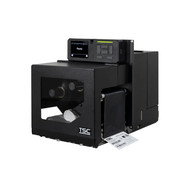
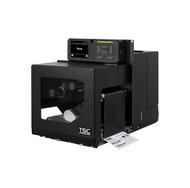
- TSC PEX series, Zebra ZE521 / ZE511, Honeywell PM and PX series, Sato S84-ex / S86-ex are the dominant lines
- Cutter and rewinder modules are sold separately and depend on label media path
- Specify resolution (203, 300, 600 dpi) carefully — over-spec costs more and slows print speed
What a print engine module is
A print engine is the core printer mechanism — thermal printhead, motor, ribbon takeup, media drive, sensors, and control electronics — that gets built into a parent system. Typical parent systems:
- Print-and-apply labelers. Engine prints, then a mechanical arm applies label to product or carton
- Kiosks and self-service. Receipts, tickets, baggage tags, prescription labels
- Wide-form printers. Pallet labels, shipping documents, hazmat tags
- Industrial mounted labelers. Cleanroom, pharmaceutical, food packaging line integration
The engine module is a sub-component within those systems. Buyers fall into two camps: OEMs who design the parent system, and end-customers replacing an aging engine within an existing system.
Heavy-duty industrial printers
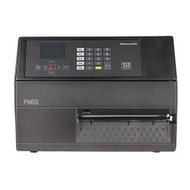
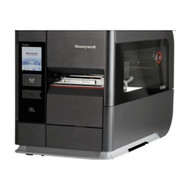
Heavy-duty industrial printers (often paired with engine modules as same-platform replacements):
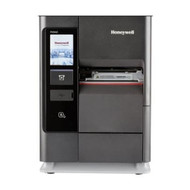
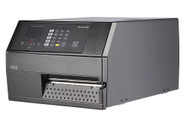
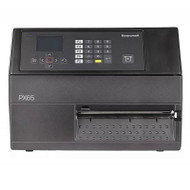
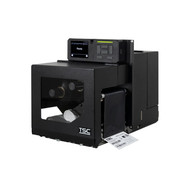
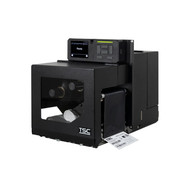
Print engine modules
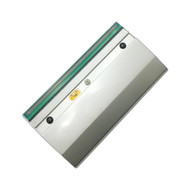
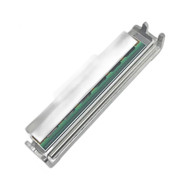
Print engine modules — direct OEM replacement parts:
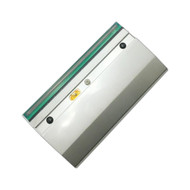
Cutter and rewinder modules
Cutter, rewinder, and accessory modules:
Print engine specs
Print engine specs you'll see on the data sheet:
| Spec | What to look for |
|---|---|
| Print resolution | 203 dpi (general), 300 dpi (small fonts, 1D barcodes), 600 dpi (small 2D codes, fine graphics) |
| Print speed | 8-16 ips for engines (faster than desktop) |
| Print width | Up to 4.1" or 6.6" depending on engine class |
| Media path | Left or right hand — must match your parent system geometry |
| Ribbon type | Wax, wax/resin, resin — varies by label adhesive and durability needs |
| Interface | Serial, parallel, Ethernet, USB; some support 802.11 wireless |
| Sensor type | Reflective, transmissive, or both — for sensing label gap on different media |
Engine integration
Engine module integration
Engine module integration into a parent system requires:
- Media path geometry — engine handedness (left/right), media supply, ribbon path
- Communication protocol — Zebra ZPL, EPL; TSC TSPL; SATO SBPL; Honeywell IPL or Fingerprint
- Power requirements — most run 24V DC; some require dedicated isolation transformer
- Environmental — dust, vibration, ambient temperature; clean rooms require special-spec engines
- Service access — front-loading vs side-loading printheads; replacement should not require system removal
Frequently asked questions
- Can I substitute a different brand engine for a like-for-like replacement?
- Sometimes possible mechanically but rarely a drop-in swap. Different vendors use different print languages (ZPL, TSPL, SBPL, IPL), different communication pinouts, and different media path geometries. Substitution typically requires recoding the host application or adding a print-language emulator. For OEM service replacement, stay with the same vendor and model family.
- What's the typical lifespan of a heavy-duty print engine?
- 5-10 years for the chassis, motor, and electronics. The printhead itself is a consumable — typically rated for 30-50 km of label travel (millions of labels). Plan for printhead replacement every 12-24 months in active production lines. Some industrial engines have field-replaceable printheads as standard service parts.
- How much does a heavy-duty engine cost vs. a desktop label printer?
- Engines run $1,500-$5,500 depending on width, resolution, and brand. Desktop label printers (Zebra ZD, TSC TDP, Honeywell PC series) run $200-$1,000. The engines cost more because they're built for higher duty cycle, integration into a parent system, and longer lifespan. For OEM and high-volume applications, the engine's lower failure rate and faster print speed justify the cost.
- Do I need a cutter or rewinder module on the engine?
- Depends on the label media and downstream handling. Cutters are needed where labels arrive as a continuous strip and need to be separated. Rewinders are needed where labels print and roll back up for batch picking. Most engines support both as optional add-on modules. For print-and-apply labelers, neither is typically needed because the applicator applies labels directly off the print web.
- Are these engines NDAA compliant?
- Print engines are typically not NDAA-impacted because they're not on the banned-equipment list. The Section 889 list focuses on video surveillance and telecommunications. Most engine brands (Zebra, Honeywell, TSC, SATO, Printronix, Toshiba) ship freely into federal and education sites. Verify the specific model's country of origin if you're under DFARS or BABA requirements.
Quote a print engine or printer
Working on an OEM integration or a printer refresh? Senior Specialists can spec engines, printheads, ribbons, and parent printers and quote channel-direct.
Talk to a specialist Browse TSC products