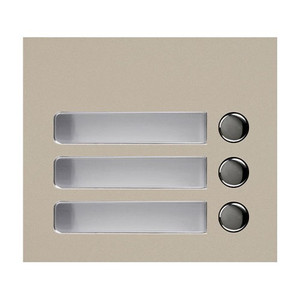
Aiphone GT-SW 4-Call Switch Module
Overview
The Aiphone GT-SW is a 4-call switch module designed to expand the tenant capacity and call-handling capability of Aiphone's GT series intercom systems. This is a core infrastructure component for multi-tenant buildings where you need to route calls from entrance stations and guard posts to individual tenant units without overwhelming the base system. The GT-SW slots into compatible Aiphone master stations (GT-4F, GF-3F, GF-2F) and scales your system from a handful of tenants to 125 total across a single master unit.
Key Features
- 125 Total Tenant Capacity: The module supports up to 125 tenants per GT master station—meaning your building can grow without replacing core hardware. This is critical in multi-unit residential or commercial environments where initial estimates always fall short.
- Four Independent Trunks: Each trunk handles up to 25 tenants, giving you granular control over call distribution and load balancing. If one trunk reaches capacity, you can still add tenants to the others without system degradation.
- 25 Tenants Per Trunk Audio: Audio traffic is routed independently across the same trunk structure, so audio quality remains consistent even when multiple units are accessed simultaneously. No audio crosstalk or codec bottlenecks when system load is high.
- 5 Entrance Stations Maximum: The system supports up to 5 different entry points (lobbies, side entrances, service gates), each able to ring any of the 125 tenants. This is the real-world limit for most buildings—more than that and you're managing separate systems per building wing.
- 2 Security Guard Stations Maximum: Two security or concierge stations can monitor and override calls across the entire tenant base, giving staff the visibility and control needed to handle emergencies or package delivery disputes without tenant involvement.
- IP43 Environmental Rating: The switch module is sealed to IP43—it won't fail if someone spills coffee on it or if the closet gets damp. Not submersible, but robust enough for typical building mechanical rooms or equipment closets with light dust and moisture exposure.
- Wire Run Limits Designed for Real Buildings: Maximum 980 feet per distribution run and 8200 feet cumulative cabling means you can deploy entrance stations across multiple floors and wings without signal degradation. This is the threshold where twisted-pair starts introducing noise; the GT-SW respects this engineering boundary.
- Single Loop Architecture: Up to 25 tenants per loop simplifies wiring and troubleshooting. A technician can trace a single line fault without unraveling a complex multi-loop topology.
Integration and Compatibility
The GT-SW requires installation on one of three Aiphone master station frames: the GT-4F, GF-3F, or GF-2F. These are the physical backplanes that accept the switch module, so confirm your existing or planned master station before specifying the GT-SW. The module is not standalone—it's an expansion card that integrates directly into the intercom master's architecture. Entrance stations, tenant handsets, and guard stations all communicate through the GT-SW's call routing logic once installed. If you're upgrading an existing GT system, verify the frame model in your equipment rack; if you're building new, choose your master station first, then add the GT-SW to match tenant count and entrance requirements.
What's in the Box
Specific package contents are not detailed in available technical documentation. Contact the supplier or manufacturer directly to confirm included mounting hardware, documentation, or cabling adapters.
Frequently Asked Questions
Q: Can I add multiple GT-SW modules to a single GT master station?
A: The technical specifications indicate a maximum of 125 total tenants per GT-VBC or GT-BC master unit. The GT-SW is the call switch expansion module designed to reach that capacity. Adding multiple modules is not mentioned in the specifications—consult the full system design guide or contact Aiphone pre-sales for multi-module configurations.
Q: What's the maximum distance I can run cabling from the GT-SW to entrance stations or tenant units?
A: Maximum 980 feet per distribution point from the switch module, with a cumulative system limit of 8200 feet. This is based on twisted-pair signal integrity over standard building cabling. Longer runs require signal boosters or distributed architecture.
Q: Does the GT-SW work with existing Aiphone GT handsets and entry stations?
A: Yes. The GT-SW is a component of the Aiphone GT system family. It integrates with GT-series entrance stations, tenant handsets, and guard stations already deployed. Compatibility is assured across the same product line.
Q: What happens if I exceed 25 tenants on a single trunk?
A: The system does not support more than 25 tenants per trunk. Additional tenants must be assigned to a different trunk to maintain audio and call-routing performance. Overloading a single trunk will result in dropped calls or audio degradation.
Q: Is the GT-SW suitable for outdoor installation?
A: The GT-SW has an IP43 rating, which protects against light dust and splash but not direct rain or submersion. It is designed for indoor equipment closets, mechanical rooms, or protected mounting locations. For outdoor master stations, use appropriately rated enclosures.
Q: How do I determine if my current Aiphone master station can accept the GT-SW?
A: The GT-SW is compatible with GT-4F, GF-3F, and GF-2F master station frames. Verify the model number on your existing master unit. If you have a different frame model, you may need a different expansion module or a new master station.
The Aiphone GT-SW is the call switch expansion module that solves a specific architectural problem: how to move from a small intercom system to a building-wide deployment without swapping out the master station. I've seen projects where a 10-unit building outgrows its initial hardware in two years. The GT-SW lets you expand to 125 tenants on a single GT-series master frame—that's a 12x capacity increase from most entry-level configurations, all with a single card-slot installation.
Technical Highlights:
- Four Independent Trunks, 25 Tenants Each: This design spreads call load across parallel paths. If your entrance station rings 15 different units during shift change, each trunk handles a fraction of that traffic, keeping latency low and preventing audio dropout that happens when a single trunk gets crushed.
- 8200 Feet Cumulative Wire Budget: Real buildings have basements, multiple floors, and mechanical chases. This spec is not arbitrary—it's the distance at which standard twisted-pair begins to show noise on analog audio. You can run 980 feet to a single distribution point and still stay within the cumulative limit for a two-wing building without a second master station.
- IP43 Environmental Rating: Your equipment closet is not climate-controlled. Coffee spills, humidity swings, and light dust are inevitable. IP43 means the card won't short if someone hoses down the rack during maintenance or if condensation pools on nearby equipment. Not military-grade, but appropriate for commercial building interiors.
Deployment Considerations:
- The GT-SW requires a specific master station frame (GT-4F, GF-3F, or GF-2F). If your site has an older Aiphone frame, you cannot retrofit the GT-SW without upgrading the backplane. Confirm the frame model before ordering.
- Once you exceed 25 tenants on a single trunk, you must split to a second trunk—there is no overflow or automatic load-balancing. This means your entrance station programming and tenant assignment must respect the 25-per-trunk ceiling, or calls will fail silently. Oversizing the system at design time is cheaper than field troubleshooting dropped calls.
The GT-SW is the right choice for mid-rise or multi-wing buildings (15–125 units) where you want single-point call management and you've already committed to the Aiphone GT platform. It's not for standalone small buildings (where a base GT master alone is sufficient) and not for massive complexes (where a fully distributed architecture with multiple master stations makes more sense). Position it as the scaling solution that keeps your intercom economics sane between the two extremes.