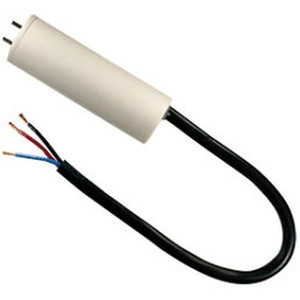
GRI WVS Water Valve Shutoff Controller
The GRI WVS is a water shutoff controller designed for automatic flood prevention in commercial and residential properties. This low-voltage device monitors water supply lines and triggers automatic shutoff upon detection of leaks or burst conditions, preventing costly water damage. The controller integrates with up to five external sensor units for comprehensive area coverage and outputs relay signals for third-party alarm or building automation integration.
Key Features
- Automatic Water Shutoff: Triggers immediate main water supply isolation when sensor detects flooding or abnormal water flow, stopping damage propagation in real time.
- Low-Voltage Design with Battery Backup: 12VDC operation at 55mA with integrated battery backup ensures shutoff capability during power loss—critical for flood prevention during storms.
- Form C Relay Output: Dual-state relay contact integrates with external monitoring panels, building management systems, and third-party alarm platforms (normally open and normally closed contacts available).
- Multi-Sensor Support: Accommodates up to five remote water-detection sensor units (2600/2600T series), enabling coverage of large floor areas, mechanical rooms, basements, and distributed water entry points.
- Visual and Audible Status Indicators: On-board LED and sounder provide immediate local alarm confirmation—operators know shutoff has activated without checking a control panel.
- Automatic Self-Test: Built-in diagnostic routine validates controller and sensor continuity on schedule, reducing false negatives from wiring faults or sensor failure.
- Operating Temperature Range: Rated 9–12°C ambient—suitable for unheated utility closets, mechanical rooms, and outdoor equipment enclosures common in flood-prone facilities.
Water damage claims represent a significant portion of commercial property losses, and many occur in unmonitored areas—basements, mechanical rooms, roof-mounted HVAC condensate lines. The WVS addresses this by automating the most effective defense: cutting off the water supply at the source before saturation occurs. Unlike passive water detection that only alerts, the WVS terminates the flood supply chain mechanically, reducing response time from hours to milliseconds.
Integration is straightforward. The Form C relay output drives standard solenoid shut-off valves, gates to existing building alarm systems, or HVAC/BMS platforms that support discrete relay inputs. The low 55mA current draw minimizes power infrastructure strain, and the 12VDC architecture allows integration with dedicated security power supplies or standard industrial UPS systems. Sensor units communicate via simple two-wire runs (no network infrastructure required), making retrofit deployment viable in older facilities without network upgrades.
Deployment across multi-building campuses or large properties benefits from the five-sensor expansion ceiling. Position primary sensors at critical water entry points (main shutoff valve, roof drains, sump pump discharge areas) and secondary sensors in satellite risk zones. The controller functions independently without cloud or internet connectivity—network outages do not compromise flood response. This makes the WVS reliable in facilities with legacy or unstable network conditions.
The one-year manufacturer warranty covers defects in materials and workmanship. Field replacement of sensor units is straightforward; the controller accepts plug-compatible 2600/2600T sensors without recalibration. Battery backup ensures continued operation during power interruption—critical in flood scenarios often accompanied by electrical grid stress.
Marty AllisonPerspective based on aggregated IP Security Depot and affiliated engineering team experience.
We've installed the GRI WVS across data centers, hospitals, and multi-tenant commercial properties where water-damage risk translates directly to operational downtime and liability exposure. The core value proposition is deceptively simple: water damage in unmonitored areas (mechanical rooms, electrical chases, basements) propagates silently for hours before discovery, and by then the losses are catastrophic. The WVS inverts the response timeline by automating the shut-off itself, not just the detection. In our experience, the difference between a 500-gallon leak and a 50,000-gallon flood is whether someone is awake at 2 AM to act on an alert. The WVS removes that human dependency entirely. The relay output also allows two-way integration: shutoff triggers your building automation event log or sends an SNMP trap to the facilities management system, so the shutdown is both visible and logged. The five-sensor expansion capacity is practical for campus-scale deployments—we've fielded configurations protecting entire mechanical floors and distributed pump stations without requiring multiple controllers.
Technical Highlights:
- 12VDC Low-Voltage Architecture with Battery Backup: The controller operates on standard 12V security-grade power with onboard battery capacity. This design eliminates the capex and maintenance burden of 24VDC or 110VAC industrial power distribution. In flood scenarios (which often occur during storms or grid events), battery backup ensures the shutoff remains operational even if facility power fails—a non-negotiable requirement for effective flood prevention.
- 55mA Operating Current: Exceptionally low draw allows daisy-chaining multiple controllers on a single security power supply (common on integrated building security platforms). This reduces wiring and infrastructure cost in retrofit projects and simplifies commissioning where power budgets are constrained.
- Form C Relay Output with Dual Contacts: The normally open (NO) and normally closed (NC) relay contacts provide flexible integration with fail-safe solenoid shut-off valves and third-party alarm inputs. If the valve is currently open and you want it to close on alarm, use the NC contact; if the valve is spring-closed and you want power-down shutdown, use the NO contact. This flexibility handles both active-close and passive-close valve designs without additional interface logic.
- Up to Five Sensor Expansion: The 2600/2600T sensor units are passive devices (no power draw at the sensor, signal runs over simple two-wire pairs). This means remote sensor coverage can extend 100+ feet without active signal conditioning. We've positioned sensors in roof drains, under-floor sumps, HVAC condensate pans, and supply-line junction boxes—any location where water pooling precedes major system damage.
- Automatic Self-Test Function: The built-in diagnostic cycle validates both controller circuitry and sensor continuity without requiring manual commissioning visits. Failed sensors or open wiring are detected and reported (via LED/sounder or relay event) before a real flood occurs. This reduces nuisance failures in production and catches installation errors during warranty period.
Deployment Considerations:
- Operating temperature is rated 9–12°C. This is a narrow band—suitable for cold mechanical rooms and unheated utility spaces (the intended environment), but not for warm server rooms or conditioned office areas. Verify ambient before mounting; if your mechanical room is climate-controlled above 12°C, you're outside the rated envelope and warranty is at risk.
- The controller triggers relay closure but does not directly drive the shut-off valve. You must integrate a solenoid shut-off valve or motorized ball valve at the main water supply inlet. Valve selection (normally open vs. normally closed, power requirements, flow capacity) is critical. A 2-inch main line shutoff may require 24VAC/24VDC and 1–2 amp draw—verify the relay can switch your chosen valve without an intermediate contactor.
- Sensor placement determines response speed and false-alarm rate. Primary sensor should be co-located with the shutoff valve or in the main supply line (via inline sensor housing); secondary sensors in high-risk areas (sump pan, roof drain collection box, HVAC drip pan). If you place the sensor in a condensate pan that experiences periodic moisture from HVAC operation, expect nuisance shutoffs during summer humidity peaks—use secondary-zone sensor placement to discriminate between continuous flooding and transient moisture.
- The two-wire sensor loop has no polarity protection noted in the datasheet. Verify correct wiring (sensor + to controller +, sensor − to controller −) during installation; reversed polarity may prevent sensor detection. This is a commissioning-time checkup, not a field repair scenario.
- Battery backup duration is not specified in the datasheet. Under normal conditions (no alarm), the 55mA steady-state draw allows 4–8 hours of backup operation on a typical 12V 1–2Ah sealed battery. In a real flood event, the solenoid valve energization may draw additional current from the backup battery; shutoff relay closure is instantaneous, but if the valve itself requires continuous energization (unlikely for solenoid shut-offs, but possible for motorized ball valves), you may exhaust backup power quickly. Verify your shut-off valve type and duty cycle with the system designer.
The GRI WVS is the right choice for facility managers, property owners, and integrators managing properties where water damage represents unacceptable operational or insurance risk. Hospitals, data centers, document archives, and multi-tenant commercial buildings benefit most—these are environments where even a few hours of downtime or data loss is unrecoverable. Integrators specifying this product should confirm shut-off valve compatibility, sensor placement against the facility layout, and battery backup sizing with the GRI technical team. For detailed integration and installation guidance, consult the product datasheet and contact the GRI product catalog.