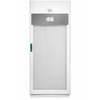
APC by Schneider Electric GVL200K500DS Galaxy VL 500 kW Three-Phase UPS
Overview
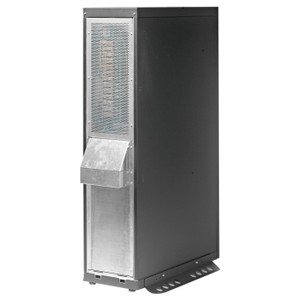
The APC by Schneider Electric GVL200K500DS is a three-phase, scalable UPS platform designed for large-scale data center, industrial, and critical facility applications where power continuity is non-negotiable. Starting at 200 kW and scaling to a full 500 kW (500 kVA), it is built to grow with your infrastructure rather than forcing a forklift upgrade when capacity requirements increase. The tower form factor keeps installation straightforward in facilities that aren't rack-dense, and active cooling ensures stable thermal management at sustained high loads.
For facilities engineers and data center architects evaluating the three-phase UPS tier, the GVL200K500DS sits in the segment where efficiency losses translate directly to operating cost. At 97.2% efficiency, losses across a 500 kW load are roughly 14 kW — that's meaningful when you're running this system around the clock, year after year. Explore the full APC by Schneider Electric power protection line for complementary PDUs, monitoring, and distribution gear.
Key Features
- Scalable 200 kW to 500 kW Capacity: Deploy at 200 kW on day one and scale to 500 kW without replacing the frame — this matters if your load projections are uncertain or phased. You pay for what you need now, and expand in place rather than staging a parallel replacement project.
- 97.2% Operating Efficiency: At 500 kW, a 97.2% efficiency rating means roughly 14 kW in losses. At an average of $0.10/kWh, that's under $12,000/year in losses — compared to older-generation double-conversion units at 94%, which shed 30 kW and cost roughly $26,000/year. The gap is significant over a 5–7 year asset lifecycle.
- Three-Phase Input and Output (380–480 V): Accepts input from 380 V up to 480 V and delivers the same range on the output side. This wide voltage window makes the GVL200K500DS compatible with both European-standard 400 V distribution and North American 480 V industrial infrastructure without transformer additions.
- Wide Input Frequency Tolerance (40–70 Hz): Accepting input frequencies from 40 to 70 Hz means the unit accommodates generator power — which often drifts outside the 47–53 Hz window during startup or under variable load — without dropping to battery unnecessarily. This is a real operational advantage during utility failover events.
- 1% Output Voltage THD: Total harmonic distortion on the output is held to 1%, delivering near-sinusoidal power to sensitive downstream loads. Servers, storage arrays, and precision instruments are sensitive to harmonic distortion; 1% THD is well within the tolerances of virtually any commercial IT or industrial equipment.
- 5% Input Current THD: Keeping input current THD at 5% reduces stress on upstream distribution infrastructure and helps facilities stay within IEEE 519 harmonic limits — a requirement in many utility service agreements and an increasing focus in new data center commissioning checklists.
- 2.5:1 Crest Factor Handling: A 2.5:1 crest factor rating means the UPS handles loads with high peak-to-RMS current ratios without clipping or derating. Switch-mode power supplies — which dominate modern IT loads — regularly produce crest factors in the 2–3:1 range. This spec confirms the GVL200K500DS won't underperform under a realistic mixed server/storage load.
- 384 V Battery Architecture: The 384 V battery string voltage is typical of high-capacity UPS platforms and supports extended runtime configurations through additional battery enclosures. This architecture also reduces battery string current at a given power level, which extends battery service life and lowers heat generation in the battery space.
- Overload and Short Circuit Protection: Factory-integrated overload and short circuit protection reduces the protective device count needed downstream and ensures the UPS itself survives fault events on the load side without requiring manual intervention to restore normal operation.
- Active Cooling: Active (fan-driven) cooling maintains internal temperatures under sustained high-load conditions. In a tower form factor running at 500 kW, passive cooling is not viable — active cooling is the correct architecture and confirms this unit is spec'd for continuous-duty operation, not intermittent peak loads.
Integration and Compatibility
The GVL200K500DS supports three-phase input and output at standard commercial and industrial voltage levels (380–480 V), positioning it for compatibility with enterprise power distribution infrastructure across North American and international deployments. The 40–70 Hz input frequency range accommodates diesel generator sets as a primary alternate source, which is a baseline requirement for Tier III and Tier IV data center designs. For facilities planning a complete power chain, pair this UPS with compatible APC Galaxy distribution and monitoring equipment for end-to-end visibility. Consult your facility's single-line diagram to confirm upstream breaker sizing against the unit's inrush and steady-state current draw at your chosen deployment voltage.
For large-scale deployments where redundancy architecture matters — N+1, 2N, or distributed UPS topologies — the scalable capacity model of the GVL200K500DS means you can right-size each module at commissioning and expand as load grows, rather than overprovisioning at installation. Review our UPS selection guide for a practical breakdown of capacity planning, redundancy tiers, and runtime calculation methodology.
Frequently Asked Questions
Q: What is the scalable power range of the GVL200K500DS?
A: The GVL200K500DS is field-scalable from 200 kW up to its maximum rated capacity of 500 kW (500 kVA). This allows phased deployment — you install the full frame initially and activate additional capacity as your load grows, avoiding a full system replacement when requirements increase.
Q: What input voltage range does the GVL200K500DS support?
A: The unit accepts three-phase AC input from 380 V to 480 V, covering both standard European 400 V and North American 480 V industrial distribution without requiring input transformers. Input frequency range is 40 to 70 Hz, which accommodates typical generator output variation during startup and load transitions.
Q: What is the efficiency rating of the GVL200K500DS and why does it matter?
A: The GVL200K500DS is rated at 97.2% efficiency. At full 500 kW load, this translates to approximately 14 kW in losses — significantly lower than older-generation double-conversion UPS designs. Over a multi-year operating period, this efficiency difference produces measurable reductions in electricity cost and cooling load in the UPS room.
Q: Does the GVL200K500DS protect against overload and short circuit events?
A: Yes. The GVL200K500DS includes integrated overload and short circuit protection, reducing the number of additional protective devices needed downstream and ensuring the UPS can survive and recover from fault conditions on the load side.
Q: What form factor is the GVL200K500DS and what cooling method does it use?
A: The GVL200K500DS is a tower-form UPS with active (fan-driven) cooling. Active cooling is required at this power level to maintain safe operating temperatures under continuous high-load conditions. The tower configuration suits facilities with floor space available rather than high-density rack environments.
Q: What is the output voltage THD of the GVL200K500DS?
A: Output voltage total harmonic distortion is rated at 1%, delivering near-sinusoidal power to connected loads. This is well within the tolerance of commercial IT equipment and precision industrial loads, and reduces the risk of harmonic-related failures in sensitive downstream systems.
The spec I keep coming back to on the GVL200K500DS is the 97.2% efficiency figure — at 500 kW continuous, that's roughly 14 kW of losses, which translates directly to reduced cooling demand in the UPS room and lower operating costs over the asset's life. If you're sizing a new UPS room or retrofitting an existing one, that 14 kW versus the 30 kW you'd shed with a 94%-efficient predecessor isn't a footnote — it's a meaningful reduction in HVAC tonnage and a real line item on the annual P&L.
Technical Highlights:
- 97.2% Efficiency at Load: Approximately 14 kW in losses at 500 kW — cuts both electricity cost and UPS room cooling requirements versus older double-conversion platforms.
- 40–70 Hz Input Frequency Tolerance: The GVL200K500DS won't unnecessarily transfer to battery when a diesel generator wobbles outside 50/60 Hz during start sequence — a common nuisance failure mode on tighter-tolerance UPS platforms.
- 1% Output Voltage THD: Near-sinusoidal output at 1% THD covers the tolerance requirements of virtually all commercial IT loads; you won't need supplemental line conditioning downstream for standard server and storage equipment.
Deployment Considerations:
- The 384 V battery architecture supports extended runtime via additional battery enclosures, but confirm battery room floor loading and ventilation before specifying runtime beyond the base configuration — at this UPS scale, battery weights add up quickly.
- The GVL200K500DS is a tower unit, not a rack-mount — verify you have the floor footprint and ceiling clearance required before ordering; retrofitting into an existing rack-dense environment will require a dedicated floor zone or a separate UPS room.
The GVL200K500DS is a well-matched platform for Tier III colocation facilities and large enterprise data centers commissioning in the 200–500 kW range, where the scalability model avoids overprovisioning at initial build-out and the 97.2% efficiency makes a defensible case to facilities management on operating cost grounds.