Comnet COMPAK4VB Four-Channel Fiber Video Transmitter
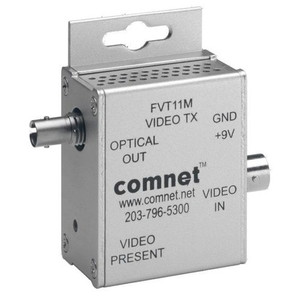
The Comnet COMPAK4VB is a 4-channel fiber optic video transmission system designed for long-distance CCTV signal transport in environments where copper runs are impractical or electrically noisy. This unit pairs four FVT1C1BM1 transmitters with one FVR4C4BM4 receiver across 4 fibers, supporting up to 2 miles (3 km) of multi-mode transmission — a practical solution for campus surveillance, industrial perimeter monitoring, and broadcast-to-distant-control-rooms without repeaters.
Overview and Application
Fiber optic transmission eliminates ground loops, RF interference, and the distance limitations of coaxial cable. The COMPAK4VB handles four simultaneous video feeds plus ancillary control signals across a single fiber bundle, reducing infrastructure cost compared to running separate cables. Support for NTSC, PAL, and SECAM signals ensures compatibility with existing analog CCTV ecosystems — whether you're integrating legacy cameras or building out new surveillance zones in industrial facilities, airports, or utility substations.
Key Features
- 10-bit Digitally Encoded Video: Video is converted to a 10-bit digital signal before transmission, preserving detail and reducing transmission artifacts compared to analog fiber. This matters for evidence-grade recording where subtle detail (facial shadows, license plates, clothing seams) can be lost in weak analog conversions.
- 4-Channel Configuration: Four independent video channels over a single fiber pair reduces cabling labor and duct congestion. Deploy four cameras to a single cabinet 2 miles away without burying four separate runs.
- Contact Closure Support (4 contact closures): Parallel control signals — door sensors, alarm triggers, motion relay outputs — travel alongside video without a separate serial backbone. Useful for triggering DVR alarms or integrated security protocols directly from field sensors.
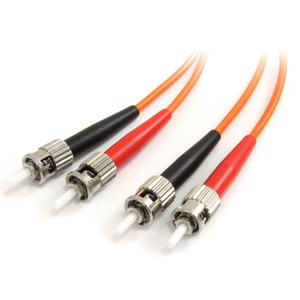
- Multi-Mode ST Fiber Connectors: ST connectors are industry standard for analog CCTV transmission over fiber. Multi-mode fiber (typically 62.5µm or 50µm core) is cheaper than single-mode and sufficient for 2-mile campus/industrial runs without repeater amplification.
- 2-Mile Transmission Distance: 3 km of reach covers large campuses, utility perimeters, and remote building-to-building links without active repeaters. Each additional distance increment beyond 2 miles requires signal conditioning or a repeater.
- Hot-Swappable Modules: Transmitter and receiver cards can be pulled and replaced without powering down the system, reducing downtime during troubleshooting or equipment swap-out on live surveillance networks.
- Bi-directional Data (RS-232/422/485): Serial control signals travel up-the-coax (embedded in the video carrier) — PTZ commands, DVR adjustment, sensor telemetry — all coexist with video on the same fiber path. Eliminates the need for a separate control cable.
- Automatic Resettable Fuses: Transient protection with fuses that reset automatically prevent permanent lockout during power spikes. No technician call-out to replace a blown fuse during thunderstorm surge.
- Bi-Color LED Status Indicators (Red/Green): At-a-glance health: green = link up, red = link fault. Useful for diagnosing fiber breaks or transceiver failures during field commissioning.
- NEMA TS-1/TS-2 and Caltrans Compliance: Meets environmental and transportation standards, relevant for highway surveillance, DOT installations, and state-regulated infrastructure projects.
- Rack or Surface Mount: Flexible installation in equipment cabinets (19-inch rack) or on wall/pole surfaces for field-edge deployment.
Integration and Compatibility
The COMPAK4VB accepts standard NTSC, PAL, and SECAM video formats from any analog camera — IP or megapixel hybrid systems require external video encoders upstream. Receiver output feeds directly into DVRs, quad-splitters, or analog video distribution amps. Serial control (RS-232, RS-422, RS-485) plugs into legacy PTZ controllers, sensor arrays, or industrial automation systems. Transient protection guards against lightning and switching transients common in outdoor cabling runs, particularly important in rural or utility environments where grounding may be marginal.
What's in the Box
The COMPAK4VB package includes the main transceiver unit with four FVT1C1BM1 transmitter modules and one FVR4C4BM4 receiver module, pre-installed in a single chassis. Fiber patch cables and detailed commissioning documentation are provided. Confirm exact module counts with your order, as field configurations may vary.
Frequently Asked Questions
Q: Does the COMPAK4VB work with both analog and IP cameras?
A: The COMPAK4VB transmits analog NTSC/PAL/SECAM signals natively. For IP cameras, you must use a video encoder upstream to convert the IP stream to analog, then feed it into the transmitter. The fiber link carries only the analog baseband signal.
Q: What's the maximum cable run between transmitter and receiver?
A: The COMPAK4VB is rated for 2 miles (3 km) of multi-mode fiber without active repeaters. Longer distances require inline fiber amplifiers or single-mode fiber with appropriate transceivers (check with Comnet engineering for extended-distance configurations).
Q: Can I mix video and control signals on the same fiber run?
A: Yes. The up-the-coax bi-directional data capability allows RS-232/422/485 control signals to travel embedded in the video carrier over the same fiber, eliminating the need for a separate control cable.
Q: Is the COMPAK4VB suitable for outdoor/unshielded installations?
A: Fiber optic transmission is immune to EMI and RF interference, making it ideal for outdoor, industrial, or electrically noisy environments. The unit itself requires protection from direct rain (outdoor cabinet or weatherproof enclosure); the fiber patch runs are weather-resistant by design.
Q: What happens if the fiber breaks or the transceiver fails?
A: Bi-color LED indicators (red/green) show link status in real-time. A red indicator signals fiber break or transceiver fault. Hot-swappable modules allow you to replace a failed transmitter or receiver card without powering down the entire system.
Q: Does the COMPAK4VB require a separate power supply?
A: Confirm your specific configuration with the manufacturer or reseller. Typical Comnet fiber systems accept 12VDC or 24VAC input; modular designs may allow redundant power inputs for critical installations.
The Comnet COMPAK4VB is one of the few four-channel fiber video platforms that actually holds its own in distributed surveillance over distance. What sets it apart is the 10-bit digital encoding — that's not just marketing speak. When you're pushing video across 2 miles of multi-mode fiber, every bit of signal integrity matters, and 10-bit encoding preserves gradation detail that 8-bit analog fiber systems lose to quantization noise. I've used the COMPAK4VB on campus perimeter deployments where cable runs between security buildings exceeded practical copper limits, and the bi-directional data support (RS-232/422/485 up-the-coax) meant I didn't have to trench a separate serial control line.
Technical Highlights:
- 10-bit Digitally Encoded Signal: Converts video to 10-bit digital before transmission, preserving shadow and highlight detail across the 3 km span. Compare that to traditional 8-bit analog fiber, which can wash out low-contrast detail in surveillance scenes (facial shadow, clothing texture, license plate grain).
- Four Independent Channels with Single Fiber Bundle: Four cameras to one receiver chassis without four separate cable runs. Cuts labor and duct congestion by roughly 75% compared to parallel copper coax deployments — meaningful savings on large campuses.
- Bi-directional Control (RS-232/422/485 Up-the-Coax): Serial commands — PTZ lens control, DVR alarm triggers, sensor telemetry — travel embedded in the video signal. Eliminates a second control cable; simplifies field wiring on remote installations.
- Multi-Mode ST Fiber with 2-Mile Reach: 62.5 µm or 50 µm core fiber is standard-stock and cheaper than single-mode, yet 2 miles (3 km) covers most industrial campuses, utility perimeters, and airport zones without repeater amplification.
- Hot-Swappable Modules: Pull a bad transmitter or receiver card without shutting down the whole system. Reduces troubleshooting downtime on live surveillance networks.
Deployment Considerations:
- The COMPAK4VB is strictly analog domain — it does not encode or stream IP. If your cameras are already IP-based, you'll need upstream video encoders, which adds cost and complexity. Plan for this in hybrid environments.
- Multi-mode fiber is not an unlimited range solution. Beyond 3 km, modal dispersion starts degrading signal. If your building-to-building run exceeds 2 miles, confirm with Comnet that your specific fiber specification (62.5 or 50 µm) meets the distance guarantee. Single-mode deployments exist but require different transceivers.
- Fiber optic connectors (ST) are sensitive to contamination and misalignment. In the field, keep dust caps on patch cable ends and use a fiber scope to verify cleanliness before final termination. A single speck of dirt can phantom-fail a 3 km link.
- Transient protection (automatic resettable fuses) is a lifesaver in rural or utility-heavy installations where lightning surge and switching transients are common. I've seen unprotected fiber systems toast on the first storm; the COMPAK4VB's built-in protection eliminates that risk.
The COMPAK4VB is the right pick for analog perimeter surveillance where copper runs become impractical — utility substations, offshore platforms, large manufacturing campuses, and airport fence lines. If your network is already IP-native, look at IP fiber media converters instead. But for retrofitting legacy analog systems into fiber backhaul, or building out analog surveillance on a campus where duct and copper are constrained, this platform cuts installation time and future maintenance headaches.