
Duct Detectors
Showing Results for Duct Detectors
-
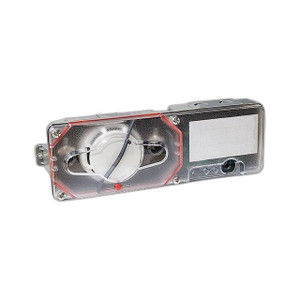
Potter
SKU: PAD200-DUCT
Potter PAD200-DUCT Analog Addressable Duct Detector
Analog addressable duct detector for HVAC smoke monitoring
- Analog addressable loop reports exact detector address and live smoke levels to the panel.
- UL 268 and UL 521 listed; UUKL listed for smoke control system integration.
- Operates on 24 VDC across 32°F–120°F ambient range for standard commercial HVAC installs.
$332.55 $208.99 Save $123.56 -

Potter
SKU: PAD200-DUCTR
Potter PAD200-DUCTR Analog Addressable Duct Detector
Analog addressable duct detector for HVAC smoke monitoring
- Analog addressable output streams continuous smoke-level data directly to the control panel.
- Eliminates auxiliary relay modules by integrating natively with addressable fire alarm wiring.
- UUKL Listed for Smoke Control; rated for ambient temps 32°F–120°F with a 5-year warranty.
$496.00 $313.99 Save $182.01 -
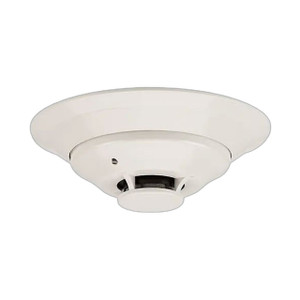
System Sensor
SKU: 2D51
System Sensor 2D51 InnovairFlex Intelligent Plug-In Duct Detector
Addressable duct smoke detector for HVAC air handling systems
- Addressable communication enables precise device identification on intelligent fire alarm networks.
- Operates at 29VDC across a wide -4°F to 158°F range, supporting demanding HVAC environments.
- Compact 14.38×5×2.5 in plug-in form factor mounts to a standard 4-inch square box, 1.5 in min depth.
$153.99 -

System Sensor
SKU: D2
System Sensor D2 2-Wire Photoelectric Duct Smoke Detector
Photoelectric duct detector, 2-wire conventional, 29VDC for HVAC systems
- Photoelectric sensing reliably detects smoldering fires in HVAC ductwork.
- 2-wire circuit cuts conduit runs—power and signaling share one wire pair.
- 29VDC operation integrates with legacy and modern panels without added modules.
$303.00 $156.99 Save $146.01 -
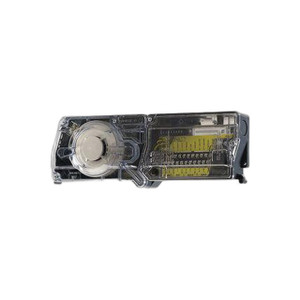
System Sensor
SKU: D4120
System Sensor D4120 4-Wire Photoelectric Duct Smoke Detector
4-wire photoelectric duct detector, 24 VDC, direct mount to HVAC
- Photoelectric sensing targets smoldering-fire smoke particles before spread through HVAC zones.
- 4-wire, 24 VDC design integrates with conventional and addressable fire alarm control panels.
- IP66-rated housing mounts directly into standard ductwork at 14.38 × 5 × 2.5 in footprint.
$375.14 $235.99 Save $139.15 -

System Sensor
SKU: D4120W
System Sensor D4120W 4-Wire Watertight Duct Smoke Detector
4-wire duct detector with NEMA 4 watertight housing for humid HVAC environments
- NEMA 4 watertight enclosure blocks moisture and dust, preventing false alarms in high-humidity ductwork.
- Separate 4-wire alarm and supervisory circuits let HVAC shutdown logic run independently from audible alarms.
- 29VDC hardwired operation integrates directly into conventional fire alarm panels—no protocol converters needed.
$505.70 $315.99 Save $189.71 -

System Sensor
SKU: D4240
System Sensor D4240 4-Wire Duct Smoke Detector 120VAC
4-wire duct smoke detector for supply/return air HVAC monitoring
- 4-wire supervised wiring supports alarm, trouble, and reset on conventional or addressable panels.
- Runs on 120VAC, eliminating the need for a separate low-voltage power supply in HVAC installations.
- Compact 14.38" x 5" x 2.5" housing fits standard supply or return air duct cutouts without modification.
$327.19 $205.99 Save $121.20 -

System Sensor
SKU: D4P120
System Sensor D4P120 Duct Detector Power Board Component
TCP/IP duct detector power board, 29VDC output for System Sensor assemblies
- Supplies regulated 29VDC to photoelectric sensor heads in D4120 duct detector assemblies.
- Operates across –4°F to 158°F, supporting installations in harsh mechanical environments.
- ¾-inch conduit knockout and terminal-block wiring simplify 4-wire field connections.
$251.77 $156.99 Save $94.78 -

System Sensor
SKU: D4S
System Sensor D4S 4-Wire Duct Smoke Detector
4-Wire duct smoke detector with TCP/IP network connectivity for HVAC monitoring
- Operates at 29VDC, matching standard fire alarm panel power supplies with no external converter.
- TCP/IP connectivity enables real-time network alerts alongside hardwired 4-wire panel signaling.
- Rated for –20 to 70°C operation, supporting reliable HVAC duct deployment across harsh environments.
$245.29 $151.99 Save $93.30 -

System Sensor
SKU: DH400OE-1
System Sensor DH400OE-1 Weatherproof Outdoor Duct Detector Enclosure
Sealed outdoor duct detector enclosure for rooftop HVAC smoke detection
- Weatherproof sealed housing blocks rain, snow, dust, and UV for outdoor HVAC installs.
- Compact 14.38 × 5 × 2.5 in footprint fits wall, ceiling, or rack mounting on rooftop ducts.
- Operates at 29 VDC with no gateway hardware needed for standard fire alarm integration.
$618.14 $389.99 Save $228.15 -

System Sensor
SKU: RTS2
System Sensor RTS2 Duct Detector Remote Test Station
Remote test station for System Sensor duct detectors, 29VDC operation
- 29VDC operation integrates directly into existing fire alarm panel wiring—no added PSU.
- Multi-signaling compatibility ensures reliable communication with current-generation FACP panels.
- Compact 14.38×5×2.5 in, 2.5 lb form factor mounts on walls, ceilings, or in tight spaces.
$197.17 $122.99 Save $74.18

Duct Detectors
Duct-mounted smoke detectors for HVAC air handling system monitoring. Sampling tube assemblies draw air from duct cross-sections to detect smoke migration through ventilation systems, triggering fan shutdown and fire alarm notification per NFPA 90A requirements.
Plan Your Deployment
- Size sampling tube length to match duct cross-section dimensions
- Confirm detector sensitivity settings for duct airflow velocity range
- Plan remote test and reset station location for accessible maintenance
- Specify relay output wiring for AHU fan shutdown on alarm condition
- Verify installation meets NFPA 90A and local mechanical code for duct detection
Duct Detectors — Engineering-Grade Fire Detection for Commercial Deployments
This category covers 0 working models of duct detectors sourced manufacturer-direct or through channel-direct US distribution. Build the rest of your system around the architectural choices below — compatibility, environmental rating, and lifecycle decisions made here propagate through every downstream component you specify.
What to Look For
Addressable versus conventional architecture is the first decision. Conventional systems group detectors into zones; addressable systems identify the exact device that triggered. For buildings above 10,000 sq ft or with more than 20 detectors, addressable saves substantial diagnostic time and meets most modern code requirements. Conventional panels remain economical for small commercial buildings and retrofits where new wiring isn't feasible.
UL 864 listing is non-negotiable for the panel; UL 268 for smoke detectors, UL 521 for heat detectors. The AHJ will reject anything else. Beyond UL, look for FM Approval and CSFM (California) listings — many jurisdictions accept only those. Confirm panel-to-detector compatibility within the manufacturer's listed combinations; mixing brands across UL listings voids the panel's certification.
Notification appliance circuit (NAC) capacity, voltage drop, and battery backup sizing drive panel sizing more than detector count does. ADA-compliant strobes draw 75-175 mA each — a 50-strobe building exceeds many small NAC ratings. Calculate total NAC load with voltage-drop budget for the longest run, and size standby battery for 24 hours plus 5 minutes alarm per NFPA 72.
Central station communication, networked panel federation, and graphical workstations matter most in multi-building campuses. Single-building panels typically dial a central station via cellular and IP; multi-building campuses run proprietary peer-to-peer networks (Notifier NFN, Siemens FN-2127, Edwards SIGA) with master annunciation. Plan the integration topology before ordering panels — head-end choice affects which compatible peripherals you can deploy.
Frequently Asked Questions
Do I need an addressable or conventional fire alarm panel?
Addressable panels identify the specific detector in alarm; conventional panels identify only the zone. NFPA 72 and most local codes require addressable for buildings above certain occupancy or square-footage thresholds, but the practical break-even is around 20-30 detectors. Above that count, addressable saves diagnostic and maintenance time. Below it, conventional is often the budget-friendly choice.
What's the difference between photoelectric and ionization smoke detectors?
Photoelectric detectors respond fastest to smoldering fires (cigarettes, electrical wiring); ionization detectors respond fastest to flaming fires (paper, kitchen). Modern dual-sensor detectors include both technologies and meet UL 268 7th edition requirements. Most jurisdictions now require dual-sensor or photoelectric for new commercial installations. Ionization-only is being phased out due to nuisance-alarm performance in cooking and shower-steam scenarios.
How often must fire alarm systems be inspected?
NFPA 72 requires annual inspection and testing of the entire system, semiannual battery testing, and monthly visual inspection of the panel. Local AHJ requirements often mandate documentation and a service contract with a licensed contractor. The owner-of-record bears legal responsibility for inspections — missing an annual inspection exposes the owner to fines and insurance claim denial.
Do I need a duct smoke detector?
Yes if the HVAC system exceeds 2,000 CFM (commercial threshold) — code requires duct smoke detectors that shut down the HVAC to prevent smoke distribution during a fire. Confirm CFM rating against local code thresholds; many jurisdictions require duct detection on smaller systems serving multiple-occupancy buildings. Duct detectors must report to the building's fire alarm panel.
What battery backup is required for fire panels?
NFPA 72 requires 24 hours of standby operation plus 5 minutes in full alarm. Calculate panel current draw under both conditions, then specify a battery with adequate Ah capacity. Lead-acid batteries lose capacity in cold environments — derate by 20% for unconditioned spaces. Replace batteries every 4-5 years even if they test good; failure rates climb steeply after year 5.
Need help choosing? Talk to a Senior Specialist — direct line 877-277-7147 or request a quote.