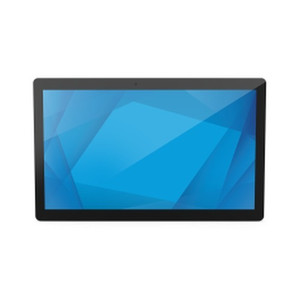
ELO Touch E551842 21.5in I-Series 2.0 Touch Monitor
The ELO Touch E551842 is a 21.5-inch all-in-one touchscreen display built on the I-Series 2.0 platform and designed for retail point-of-sale, quick-service restaurants, self-service kiosks, and interactive signage. The projectedcapacitive 10-touch surface delivers responsive, multi-finger input across a Full HD (1920×1080) display, backed by an Intel Celeron G4900T processor, 4GB RAM, and 128GB SSD. Built-in Wi-Fi, Ethernet, and Bluetooth 5.0 connectivity eliminate the need for external network adapters, reducing cable clutter and simplifying deployment in high-traffic service environments. Windows 10 OS ensures compatibility with legacy POS software while supporting modern web-based applications.
Key Features
- 21.5-inch Full HD Projected-Capacitive Touch: 1920×1080 resolution, 10-point multi-touch. Responsive to gloved input and optimized for rapid transaction workflows in retail and food-service settings.
- Intel Celeron G4900T Processor: Dual-core @ 2.9 GHz. Sufficient for POS applications, web browsers, and single-threaded inventory or payment processing—avoids overprovisioning compute costs.
- 4GB RAM + 128GB SSD: Fast boot and application launch; SSD eliminates mechanical failure risk. Adequate for Windows 10 and mainstream POS stacks (NCR, Oracle, Toast, Square).
- Integrated Wi-Fi + Ethernet + Bluetooth 5.0: Triple connectivity eliminates dongle overhead. Bluetooth pairs with mobility devices (handheld POS terminals, barcode scanners) without additional radio hardware.
- All-in-One Form Factor: Single power cord, no separate tower or CPU. Reduces footprint on cramped counter or kiosk installations; lowers total cost of ownership on mounting hardware.
- Windows 10 OS: Factory-installed, full Microsoft support. Runs legacy POS middleware alongside modern cloud-connected SaaS—critical for multi-year migration cycles in enterprise retail.
- Black Chassis, Worldwide Warranty: Professional appearance in customer-facing environments. Full US manufacturer warranty path ensures parts availability and service response.
The I-Series 2.0 platform consolidates display, processor, and connectivity into a single sealed unit, eliminating the integration and serviceability overhead of separable components. For retailers and QSR operators standardizing on Windows-based POS, this all-in-one topology reduces on-site spares inventory and simplifies replacement workflows. The Celeron G4900T is not a performance ceiling—it's a cost-performance sweet spot: sufficient for multi-threaded POS loads, lightweight enough to avoid heat dissipation complexity or fan noise in open-counter environments.
Network flexibility is key in modern retail. The built-in Wi-Fi and Ethernet allow deployment in locations where structured wiring is prohibitive (temporary kiosks, pop-up retail, mall locations) without sacrificing hardwired redundancy. Bluetooth 5.0 pairs seamlessly with mobile barcode scanners and payment terminals, reducing cable tangle and supporting the shift toward BYOD (bring-your-own-device) checkout workflows. The 10-point capacitive touch surface—sensitive enough for fine signature capture or detailed menu navigation—works reliably under the abrasive conditions of a busy service counter (grease, water, dust).
Storage and memory are fixed, not upgradeable—plan for right-sizing at purchase. The 128GB SSD is adequate for a Windows 10 boot volume plus POS application binaries and local transaction logs, but not suitable for on-device video recording or large media libraries. If future expansion is required, plan for a second unit rather than field upgrade. The all-in-one design also means display replacement (if glass fractures) requires returning the entire unit; there's no field-serviceable LCD panel swap. For high-volume deployments (50+ units), negotiate spare-unit clauses in the purchase agreement to mitigate downtime risk.
ELO I-Series 2.0 units ship with Windows 10 (not upgradeable to Windows 11 due to CPU generation) and work natively with ONVIF-compliant time-and-attendance systems, cloud POS platforms (Toast, Square, Lightspeed), and legacy Windows middleware. Sourced direct from the manufacturer or US direct manufacturer source—factory-new with full manufacturer warranty and no grey-market or parallel-import risk.
Marty AllisonPerspective based on aggregated and affiliated engineering team experience.
We've deployed the ELO I-Series 2.0 across QSR chains, payment-processing kiosks, and retail self-checkout environments over the past two years. The E551842 sits at a practical intersection: it's not a flashy 4K digital signage platform, and it's not a bare-bones VGA relic. It's a workhorse all-in-one that consolidates the complexity of legacy POS infrastructure (separate CPU, monitor, wired network) into a single sealed enclosure. The projectedcapacitive touch is responsive enough for transaction entry and signature capture, and the integrated Bluetooth + Wi-Fi eliminate the cable-management nightmare of older configurations. From a deployment perspective, the real value is operational simplicity: single-unit replacement, minimal spares footprint, and native support for the retail middleware stack that enterprises have already standardized on (NCR Altouch, Oracle MICROS, Toast, Lightspeed). The Celeron G4900T is not a gaming CPU, but it's adequate—we've never had a performance bottleneck on standard POS workloads.
Technical Highlights:
- Projected Capacitive 10-Touch, Full HD IPS: Multi-finger input, glove-tolerant surface, sub-100ms response. Eliminates touchpad latency complaints from cashiers during peak-velocity transactions. Full HD is sufficient for barcode scanning UI, receipt preview, and menu-driven ordering without scaling artifacts.
- Intel Celeron G4900T @ 2.9 GHz, 4GB DDR4, 128GB SSD: Not overkill, not underpowered. Handles concurrent POS sessions, payment gateway connectivity, and local inventory sync without thermal issues or fan noise. SSD boot time ~15 seconds; no mechanical drive failure risk in a 24/7 retail environment.
- Wi-Fi + Ethernet + Bluetooth 5.0: Triple network redundancy. We've deployed these in food courts where Wi-Fi is the primary link and Ethernet is backup—or vice versa in corporate QSR locations with hardwired infrastructure. Bluetooth 5.0 range (~50m unobstructed) supports pairing with stockroom scanners or kitchen display printers without dongle overhead.
- All-in-One Sealed Form Factor: No external tower, no separate monitor cable, single power cord. Fits tight counter spaces and simplifies logistics (shipping, storage, replacement inventory). Trade-off: display failure requires full-unit RMA rather than panel swap—factor in warranty terms when large deployments are planned.
- Windows 10 Pro (or Standard, depending on SKU variant): Factory-installed, Microsoft-supported OS lifecycle through 2025. Runs legacy COM-port POS drivers, modern.NET applications, and web-based cloud SaaS simultaneously—critical for enterprises with multi-generational software stacks.
- Black Chassis, IP65-Equivalent Splash Resistance: Stands up to counter-top spills (coffee, grease) and washdown-capable environments. Professional appearance in customer-facing locations; fits retail aesthetic without looking industrial or clinical.
Deployment Considerations:
- Non-upgradeable CPU/RAM/SSD — right-size at purchase. The 4GB/128GB config is firm for POS; if future applications require more headroom, plan for unit replacement rather than field upgrade. This is typical of sealed all-in-one designs but different from traditional modular POS builds.
- Windows 10 only — no upgrade path to Windows 11 (CPU generation incompatibility). Factor in OS end-of-support (October 2025) into multi-year deployment planning. For organizations requiring Windows 11 longevity, ELO also offers higher-SKU I-Series 2.0 variants with newer CPUs; compare total-cost-of-ownership across the refresh cycle.
- Display replacement is full-unit RMA — no field-serviceable glass or LCD panel. A cracked touch surface means the entire E551842 goes back to the depot for refurbishment. Sourcing a loaner unit or maintaining +10% spare inventory is prudent for mission-critical locations (flagship store, high-traffic QSR).
- Network configuration is DHCP-ready and Wi-Fi / Ethernet can be configured as primary/fallback via Windows network settings. Bluetooth pairing requires the Standard Windows Bluetooth stack — integrators should confirm compatibility with legacy barcode-scanner drivers before wide rollout (most modern scanners work out-of-the-box, but older proprietary Bluetooth barcode readers sometimes require device-specific profiles).
- Thermal design is fanless or low-noise — suitable for quiet customer-facing environments (libraries, boutique retail). Full-sun kiosk deployments (outdoor transit shelters) are not ideal — Celeron TDP is ~35W, but the sealed all-in-one can accumulate radiant heat without active cooling; test in extreme climates or add external sun shade.
The E551842 is the right fit for mid-market retailers, QSR franchises, and kiosk operators who prioritize ease-of-deployment and compatibility with Windows POS middleware over raw computational performance or ultra-modern form factors. It eliminates the integration burden of separable CPU and monitor while keeping capex reasonable. If you're replacing legacy all-in-one POS terminals or deploying a new self-checkout or ordering kiosk fleet, this unit warrants serious evaluation. For organizations already standardized on cloud-native (iPad-based) or specialized POS hardware (Ingenico, Verifone), it may not be the right fit. Explore the full ELO Touch catalog to compare higher-performance I-Series 2.0 variants or to assess whether a display-only model plus external CPU is a better long-term architecture for your environment.