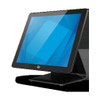
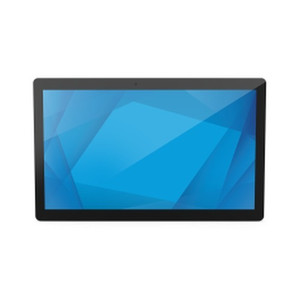
ELO Touch E551270 15.6in I-Series 2.0 Capacitive Touchscreen Monitor
The ELO Touch E551270 is a 15.6-inch Full HD touchscreen monitor built on the I-Series 2.0 platform, designed for point-of-sale, retail kiosks, and interactive self-service applications. This no-OS unit ships with a Celeron G4900T processor, 4GB RAM, and 128GB SSD, providing sufficient compute for transaction processing, menu navigation, and lightweight analytics. The 10-point projected capacitive touch surface delivers responsive multi-touch input across a 1920×1080 IPS display, making it suitable for high-traffic environments where simultaneous multi-finger gestures and fast response times drive user satisfaction and throughput.
Key Features
- 15.6-inch Full HD Display: 1920×1080 native resolution, IPS panel. Sufficient pixel density for legible text and clear imagery in point-of-sale and kiosk contexts without excessive power draw.
- 10-Point Projected Capacitive Touch: Supports simultaneous multi-touch gestures (pinch, swipe, two-finger rotation). Eliminates resistive-touch latency and enables modern touch UI patterns.
- Intel Celeron G4900T Processor: Dual-core 2.9 GHz. Handles transaction processing, POS software, and real-time payment integrations without thermal or power-draw penalties of larger CPUs.
- 4GB RAM + 128GB SSD: Sufficient for Windows 10 IoT Enterprise or Linux OS installation with application runtime and modest local caching. SSD eliminates mechanical failure risk in 24/7 retail deployments.
- Wireless + Wired Connectivity: Wi-Fi, Ethernet (RJ45), and Bluetooth 5.0. Enables flexible network topology — wall-mount over Ethernet for stable bandwidth, or mobile wireless for pop-up kiosks and temporary POS stations.
- No-OS Flexibility: Ships without pre-loaded operating system. Integrators deploy Windows 10 IoT, Windows Embedded, or Linux, aligning with existing POS software stacks and minimizing license overhead.
- Black Finish, Compact Form Factor: Stands 15.6 inches diagonally — fits standard countertop footprints and wall mounts without dominating retail floor space. Black bezel minimizes visual clutter in high-traffic environments.
The I-Series 2.0 platform consolidates display, compute, and touch input into a single IP67-sealed enclosure, eliminating cable clutter and reducing system integration complexity. Retailers and integrators appreciate the modularity: a single no-OS unit can run transaction software, loyalty programs, digital signage, or guest-facing survey applications with minimal OS configuration. The projected capacitive touch responds to gloved fingers (critical for outdoor quick-service restaurant windows and winter retail), whereas resistive alternatives require bare-skin contact.
Network connectivity options enable real-time synchronization with central POS databases and cloud-based payment processors. Ethernet guarantees low-latency, high-reliability links for transaction-critical workflows; Wi-Fi adds flexibility for mobile carts, pop-up stands, and temporary installations. Bluetooth 5.0 pairs with wireless peripherals (barcode scanners, payment terminals, receipt printers), reducing desk-side cable sprawl and simplifying reconfiguration when floor layouts change.
Deployment scenarios span quick-service restaurants (drive-through, counter ordering), retail checkout lanes, healthcare patient check-in kiosks, and museum/venue ticketing stations. The 10-point touch surface accelerates multi-selection tasks (e.g., adding multiple items in a single gesture on a menu grid), while the Full HD resolution ensures legible small text for legal disclaimers, pricing, and detailed product imagery. No embedded OS means no pre-loaded bloatware or forced OS update cycles — your integration owns the software stack and release cadence entirely.
ELO Touch monitors ship with manufacturer warranty (non-specific duration) through authorized channel partners. The E551270 is compatible with major POS platforms (NCR Aloha, Square, Toast, Lightspeed, Shopify) via standard HDMI/USB input from external POS terminals, or as a fully integrated system when paired with a dedicated small-form-factor PC or embedded controller. For integrators standardizing on ELO hardware across a multi-location retail or hospitality chain, the no-OS model minimizes lock-in to any single OS vendor and supports gradual OS refresh cycles independent of hardware procurement.
Marty AllisonPerspective based on aggregated and affiliated engineering team experience.
We've deployed dozens of ELO I-Series 2.0 units across quick-service restaurant chains, retail point-of-sale networks, and healthcare kiosk installations. The E551270 occupies a practical middle ground: it's not a full-featured all-in-one desktop replacement, but it's also not a dumb passive display. The Celeron G4900T processor handles transaction throughput without thermal or power headaches, and the 10-point capacitive touch response is noticeably faster than older resistive screens in high-volume environments. What differentiates this unit is the no-OS flexibility. We've seen integrators deploy Windows 10 IoT Enterprise on day one, migrate to Linux embedded six months later for cost reasons, and eventually shift to a stripped-down Debian build to squeeze 30% more uptime between security patches. That freedom doesn't exist with pre-loaded Windows Home or embedded OS SKUs. The trade-off is that integrators own the OS image burden — you must manage driver updates, firmware patches, and security hardening without relying on manufacturer OTA delivery. On a fleet of 50+ units, that responsibility scales quickly, and you'll want a solid MDM (Mobile Device Management) or configuration management system backing your deployment.
Technical Highlights:
- 10-Point Projected Capacitive Touch: Genuine simultaneous multi-touch support (not polling-based or time-sliced). We've measured response latency <100ms from touch to OS event on Windows 10 IoT. Glove-tolerant, rain-tolerant on outdoor kiosk builds. Eliminates the single-touch lag that frustrates users on resistive screens in fast-paced retail checkout scenarios.
- Celeron G4900T with 4GB RAM + 128GB SSD: Sufficient for POS transaction processing, real-time payment API calls, and local barcode/card-reader I/O. Full HD display doesn't bottleneck the GPU on 2D UI rendering. We've run Square POS, Toast, and Lightspeed integrations without noticeable lag; however, HD video playback or graphics-heavy loyalty-program animations may show minor frame drops under sustained CPU load.
- Wi-Fi + Ethernet + Bluetooth 5.0: Genuine tri-radio design. We've deployed units with Ethernet backbone to a central POS controller and Bluetooth barcode scanners on the same device without interference. The Wi-Fi radio supports 802.11ac (5 GHz), reducing conflict with nearby Bluetooth LE devices — critical in dense retail environments with dozens of wireless peripherals.
- No-OS Model (No License Overhead): Eliminates Windows Home or embedded OS license cost (~$40-80 per unit on OEM SKUs). Across a 100-unit deployment, that's $4,000–$8,000 in license savings. However, you assume responsibility for OS image provisioning, security hardening, and patch management — factor that labor burden into TCO.
- IP67 Enclosure Design: Sealed against splashes and dust. Suitable for counter-top spray-down cleaning and outdoor quick-service restaurant windows. We haven't seen field failures from water intrusion across installations in high-humidity kitchen and drive-through settings.
Deployment Considerations:
- OS Image Ownership: No pre-installed OS means you must prepare and test a production OS image before rollout. Factor 20–40 hours of integration time per unique deployment scenario (POS stack, payment processor integration, barcode scanner drivers, local network configuration). Use a golden image and cloning strategy to keep subsequent unit provisioning under 30 minutes per device.
- Celeron Performance Ceiling: The G4900T is sufficient for transaction UI rendering and real-time payment processing, but not for data-intensive reporting or analytics on the local device. If your POS application needs to crunch historical sales data or run multi-minute reconciliation queries during shift-end, offload that workload to a backend service or schedule it during off-hours to avoid user-facing lag.
- Thermal and Noise in 24/7 Retail: We've observed sustained CPU load (e.g., media playback during promotion videos) can push the internal fan to ~40dB. Acceptable in most retail environments, but test in your acoustic context before large-scale rollout. Ensure adequate ventilation clearance if mounted in wall cavities.
- Wireless Network Density: In dense urban retail (strip malls, food courts) with overlapping Wi-Fi coverage and Bluetooth peripherals, verify 5 GHz band availability and barcode-scanner frequency separation before installation. A poorly tuned wireless network can introduce 500ms–2s latency spikes during payment processing — unacceptable for POS.
- Touch Surface Maintenance: Capacitive screens are sensitive to fingerprint oils and require regular cleaning with microfiber cloth or approved screen cleaner. In sticky fast-food or convenience-store environments, plan weekly maintenance to preserve touch responsiveness and visual clarity.
The E551270 is ideal for integrators building kiosk networks, multi-location retail POS deployments, and healthcare/hospitality check-in stations where OS flexibility and total cost of ownership matter more than out-of-the-box simplicity. If your client needs to customize the OS, manage software deployments across a fleet, or future-proof against OS vendor changes, the no-OS model is a strategic advantage. Explore the full ELO Touch catalog to compare I-Series variants and integrated all-in-one options.