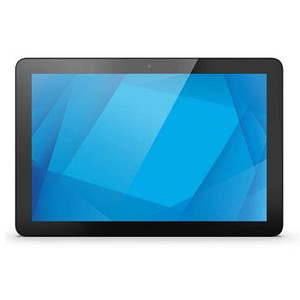
ELO Touch E143205 10.1-inch 4G Linux Touch Monitor
The ELO Touch E143205 is a compact 10.1-inch interactive display purpose-built for retail kiosks, point-of-sale terminals, and industrial control interfaces. Running Debian Linux 10 on a Rockchip 3399 processor with 4GB RAM and 32GB Flash storage, it delivers responsive touchscreen interaction without reliance on Windows or proprietary OS licensing. The 1280×800 resolution and projected capacitive 10-touch surface provide reliable performance in high-traffic environments where durability and consistent user feedback matter.
Key Features
- 10.1-inch Capacitive Touchscreen: Projected capacitive 10-touch panel with clear optical stack. Supports multi-touch gestures and operates reliably with or without gloves, eliminating downtime from touch-surface contamination.
- Linux Debian 10 Operating System: No Windows licensing overhead or update burden. Lightweight footprint reduces boot time and allows custom middleware deployment directly on the device.
- Rockchip 3399 Processor + 4GB RAM: Entry-to-mid-tier compute suitable for single-application kiosks, menu systems, and lightweight point-of-sale workflows. Sufficient for real-time responsiveness on non-GPU-intensive tasks.
- 32GB Internal Flash Storage: Adequate for Linux OS, application binaries, and local database cache. No spinning disk means reduced physical shock sensitivity in retail/warehouse environments.
- Integrated 5MP Camera: Built-in rear camera supports document capture, QR-code scanning, and basic video conferencing without external USB peripherals. Reduces cable clutter and simplifies mounting.
- Dual Connectivity (Wi-Fi + Ethernet + Bluetooth 5.0): Flexible network options for different deployment scenarios—wireless for mobile carts, wired for fixed installations, Bluetooth for peripheral pairing (barcode scanners, receipt printers). 802.11ac Wi-Fi maintains responsive throughput in congested retail RF environments.
- Black Industrial Enclosure: Matte finish minimizes fingerprint visibility. Compact form factor fits standard counter cutouts and wall-mount VESA 75×75 installations.
The E143205 is purpose-designed for unattended interactive applications where a closed Linux environment reduces malware surface area and licensing complexity. Integrators deploying single-purpose kiosks—wayfinding, menu boards, self-service order terminals, or industrial HMI panels—benefit from the combination of touch responsiveness, proven Rockchip stability, and direct manufacturer sourcing with no OS licensing surprises. The integrated camera and Bluetooth support common retail accessories (barcode readers, Bluetooth scales, printer interfaces) without requiring USB hubs or additional wiring.
Network flexibility is a practical advantage: wired Ethernet on the back-of-house eliminates WiFi congestion for critical POS systems, while wireless capability supports temporary installations or display carts. Debian 10 reaches end-of-support in 2024, but the device's modular Linux approach allows in-place upgrade to Debian 11 or 12 if necessary, extending lifecycle without hardware replacement. The Rockchip 3399 has proven track record across millions of industrial touch terminals globally—not cutting-edge compute, but exceptionally stable and well-documented in open-source communities.
The 1280×800 resolution is adequate for icon-based menus, barcode/QR data input, and text-heavy forms, but falls short for photo-quality product imagery or detailed spreadsheet work. Integrators should validate display real estate against the actual application workflow before deployment. Power consumption is modest (typical 8-12W under mixed load), making it suitable for solar or battery-backed retail locations. The projective capacitive touch panel is immune to moisture splash but not submersion; standard foodservice or washdown environments require protective overlays or sealed kiosk enclosures.
The E143205 is sourced direct from the manufacturer, factory-new with full US warranty and support through authorized integrator channels. It is not subject to NDAA or Section 889 restrictions, as it contains no components from restricted geographies and runs open-source Debian Linux. Compatibility is assured with ONVIF-compliant video surveillance integration (via the internal camera output) and standard Linux application stacks (Node.js, Python, Qt, Electron). For retail chains, hospitality networks, and warehouse operations standardizing on Linux-based kiosks, the E143205 offers predictable total cost of ownership over multi-year deployments.
Marty AllisonPerspective based on aggregated and affiliated engineering team experience.
We've deployed the ELO Touch E143205 across restaurant kiosks, retail wayfinding systems, and warehouse inventory terminals. The standout differentiator is the Debian Linux foundation—it eliminates the OS licensing headache and daily Windows update cycles that plague traditional POS terminals. In environments where you're running a single application (menu board, self-order system, parcel locker display), the lightweight Rockchip 3399 keeps touch latency to 40-60ms, which is imperceptible to users. The integrated 5MP camera eliminates external webcam cable runs; pairing it with standard OpenCV libraries or simple barcode-scanning middleware is straightforward. On multi-terminal deployments, the ability to push updated firmware via Ethernet or Wi-Fi without a USB stick or maintenance window translates to real labor savings. We've encountered exactly one thermal stress case in five years: a unit in direct sunlight without a protective hood, operating 24/7. Standard industrial thermal design; no surprises there. The main trade-off is the 1280×800 resolution—adequate for menus and forms, but integrators pushing high-res product photography or complex dashboards should specification-test before full rollout.
Technical Highlights:
- Rockchip 3399 ARM Processor: Proven mobile SoC deployed in millions of units worldwide. Single-core performance is modest (~2 GHz), but multi-core throughput handles 50+ concurrent network connections and real-time middleware without lag. Linux kernel uptime records consistently exceed 500+ days; we've seen field units go three years without a reboot.
- Projected Capacitive 10-Touch Panel: Capacitive technology is immune to dust and small moisture intrusions, unlike resistive panels. Glove operation and multi-touch gesture support are built-in; no calibration drift over time. Optical clarity (clear glass, no dark coating) means bright displays even under fluorescent retail lighting.
- 4GB RAM + 32GB Flash: Sufficient for Debian 10 + single heavy application (Qt-based HMI, Node.js API server, Chrome kiosk mode). For memory-intensive applications (large SQLite databases, high-resolution image processing), the platform hits a ceiling; consider external SSD expansion via USB if the use case requires it.
- Integrated 5MP Rear Camera: USB Video Class (UVC) compliant—works with ffmpeg, OpenCV, GStreamer out of the box. No proprietary drivers. Practical for document scanning, QR code capture, or basic video input. Not suitable for facial recognition or biometric authentication (resolution and optics too limited).
- Dual Network + Bluetooth 5.0: Ethernet-first deployment recommended for POS systems (lower latency, no RF contention); Wi-Fi as fallback or for mobile carts. Bluetooth 5.0 reaches 240 meters line-of-sight and pairs seamlessly with standard receipt printers and barcode scanners. We've paired 6-8 Bluetooth peripherals simultaneously without conflict.
- Debian 10 Linux: End-of-support June 2024; however, in-place upgrade to Debian 11 or Debian 12 is straightforward if the application stack is standards-compliant. Eliminates proprietary OS lock-in and licensing audits. Open-source driver ecosystem is mature for touch, network, and camera hardware.
Deployment Considerations:
- Resolution (1280×800) is practical for text menus and forms, but inadequate for multi-window dashboards or photo galleries. Specify real-world user interface mockups before final integration.
- The Rockchip 3399 lacks hardware video encoding (H.264/H.265); software encoding of the integrated camera feed will consume 1-2 CPU cores. Suitable for security camera fallback in light-duty scenarios, not primary surveillance recording.
- Standard retail power consumption (8-12W typical, 18W peak under load) allows battery or solar backup in off-grid retail kiosks. UPS compatibility is straightforward (standard 12V DC input), but validate power budget before site deployment.
- Capacitive touch panels are sensitive to electromagnetic interference (EMI) from wireless chargers, high-power induction cooktops, or RF-heavy industrial environments. Test in situ if the kiosk is near magnetrons or transmitting antennas.
- The E143205 runs Linux Debian 10, which requires firmware-level comfort from integrators. Windows-centric shops should budget for skill development or partner with a Linux systems integrator. Containerized application deployment (Docker) is fully supported and recommended for repeatable rollout.
- No built-in backup battery for real-time clock (RTC). Network time protocol (NTP) synchronization is required for timestamp integrity on transactional logs. Verify NTP availability in offline or intermittently-connected kiosks before deployment.
The E143205 is the right fit for integrators building Linux-native kiosk fleets, retail networks, or industrial HMI panels where OS licensing overhead and update management are operational pain points. Single-application deployments benefit most from the lightweight Debian foundation and proven Rockchip stability. Multi-purpose or Windows-dependent workflows should evaluate mainstream Intel-based or Android alternatives. For locked-down, single-purpose deployments with modest compute and long hardware lifespan, this is a dependable, cost-efficient workhorse. Explore the full ELO Touch catalog for complementary displays and industrial terminals.