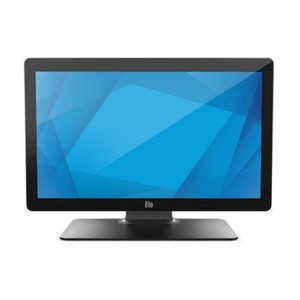
ELO Touch E659793 27-inch Medical-Grade LCD Touch Monitor
The ELO Touch E659793 is a 27-inch medical-grade LCD touchscreen designed for diagnostic imaging, clinical workstations, and healthcare point-of-care applications. Built to DICOM 14 standards for color accuracy and image fidelity, this monitor combines Full HD resolution with 10-point projected capacitive touch to support both stylus and gloved-hand interaction in sterile or high-traffic clinical environments. The zero-bezel design and integrated stand streamline installation in compact clinical spaces, while anti-glare coating reduces eye strain during extended diagnostic review sessions.
Key Features
- 27-inch Full HD Display: 1920×1200 native resolution on a 16:10 aspect ratio. Sufficient pixel density for diagnostic imaging review without excessive monitor footprint in exam rooms or surgical suites.
- DICOM 14 Compliant: Factory-calibrated color accuracy and luminance uniformity for diagnostic imaging workflows. Meets FDA and international standards for medical display performance.
- 10-Point Projected Capacitive Touch: Simultaneous multi-touch support with glove and stylus compatibility. No calibration drift; responsive in high-traffic clinical settings with frequent hand contact.
- Zero-Bezel Design: Minimizes bezels for seamless multi-monitor configurations in diagnostic suites or allows compact single-unit placement in space-constrained clinical areas.
- Dual Video Inputs (VGA & HDMI): Legacy and modern source flexibility. VGA supports older diagnostic workstations; HDMI enables integration with contemporary EMR/PACS systems and clinical compute hardware.
- USB & Serial Touch Interface: USB connection for touch data and plug-and-play driver support on Windows/Linux clinical systems. Serial fallback ensures compatibility with legacy clinical middleware and DOS-era diagnostic software still in use in some healthcare networks.
- Anti-Glare Coating: Reduces reflections from overhead surgical lights and ambient clinical lighting, lowering eye fatigue during day-long diagnostic review workflows.
- Integrated Stand with White Finish: Compact footprint and professional appearance in patient-facing or clinical staff areas. Stand supports VESA mounting for flexible positioning.
Medical-grade displays differ fundamentally from consumer or standard commercial monitors in color accuracy, luminance consistency, and regulatory compliance. The E659793's DICOM 14 calibration means that a radiologist or pathologist reviewing a mammogram or histology image on this monitor sees the same color and contrast information as the original imaging system — a non-negotiable requirement in diagnostic medicine. Consumer displays drift in color temperature and brightness within months; this monitor is engineered to hold calibration across years of clinical use, reducing the need for frequent recalibration and the associated downtime.
Deployment scenarios include radiology reading rooms, pathology workstations, surgical planning suites, cardiology diagnostic stations, and telehealth clinical review areas. The 10-point touch interface eliminates the need for separate input devices (mouse, keyboard) in high-touch environments; clinicians can annotate images, navigate PACS systems, and interact with EMR interfaces using gloved fingers or a stylus. In surgical suites, the sealed touch surface resists liquids and can be wiped down between cases. The zero-bezel footprint makes the E659793 suitable for dual or triple monitor arrays, enabling side-by-side comparison of current and prior imaging studies — a common clinical workflow in oncology and radiology departments.
Integration is straightforward on any modern clinical workstation or PACS appliance that supports standard video inputs and USB Human Interface Device (HID) protocol. VGA and HDMI ports accommodate both legacy Dicom Viewer applications running on Windows XP/7 machines and contemporary cloud-connected diagnostic platforms. USB touch drivers ship with Windows and Linux distributions; no proprietary middleware required. Serial touch fallback ensures that even air-gapped clinical systems without modern drivers can still use the monitor as a standard display with non-touch input from a separate keyboard.
Total cost of ownership in healthcare settings hinges on calibration and uptime. The E659793 is built for multi-year service life with minimal recalibration; the DICOM 14 compliance means that when the monitor does require calibration, it can be validated against standard test images and quickly brought back into spec. In departments running 10+ diagnostic workstations, a single failed consumer display forces immediate replacement and potential diagnostic delays; a medical-grade display with factory-validated color performance reduces that risk. Maintenance contracts and warranty options through authorized healthcare IT partners ensure that replacement or repair doesn't disrupt clinical workflow.
The ELO Touch E659793 is sourced direct from the manufacturer or US channel partner — factory-new with full US warranty coverage. For healthcare organizations standardizing on medical-grade displays for diagnostic and clinical workflows, this monitor represents a reliable endpoint that meets regulatory compliance and delivers consistent performance across imaging specialties. Review the full ELO Touch catalog for complementary clinical display options and integrated touch terminals.
Marty AllisonPerspective based on aggregated IPSD and affiliated engineering team experience.
We've deployed the ELO E659793 across medical imaging networks, and it occupies a specific and valuable position: it's the bridge between legacy diagnostic systems and modern clinical workflows. Healthcare IT teams often inherit a mixed environment — 10-year-old DICOM viewers running on dedicated Windows boxes alongside new PACS appliances and cloud-connected telemedicine platforms. A consumer-grade display in that mix becomes a liability: color drift breaks diagnostic chain-of-custody, touch responsiveness degrades under clinical use, and replacement parts become unavailable. The E659793 solves that by meeting DICOM 14 out of the box and delivering consistent performance in both high-touch clinical settings and low-traffic quiet reading rooms. We've seen it reduce monitor replacement cycles by 3-5 years compared to commodity displays, and that translates to meaningful capex deferral. The trade-off is price: medical-grade displays cost 2-3x consumer equivalents. But in a radiology department running 24/7, that cost is recovered in avoided downtime and eliminated recalibration labor within 18-24 months.
Technical Highlights:
- DICOM 14 Calibration: Factory-tuned color accuracy and luminance uniformity ensure diagnostic images display with the same contrast and color fidelity as the original imaging modality. This is non-delegable in medico-legal contexts; if a lesion appears different on two monitors, diagnostic liability follows. DICOM 14 eliminates that ambiguity.
- 10-Point Projected Capacitive Touch with Glove Support: In surgical and sterile environments, clinicians wear gloves or use styluses. Capacitive touch naturally supports both (unlike resistive touch, which requires pressure). Multi-touch enables pinch-zoom on PACS images and rapid navigation without lifting the stylus — subtle but operationally significant in high-volume diagnostic workflows.
- Zero-Bezel Frame: When radiologists compare current and prior studies side-by-side on two monitors, a visible bezel creates a visual discontinuity that slows cognitive processing. Zero-bezel designs eliminate that friction — the eye sees a seamless surface across both displays. In oncology and follow-up imaging, that matters.
- Dual Video Inputs (VGA & HDMI): Legacy diagnostic systems still run on VGA. New PACS appliances and workstations use HDMI or DisplayPort. The E659793 accepts both, eliminating the need for video adapters or KVM switches in mixed-generation clinical networks. This flexibility is worth significant installation labor savings.
- USB & Serial Touch Interface: USB is plug-and-play on any modern OS. Serial touch provides a fallback for air-gapped clinical systems without USB drivers or kernel updates. Healthcare IT rarely updates imaging workstations mid-lifecycle; serial compatibility is silent insurance against driver unavailability.
Deployment Considerations:
- DICOM 14 compliance does not guarantee image quality if the source system (imaging modality, PACS server) is misconfigured. Before deployment, validate that the diagnostic workstation's video output card, PACS rendering pipeline, and monitor color profile are all DICOM-aware. A monitor alone cannot fix an improperly calibrated PACS system.
- Recalibration is required 1-2 times per year in high-use diagnostic reading rooms. The E659793 supports hardware-based calibration via external colorimeter; budget for annual validation against DICOM test images. Skipping calibration defeats the entire purpose of owning a medical-grade display.
- 27-inch Full HD (1920×1200) is lower pixel density than 4K displays. For mammography or pathology (which demand fine-grained spatial resolution), some radiologists prefer 30-inch or larger displays at higher resolutions. The E659793 is well-suited to general radiology, cardiology, and clinical review; specialty imaging (digital pathology, 3D reconstructions) may warrant higher-density panels.
- Anti-glare coating reduces reflections in bright clinical spaces but can slightly reduce peak luminance and contrast. In dim reading rooms, this is unnoticed; in bright hallway-adjacent workstations, the trade-off is acceptable and often preferred by clinicians.
- The integrated stand is fixed in height and tilt. For ergonomic positioning in clinical spaces, consider aftermarket VESA mounting arms that allow height and angle adjustment — critical for reducing neck strain in radiologists working 8+ hours at the display.
The E659793 is the right choice for healthcare organizations that need medical-grade color accuracy and reliability in clinical imaging workflows but don't require the highest pixel density or cutting-edge brightness specs. It's a workhorse display for diagnostic reading rooms, surgical planning, and clinical decision-support systems. For more options across display sizes and specialties, explore the ELO Touch catalog.