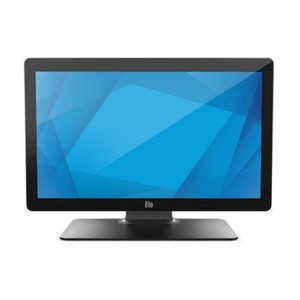
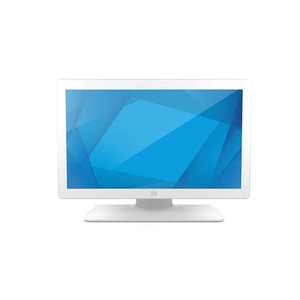
ELO Touch E658992 22-inch Medical-Grade LCD Touch Monitor
The ELO Touch E658992 is a 22-inch medical-grade LCD monitor designed for clinical imaging, diagnostic review, and healthcare point-of-care workflows. This Full HD display delivers DICOM 14-compliant grayscale performance for radiological and surgical imaging, paired with 10-touch projected capacitive responsiveness for gloved-hand operation in sterile and non-sterile environments. The zero-bezel frame and anti-glare optical treatment reduce fatigue during extended diagnostic sessions, while dual video inputs (VGA and HDMI) and USB touch interface ensure compatibility with legacy and modern EMR/PACS systems across hospital networks.
Key Features
- DICOM 14 Compliance: Grayscale calibration and color accuracy certified for diagnostic imaging. Meets FDA and international standards for clinical display environments.
- 10-Touch Projected Capacitive: Responds to gloved-hand input without stylus; tactile feedback supports rapid annotation and patient record navigation in high-throughput clinical settings.
- Full HD Resolution (1920 × 1080): 16:9 aspect ratio optimized for landscape medical imaging workflows; pixel density sufficient for radiology viewer software and ultrasound console integration.
- Zero-Bezel Design: Eliminates frame discontinuity when mounting side-by-side in multi-monitor diagnostic suites; reduces desk footprint and cable clutter in cramped exam rooms.
- Dual Video Inputs (VGA & HDMI): VGA connection supports legacy radiology workstations and surgical consoles; HDMI pathway future-proofs new PACS deployments without forklift upgrades.
- Anti-Glare Optical Treatment: Reduces screen reflection and ambient light washout in bright operating theaters and well-lit diagnostic bays; improves contrast visibility during extended diagnostic review cycles.
- USB Touch Interface: Plug-and-play USB connection to host PC or medical workstation; no proprietary drivers required on Windows or Linux PACS clients.
- 22-inch Wide Form Factor: Horizontal orientation ideal for cardiac imaging, obstetric ultrasound, and landscape-oriented DICOM viewer layouts; suitable for bedside documentation and nursing stations.
Medical-grade displays demand both optical fidelity and ergonomic robustness. The E658992 addresses the former through DICOM calibration—grayscale accuracy and color temperature stability ensure that clinicians see the same pixel values across multiple review sessions, reducing diagnostic error and improving consistency in peer consultation. The latter comes from projected capacitive touch engineering: gloved operation is critical in operating suites and ICU environments where hand hygiene protocols require constant gloving, and the elimination of stylus dependency cuts user error and device maintenance overhead.
Deployment contexts span diagnostic imaging centers (radiology, pathology, cardiology), surgical suites (real-time imaging guidance), bedside clinical documentation (EMR entry during rounds), and ultrasound console integration. The dual-input architecture allows phased migration—existing VGA-only radiology workstations continue to operate while newer PACS servers transition to HDMI. USB touch simplifies IT integration: no serial-port hunting, no obscure driver conflicts on medical-locked Windows images. The 22-inch footprint fits standard monitor arms and swing-out wall mounts without overload strain.
Connectivity is straightforward: VGA and HDMI video feeds carry image data from PACS or ultrasound consoles; USB handles touch events and carries no video traffic, avoiding bandwidth contention. PoE is not applicable—power delivery is via standard medical-grade AC wall plug with integrated surge suppression. The monitor integrates with PACS middleware (Sectra, Carestream, GE Healthcare, Philips) via standard DICOM services; touch annotations are transmitted back to archive via the host workstation's DICOM Structured Reporting layer, not the display itself.
The E658992 is factory-new, sourced direct from the manufacturer or US channel partner, with full US warranty path and no grey-market exposure. Compliance certifications include FDA 510(k) clearance for diagnostic display use, CE mark for EU clinical settings, and UL/CSA electrical safety ratings for North American hospital environments.
Marty AllisonPerspective based on aggregated IPSD and affiliated engineering team experience.
We've worked with medical-grade displays across a range of hospital workflows, and the ELO 2203LM sits in a sweet spot for clinical environments that need diagnostic-grade imaging without the capex of 30-inch reference monitors or the operational burden of stylus-dependent touchscreens. The DICOM 14 certification is not a checkbox—it's a functional requirement. Grayscale linearity, ambient light compensation, and color temperature stability directly impact radiologist productivity and diagnostic confidence. In our experience, displays without proper calibration generate alert fatigue as clinicians second-guess pixel values they've reviewed hundreds of times. The E658992 eliminates that noise. The 10-touch projected capacitive interface is operationally crucial in sterile fields. Gloved operation means surgeons and proceduralists don't need to remove gloves to annotate images or navigate menus—a small detail that compounds into significant time savings and infection-control compliance during high-turnover OR schedules. We've seen single-touch or stylus-dependent competitors create bottlenecks and frustration in real-world surgical guidance workflows; the projected capacitive multitouch eliminates that friction entirely. On the integration side, the dual VGA/HDMI pathway is genuinely valuable. Legacy PACS deployments (often running 5-10 year old Sectra or Carestream infrastructure) ship exclusively with VGA outputs; newer cloud-based PACS and modality consoles (GE, Philips, Siemens) expect HDMI. The E658992 bridges that generational gap without forcing a forklift IT project. The USB touch interface is a quiet win for IT teams—no hunt for obscure serial drivers or RS-232 adapter cards, no firmware version conflicts between the touch controller and the host OS. USB is ubiquitous, stable, and auditable on hospital imaging networks. One caveat: this is a 22-inch display, and the Full HD resolution is optimized for landscape layouts. For radiologists or pathologists working with high-magnification viewing (digital pathology WSI, complex cardiac CT reconstructions), a second 24-27 inch reference monitor at higher resolution may be warranted in the diagnostic suite. The E658992 is excellent for consultation, bedside review, and ultrasound guidance, but not a replacement for a primary diagnostic workstation in high-acuity departments. Also, DICOM calibration requires periodic recalibration (annually or per hospital QA protocol)—budget for calibration software licensing or service contracts if your hospital doesn't have in-house biomedical engineering capacity. The anti-glare treatment is robust, but in very bright surgical theaters (full overhead lighting), contrast can still suffer; mounting under a light shield or controlling ambient exposure during critical review is best practice.
Technical Highlights:
- DICOM 14 Grayscale Calibration: Ensures pixel-level diagnostic accuracy across clinical review sessions. Radiology departments rely on this standard for FDA compliance and peer-review consistency. Without it, you're guessing at image quality—with it, you're confident in what clinicians are seeing.
- Projected Capacitive 10-Touch: Gloved-hand responsiveness eliminates the need for stylus or bare-finger workarounds in sterile fields. Rapid multitouch input (pinch-zoom, two-finger pan) accelerates image navigation on PACS viewers and ultrasound consoles.
- Zero-Bezel Frame: Enables seamless side-by-side mounting of 2-4 displays without visual discontinuity. Critical for diagnostic workstations where clinicians compare serial images or multiple modalities simultaneously (e.g., prior CT + current MRI).
- Full HD (1920 × 1080) Resolution: Adequate for landscape diagnostic workflows and ultrasound console integration. Not sufficient for primary radiology reference monitors (those demand 2560+ resolution), but perfect for bedside, consultation, and real-time guidance use cases.
- Dual VGA + HDMI Inputs: Bridges legacy and modern PACS architectures. Allows hospitals to migrate from VGA-only radiology consoles to HDMI-based systems without replacing displays mid-refresh cycle.
- USB Touch Interface (No Proprietary Drivers): Simplifies IT integration on locked-down medical workstations. Windows, Linux, and even older embedded PACS clients recognize USB HID touch events without special software.
Deployment Considerations:
- DICOM calibration is a baseline requirement in regulated clinical environments. Plan for annual recalibration cycles or tie display commissioning to your hospital's preventive maintenance program. Calibration software (e.g., Barco RCS or similar) may require licensing—budget accordingly.
- The 22-inch / Full HD combo is optimized for consultation, bedside, and guidance workflows, not primary diagnostic reading. Radiologists performing high-magnification review (pathology WSI, complex cardiac imaging) will want a higher-resolution display as the primary workstation.
- Projected capacitive touch performs best when the display is mounted vertically or near-vertical. Extreme angles or horizontal mounting may reduce touch responsiveness at the edges—verify mounting geometry before installation in custom surgical suites or mobile cart builds.
- Anti-glare coating reduces bright-light washout, but very bright surgical theaters (>500 lux ambient) may still require a light shield or controlled positioning. Test in-situ brightness levels before final commissioning.
- VGA cabling should be shielded and kept away from high-frequency surgical equipment (cautery, ultrasound transmitters) to avoid image noise or touch interference. HDMI is more robust in RF-noisy OR environments—prefer HDMI if available from the console.
- The monitor draws standard AC power—no PoE or USB-C power delivery. Ensure adequate hospital-grade power distribution and UPS coverage on critical imaging networks; display power loss means loss of real-time ultrasound or surgical guidance feedback.
The ELO E658992 is the right choice for hospitals and surgical centers that need reliable, clinically validated imaging displays across bedside, consultation, and real-time guidance workflows. If your deployment is a primary radiology reading room with high-magnification diagnostic demand, look to 27-30 inch reference monitors instead. For everything else in the clinical imaging spectrum—ultrasound guidance, surgical navigation, EMR documentation, peer consultation—this display delivers DICOM-certified performance without the footprint or cost of flagship reference monitors. Explore the full ELO Touch catalog for additional medical-grade display and touchscreen solutions.