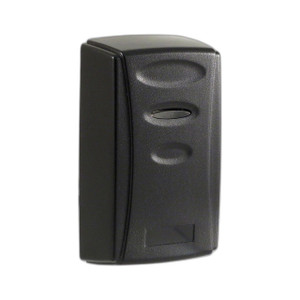
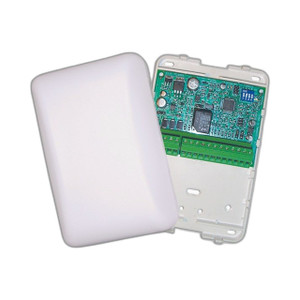
ELK Products ELK-W035A Wiegand Reader Wiring Harness
Overview
The ELK-W035A is a purpose-built wiring harness that bridges proximity card readers, keyfob readers, and keypad-based access devices to ELK M1K and M1Kpb control panels. This is a straightforward connectivity component—no intelligence on the harness itself, only solid Wiegand protocol support that ensures credential data (card swipes, code entries, keyfob transmissions) reaches the control panel without signal loss or degradation. For integrators assembling multi-door access installations, reliable reader-to-panel wiring is non-negotiable; a failed harness means zero throughput on that reader zone.
Key Features & Specifications
- Wiegand Protocol Support: Carries both data lines (D0/D1) needed for standard Wiegand credential transmission—the industry workhorse for proximity and keypad readers. No proprietary encoding; if your reader speaks Wiegand and your panel expects Wiegand, this harness moves that signal reliably.
- M1K and M1Kpb Compatibility: Engineered specifically for ELK's M1K and M1Kpb reader line. This tight specification means correct pinout, impedance matching, and connector type—mismatched harnesses are a common source of intermittent read failures on access control jobs.
- Multi-Credential Support: Works with proximity cards, keyfobs, and keypad-based readers—the three dominant credential types in enterprise door access. Single harness type handles all three, simplifying inventory for integrators running mixed credential environments.
- Direct Panel Integration: Connects directly to ELK control panels running Wiegand reader modules. No intermediary converters or adapters required; you terminate the harness end at the panel input, configure the reader ID in software, and the panel firmware handles credential parsing.
- Standard Wiring Gauge: Harness conductor size and shielding appropriate for low-voltage access control signaling—runs reliably over typical in-building distances (up to 100 feet for standard installation) without significant signal attenuation or susceptibility to EMI from adjacent power or data cables.
- Field-Ready Termination: Comes terminated and ready to install—no need to cut, strip, or solder. Reduces on-site assembly time and minimizes connection errors that plague hand-assembled harnesses on busy installation schedules.
Integration & Compatibility
This harness is part of the ELK Products access control ecosystem. It assumes the M1K or M1Kpb reader is already wired to power (typically 12VDC) at the reader location; the ELK-W035A handles the Wiegand data lines only. Pair this harness with an ELK access control panel supporting Wiegand reader modules, and the credential stream flows from card/keypad/keyfob through the reader, down the harness, and into the panel's access decision engine.
For integrators planning multi-reader deployments, calculate one harness per reader. Stock extras—damaged harnesses in the field are replaceable in under 10 minutes per door if you have spares on the truck.
When to Choose This Harness
Deploy the ELK-W035A if you are (1) upgrading or expanding an existing ELK M1K/M1Kpb reader installation, (2) building a new door access system around ELK control panels, or (3) replacing a damaged or worn reader harness. It is also appropriate for mixed-credential environments where proximity cards, keyfobs, and keypads are all in use across the same access control zone.
When to Look Elsewhere
If you are using a different reader brand (Honeywell, Salto, HID, etc.), this harness will not fit. If your readers support modern IP-based protocols (like Salto, Bluetooth, or cloud-based access), you may not need a hardwired Wiegand harness at all—consult your reader and panel documentation. For non-ELK control panels, verify that the target panel supports standard Wiegand inputs before purchasing.
Frequently Asked Questions
Q: Is the ELK-W035A backward compatible with older M1K reader generations?
A: The harness is designed for M1K and M1Kpb models. If you have legacy ELK reader variants, confirm the part number with your panel documentation or ELK technical support before ordering.
Q: Can I use this harness with non-ELK control panels?
A: The ELK-W035A is terminated for ELK panel connectors. If your panel uses a different Wiegand input connector type, this harness will not mate. Verify connector compatibility before purchase.
Q: How long can the harness run without signal loss?
A: Standard Wiegand runs are rated up to approximately 100 feet in typical commercial buildings. Longer runs require signal conditioning or use of shielded twisted-pair cable; consult ELK documentation for distance-specific guidance.
Q: Does this harness include power lines for the reader?
A: No. The ELK-W035A carries Wiegand data lines only. Reader power (typically 12VDC) must be supplied separately to the reader unit.
Q: What is the typical warranty on this harness?
A: Consult ELK's standard parts warranty or your distributor; specific warranty terms are not published on the datasheet.
Q: Is the ELK-W035A (often searched as ELK W035A) NDAA compliant?
A: No domestic content or NDAA Section 889 compliance claims are documented for this accessory. Verify with your compliance officer if NDAA status is required for your project.
Ted PerryPerspective based on aggregated IP Security Depot and affiliated engineering team experience.
The ELK-W035A is a connectivity piece—nothing flashy, but it is the often-overlooked thread that ties a reader to a control panel. On access control jobs, a single failed harness can drop an entire door offline, and replacement costs far exceed the harness price when you factor in a service call and lost uptime. The key decision here is simple: if you are building an ELK M1K or M1Kpb system, this is the correct harness. If you are retrofitting a legacy system or mixing brands, you must verify pinout and connector type before ordering.
Technical Highlights:
- Wiegand Protocol Integrity: Dedicated shielding and twisted-pair conductors for D0/D1 lines preserve signal fidelity over building distances. Wiegand is simple (only two data lines plus ground), but poor harness quality introduces noise and intermittent read failures—cheap harnesses fail first in electrically noisy environments (near HVAC drives, high-current lighting circuits).
- M1K/M1Kpb Factory Termination: Eliminates field assembly risk. Hand-assembled Wiegand harnesses on job sites are a recurring source of polarity reversals and poor crimps. Factory termination means you install, verify continuity with a multimeter in 60 seconds, and move on.
- Multi-Credential Agnosticism: The harness does not care whether the signal comes from a proximity card, keyfob, or keypad—it passes any Wiegand-compliant bit stream. This matters on mixed-credential deployments where you do not want to stock three different reader types.
Deployment Considerations:
- Plan for spares. Access control harnesses fail from physical abuse (door installers stepping on them, repeated flexing at termination), water intrusion, or EMI in particularly noisy electrical environments. A spare harness per 5 doors is a prudent buffer for multi-building campuses.
- Verify distance to the control panel before ordering. Standard Wiegand is rated to roughly 100 feet; if your reader is farther than that from the panel, you may need repeater modules or differential Wiegand drivers—consult the ELK panel manual for distance specifications before committing to a remote reader location.
- Do not assume this harness works with readers from other manufacturers. Wiegand is a standard protocol, but connector types and pinouts vary. Verify the reader make and model against the ELK documentation before installation.
The ELK-W035A is purpose-built infrastructure for ELK M1K/M1Kpb deployments. Deploy it when credential throughput and reliability are the drivers—particularly on multi-door facilities where downtime is expensive and spares on the truck are non-negotiable.