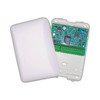
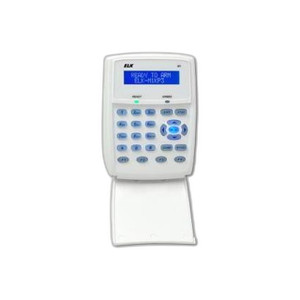
ELK Products ELK-M1KAM Wired Keypad Reader
Overview
The ELK-M1KAM is a hardwired keypad reader purpose-built for PIN-based credential entry on access control installations running access control readers and ELK security systems. This accessory bridges the gap between keypads and control panels using industry-standard Wiegand or RS-485 communication protocols — a pair of transport options that gives you flexibility in system architecture without forcing a proprietary gateway layer. Rated at 8VDC operation, the ELK-M1KAM suits both retrofit projects where existing runs are in place and new installations where hardwired keypads are preferred over wireless or networked alternatives. Indoor mounting at entry points, delivery gates, or secured warehouse zones is the typical deployment.
Key Features
- Dual Protocol Support: Wiegand and RS-485 communication means you can wire it into most ELK panels without needing additional interface modules — less complexity and fewer points of failure in the field.
- 8VDC Nominal Operation: Low voltage design reduces shock hazard and simplifies power distribution in mixed-voltage environments; verify your panel's 8V auxiliary output capacity before installation.
- PIN Entry Credential Method: Numeric keypad input makes credential enrollment simple and audit-friendly — no RFID tags or mobile credentials to manage, though this also means you lose the convenience of contactless unlock.
- Wired Hardwire Architecture: No wireless bridge, no WiFi dropout risk, no battery maintenance — a reliable choice for high-traffic access points where lost connectivity is not acceptable.
- Indoor Form Factor: Designed for interior mounting only; do not expose to rain, salt spray, or direct UV. For outdoor gatehouse or yard perimeter use, you'll need an environmental housing or a purpose-built outdoor reader variant.
- ELK Panel Ecosystem Integration: Works with ELK security control systems supporting Wiegand or RS-485 input; verify your panel firmware version and confirm the communications module is installed before wiring.
Integration & Compatibility
The ELK-M1KAM (often searched as ELK M1KAM) integrates with ELK security panels and access control modules that expose Wiegand or RS-485 reader input. Before commissioning, confirm your panel firmware supports the reader protocol you intend to use — Wiegand is typically the default, but some installations standardize on RS-485 for longer cable runs or noise immunity in industrial environments. Hardwire the reader directly to the panel's reader input terminals; no intermediate controller is required. Indoor mounting at access points requiring user PIN authentication is the standard application. If your installation includes a network video recorder for access logging alongside camera footage, synchronize the reader's timestamp with the NVR's system time to ensure audit trails align.
When to Choose a Different Model
If your deployment requires outdoor installation, splash protection, or IP-rated durability, the ELK-M1KAM is not suitable — consider a panel-compatible outdoor reader from the same ELK family. If you need wireless keypads to avoid conduit runs, or if your control panel uses proprietary reader interfaces rather than standard Wiegand/RS-485, look for integration options specific to your panel model. For facilities deploying multi-technology readers (RFID, mobile, PIN hybrid), verify the ELK panel supports all technologies before committing to a single-protocol reader.
Frequently Asked Questions
Q: Is the ELK-M1KAM compatible with all ELK security panels?
A: The ELK-M1KAM requires a panel with Wiegand or RS-485 reader input. Verify your panel's firmware version and confirm the communications module is installed. If in doubt, consult your panel documentation or contact your integrator.
Q: What voltage does the ELK-M1KAM require?
A: The ELK-M1KAM operates at 8VDC nominal. Ensure your panel's auxiliary 8V output has sufficient current capacity for the reader and any other devices on that rail.
Q: Can I use Wiegand and RS-485 on the same ELK-M1KAM simultaneously?
A: No, the ELK-M1KAM supports one protocol at a time. Configure it for either Wiegand or RS-485 during installation based on your panel's available input.
Q: Is the ELK-M1KAM suitable for outdoor use?
A: No. The ELK-M1KAM is rated for indoor mounting only. Exposure to rain, dust, or UV will damage the unit. For outdoor access points, specify an IP-rated outdoor reader compatible with your ELK panel.
Q: Can I mount the ELK-M1KAM on a wall or does it require a recessed box?
A: Refer to the installation guide included with the unit for mounting specifications. Most keypad readers support both surface and recessed mounting; confirm your hardware kit includes the correct bracket.
Q: What cable should I use to wire the ELK-M1KAM to my panel?
A: Use a twisted pair or shielded twisted pair (STP) suitable for Wiegand or RS-485 signaling. RS-485 runs typically use 22 AWG STP; confirm cable gauge and shielding requirements in your panel manual.
Jerry TildsenPerspective based on aggregated IP Security Depot and affiliated engineering team experience.
The ELK-M1KAM is a straightforward access control reader — no frills, no wireless complexity, just a PIN keypad wired directly to your panel. The dual Wiegand/RS-485 protocol support is the real win here: it means you're not locked into a single transport method, and you can adapt to whatever interface your panel exposes without chasing down proprietary gateway modules.
Technical Highlights:
- 8VDC Operation: Low voltage keeps power distribution simple and avoids the need for a separate 12V supply; just tap the panel's auxiliary 8V rail. Watch your total load — if you're stacking this reader with multiple door locks or solenoids on the same rail, verify the panel's 8V output can handle cumulative draw.
- Wiegand and RS-485 Dual Protocol: Wiegand is universally supported by legacy and modern ELK panels; RS-485 gives you cable-run flexibility and noise immunity in electrically noisy environments (warehouses, manufacturing floors). Pick one protocol at install time — you can't toggle between them on the fly.
- Hardwired Architecture: No wireless link means zero risk of RF interference, no battery maintenance, and predictable latency. If conduit runs are already in place from a retrofit, the ELK-M1KAM slides into that infrastructure without redesign.
Deployment Considerations:
- The ELK-M1KAM is indoor-rated only — any water intrusion, dust accumulation, or UV exposure will kill it. If your access point is near a loading dock or outdoor staging area with ambient moisture, either enclose it in a weatherproof box (which adds cost and complication) or specify an outdoor-rated variant.
- Confirm panel firmware version before wiring. Some older ELK panels may require a firmware update or communications module installation to expose Wiegand or RS-485 reader input. A five-minute firmware check saves a site visit.
The ELK-M1KAM is your move for retrofit warehouse access installations where hardwire conduit already exists and PIN-only authentication is acceptable. It's not a Swiss Army knife — it does one job well, integrates without surprises, and doesn't introduce wireless or networked dependencies. Deploy it at receiving docks, internal gate points, or secured storage zones where simplicity and reliability matter more than credential technology diversity.