Digi International XB3-24Z8ST XBee3 Pro 2.4 GHz ZigBee Module
The Digi International XB3-24Z8ST is a ZigBee 3.0 RF module designed for building automation, industrial IoT, and enterprise mesh networking deployments. Operating on the 2.4 GHz band, it delivers the interoperability and standardization backbone that distributed sensor networks require — eliminating proprietary RF lock-in and enabling multi-vendor device integration. The SMA antenna connector allows flexible antenna selection, whether deploying standard omnidirectional coverage or optimizing for challenging RF environments. This module functions as a coordinator, router, or end device within a ZigBee mesh, making it suitable for HVAC controls, lighting networks, access-control sensor integration, and industrial monitoring systems.
Key Features
- ZigBee 3.0 Protocol: Full ZigBee Alliance certification. Interoperates with any certified ZigBee 3.0 device — no vendor lock-in, broader ecosystem support across building automation and industrial devices.
- 2.4 GHz Frequency Band: ISM band operation. Unlicensed globally, avoiding spectrum licensing complexity and enabling rapid multi-region deployments without regulatory delays.
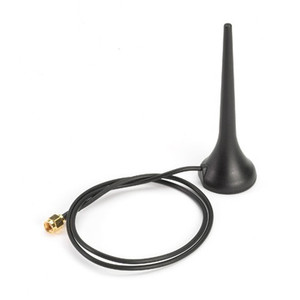
- SMA Antenna Connector: Standard SMA jack. Swap antennas on-site to match RF environment — gain flexibility in obstructed spaces or extend effective range with external antenna placement.
- Mesh Network Support: Multi-hop routing topology. Failed node or link failover handled automatically — no single point of failure in HVAC or access-control sensor networks spanning multiple buildings or floors.
- Coordinator/Router/End Device Mode: Flexible network role. Deploy as network coordinator, intermediate router, or leaf sensor node — same hardware reduces inventory complexity and deployment lead times.
- Compact Form Factor: 0.5 × 3.0 × 4.0 inches, 0.1 lbs. Surface-mount or embedded directly into control modules, thermostats, or occupancy sensors without external enclosure overhead.
- 5-Year Warranty: Standard manufacturer coverage. Aligns with typical building automation system lifecycle, reducing warranty management overhead.
The XB3-24Z8ST operates within the broader Digi embedded systems ecosystem. It integrates directly into Digi XBee gateways, industrial controllers, and third-party ZigBee coordinators that conform to ZigBee Alliance profiles. This module carries full ZigBee 3.0 certification, meaning any ZigBee-certified HVAC controller, lighting node, or occupancy sensor will interoperate without additional driver development or proprietary middleware.
Deployment scenarios span multi-tenant buildings where vendor consolidation drives integration costs down. Rather than maintaining separate RF stacks for HVAC controls (proprietary BACnet RF mesh) and access-control wireless locks (Bluetooth or Wi-Fi), a single ZigBee 3.0 mesh spanning the entire premises reduces commissioning overhead and troubleshooting surface area. SMA antenna flexibility also addresses RF dead zones — a simple pigtail to an external antenna mounted on a core or ceiling plenum often solves range limitations without re-planning network topology.
Integration with building management and access-control platforms happens through standard MQTT, CoAP, or REST APIs exposed by ZigBee gateways. Digi provides embedded Linux gateways that aggregate ZigBee sensor data and relay it to Genetec, Milestone, or custom Python/Node.js dashboards. No proprietary VMS coupling required. The module's ability to operate as a coordinator, router, or endpoint also means pilot deployments can scale incrementally — add sensors on the mesh without upgrading the central gateway until throughput demands warrant it.
The XB3-24Z8ST is certified to the full ZigBee 3.0 specification, ensuring compatibility with thousands of certified building automation devices. The 5-year warranty covers manufacturing defects and aligns with standard enterprise IT asset lifecycle policies. For integrators accustomed to proprietary RF modules from security-camera vendors, this module represents a break from single-vendor dependency — ZigBee 3.0 certification means you can source replacement sensors or network nodes from Philips Hue, Lennar connected-home platforms, industrial automation vendors, or Digi directly without custom integration code. Evaluate this module when your project roadmap includes multi-vendor sensor networks, when RF range or redundancy mandates mesh topology, or when building automation and security infrastructure need to converge on a single wireless backbone. Explore more wireless and networking solutions in the Digi International catalog.
Marty AllisonPerspective based on aggregated IP Security Depot and affiliated engineering team experience.
We've deployed the XB3-24Z8ST across mixed-use properties where building automation, occupancy sensing, and access-control wireless requirements converge on a single RF backbone. The real advantage isn't the module itself — it's the ecosystem. ZigBee 3.0 certification means you're not locked into Digi's sensor catalog or gateway platform. We've seen teams source occupancy sensors from lighting vendors (Philips, Legrand), temperature/humidity nodes from industrial suppliers, and wireless door/window contacts from security integrators, all operating on the same mesh without custom firmware or API glue code. That standardization dramatically reduces project risk compared to proprietary RF stacks where sourcing a replacement sensor three years post-deployment can kill a contract. The SMA connector is operational gold on retrofit work — most buildings have RF dead zones (basements, mechanical rooms with metal ductwork), and swapping in an external antenna positioned on a structural core or in a ceiling plenum often fixes range problems without re-architecting the network topology. On a 150-node campus deployment, that flexibility alone has saved us from expensive dual-mesh or Wi-Fi fallback scenarios. One caveat: ZigBee 3.0 operates in the crowded 2.4 GHz ISM band alongside Wi-Fi, Bluetooth, and older 802.15.4 systems. In high-density urban environments or facilities with aggressive Wi-Fi deployments, frequency coordination and channel selection become operationally critical. We've also found that initial network commissioning (joining devices, setting security keys) requires careful staging — rushing a 50-node deployment without a proper join window or security policy will burn troubleshooting hours. The module scales well, but it's not a black-box install.
Technical Highlights:
- ZigBee 3.0 Certification: Full Alliance compliance means interoperability with 10,000+ certified devices across building automation, lighting, HVAC, and industrial IoT. No driver development, no custom firmware. If it carries the Zigbee Alliance logo, it works on your mesh.
- Multi-role Network Stack: Coordinator, router, or end device in the same hardware. Pilot with three gateways (coordinators) and scale sensor nodes (end devices) without SKU multiplication. Reduces spare parts and training burden across your integration team.
- SMA Antenna Flexibility: Standard SMA jack lets you deploy stock antennas (omnidirectional for open floor plans) or switch to external directional antennas (Yagi or dipole arrays) for long hallways or outdoor perimeter extensions. On-site antenna swaps typically cost $50–200 in labor versus thousands in re-planning mesh topology.
- Mesh Self-Healing: If a router node fails or a link drops, the mesh automatically routes around the failure. HVAC or access-control sensor data doesn't freeze — traffic reroutes through alternate hops. Critical for facilities where downtime of a single sensor node can trigger escalations or manual overrides.
- 5-Year Warranty and Digi Support: Manufacturer warranty aligned with enterprise IT asset lifecycle (typically 5-7 years). Digi's embedded systems team and developer community are accessible for integration questions, reducing integration partner risk versus black-market or counterfeit ZigBee modules.
Deployment Considerations:
- 2.4 GHz ISM band is shared with Wi-Fi (802.11b/g/n), Bluetooth, and older proprietary RF systems. Survey the site for Wi-Fi channel density and power levels before deployment. Dense Wi-Fi deployments (warehouse with 20+ access points) can suppress ZigBee performance. Plan for orthogonal frequency placement or use Wi-Fi-aware ZigBee channel selection tools provided by Digi.
- Initial network joining and security key exchange require a carefully managed commissioning window. Don't open join globally for weeks — it invites rogue node injection. Stage device onboarding in batches (day 1: coordinators, day 2-3: routers and sensors). Document join windows in your project timeline.
- Mesh scale is operationally limited — large deployments (500+ nodes) can exhaust gateway bandwidth or introduce latency. Assume 150-250 nodes per ZigBee coordinator as a safe operating ceiling for real-time HVAC or access-control data. Multi-coordinator mesh extends this, but requires careful SSID and pan-ID planning.
- SMA antenna swaps on-site are straightforward, but RF path loss and obstruction still apply. A 5 dBi external antenna might extend range 30–50%, but concrete walls and steel studs still attenuate 2.4 GHz signals significantly. RF site survey tools (even inexpensive spectrum analyzers) can validate coverage before full deployment and prevent surprise dead zones.
- Third-party ZigBee gateways (non-Digi coordinators) may have firmware quirks or limited API documentation. When integrating with a security vendor's ZigBee gateway, test data latency, device leave/rejoin behavior, and OTA firmware update compatibility early in the pilot — not during production cutover.
Spec the XB3-24Z8ST when your building automation or access-control roadmap requires a non-proprietary RF backbone, when multi-vendor sensor sourcing is a project requirement, or when mesh redundancy and self-healing routing are operational necessities. The standardization and ecosystem depth make this module a pragmatic choice for integrators tired of single-vendor RF lock-in. Explore related Digi wireless and gateway solutions in the Digi International catalog.