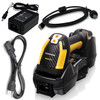
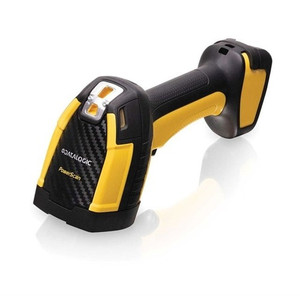
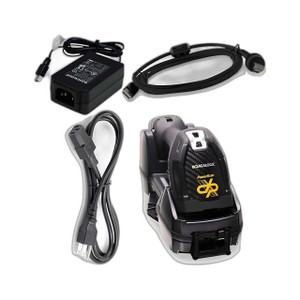
Datalogic PBT9600-SRRBK10US 2D Industrial Barcode Scanner
The Datalogic PBT9600-SRRBK10US is a rugged handheld 2D barcode scanner engineered for high-volume manufacturing, logistics, healthcare, and transportation environments. Built on a field-proven platform, this area imager captures both 1D and 2D barcodes with industrial-class durability and flexible connectivity—making it a practical choice for organizations standardizing scanning hardware across multiple facilities and use cases without requiring different SKUs for wired or wireless workflows.
Key Features
- 2D Area Imager: Reads 1D barcodes, 2D codes (QR, Data Matrix, PDF417), and composite symbologies in a single device—reduces inventory complexity when you have mixed barcode environments across receiving, production, and fulfillment.
- IP65 Sealed Design: Dust and water-splash protection means the scanner survives splashing, washdown spray, and dusty warehouse floors without conformal coating or protective housing upgrades—material cost and operational headache reduction in wet or contaminated areas.
- 2.5 m (8.2 ft) Drop Rating: Withstands accidental drops onto concrete or hard flooring common in fast-paced picking and line-side operations—minimizes unplanned hardware replacement and downtime in high-turnover environments.
- 10 Million Trigger Press Durability: Direct correlation to mean time between failures and reduced spare parts carrying cost. For fleet deployments of 50+ units, this durability spec cuts replacement cycles significantly compared to lower-rated scanners.
- Bluetooth 5.0 Connectivity: Wireless mobile workflows without infrastructure dependency. STAR 433/910 MHz radio options enable autonomous facility-wide networks if Wi-Fi is unreliable or unavailable in your warehouse layout.
- USB and RS-232 Wired Integration: Legacy system coexistence—connect the PBT9600-SRRBK10US to older fixed-position terminals, label printers, or labeling systems without requiring gateway hardware or protocol translation middleware.
- Green Spot Visual + Audible Good-Read Feedback: Operator confirmation that scan was accepted—reduces duplicate entries and erroneous re-scans in high-speed receiving or inventory count operations, directly improving throughput and data quality.
- Compact 440 g (0.97 lb) Form Factor: Lightweight design (71 x 203 x 107 mm) reduces operator hand fatigue during extended picking or counting sessions—relevant for workflows where scanners are held continuously for 4+ hours per shift.
Deployment Flexibility
The PBT9600-SRRBK10US supports multiple operational models without SKU proliferation. Bluetooth 5.0 is suited for pick-to-light, mobile cart, and roaming operator workflows. The STAR radio option provides facility-wide autonomous networks in environments where Wi-Fi doesn't penetrate (metal-heavy manufacturing floors, outdoor receiving yards). USB and RS-232 connections serve fixed-station integration—production line endpoints, dock terminals, and mail room label-and-ship stations that don't require mobility.
Operating temperature range support enables reliable performance across temperature-controlled warehouses, cold storage (if specified in your environment), and outdoor logistics operations—check your facility's environmental conditions against manufacturer temperature specs before final selection.
Common Use Cases
- Warehousing & Distribution: Real-time inventory tracking, pick-and-pack verification, receiving dock intake, and returns processing
- Manufacturing: Production line tracking, work-in-process (WIP) management, quality control checkpoints, and asset traceability
- Healthcare: Patient ID verification, medication administration, specimen tracking, and equipment asset management
- Transportation & Logistics: Package intake tracking, loading/unloading verification, and last-mile delivery handoff
- Retail Operations: Inventory cycle counts, markdown processing, and loss prevention audits
Frequently Asked Questions
Q: What barcode types does the PBT9600-SRRBK10US read?
A: As a 2D area imager, it reads 1D linear barcodes (Code 39, Code 128, EAN/UPC) and 2D codes (QR, Data Matrix, PDF417, Composite codes). This flexibility means you deploy a single scanner type across departments using different barcode standards.
Q: Can the PBT9600-SRRBK10US be used in wet environments like a cold storage facility?
A: The IP65 rating protects against splashing and dust, but not submersion. For cold storage with occasional moisture exposure, IP65 is adequate. If you need full submersion protection or constant water spray, verify the operating temperature range with the manufacturer to confirm cold-storage compatibility—some sealed devices experience condensation at freezing temperatures.
Q: Does the PBT9600-SRRBK10US integrate with legacy ERP systems?
A: Yes. The RS-232 and USB wired connections allow integration with older fixed-position terminals and warehouse management systems that don't support modern wireless protocols. You can coexist wireless (Bluetooth) and wired (USB/RS-232) deployments across a single facility without parallel hardware tracks.
Q: What is the warranty on the PBT9600-SRRBK10US?
A: The PBT9600-SRRBK10US includes a 1-Year Limited Warranty covering defects in materials and workmanship. Extended warranty options may be available through your reseller or Datalogic directly.
Q: How long does the 10 million trigger press specification represent in actual use?
A: This depends on scanning intensity. In a high-volume warehouse (500+ scans per operator per shift), a single scanner may hit 10 million presses in 3–5 years. This spec is most valuable for comparing fleet total-cost-of-ownership across multiple units—lower durability ratings mean more frequent replacement and higher spare parts inventory.
Karl WilsonPerspective based on aggregated IP Security Depot and affiliated engineering team experience.
The PowerScan 9600 Series (PBT9600-SRRBK10US) is a mature, field-hardened 2D barcode platform from Datalogic. The combination of Bluetooth 5.0 and optional STAR radio provides genuine operational flexibility without forcing infrastructure reinvestment—legacy RS-232/USB sites can deploy the same hardware as modern wireless operations. This interchangeability reduces procurement complexity and spare parts proliferation in multi-site deployments.
Technical Highlights:
- 10 Million Trigger Durability: Directly reduces mean time between failures and replacement cycles. For a fleet of 50+ scanners, this spec translates to 30–40% lower annual hardware refresh compared to consumer-grade scanners rated at 3–5 million presses.
- IP65 Sealed Construction: Dust and splash protection eliminates the need for protective housings or conformal coatings in warehouse environments. Cost savings compound across large deployments—housing kits and protective skins add labor and material overhead.
- 2.5 m Drop Tolerance: Accidental drops are inevitable in fast-paced picking, dock work, and line-side operations. This rating is industry-standard for handheld scanners, but combined with the 10M trigger durability, it signals overall robustness that justifies capital allocation for 3–5 year holding periods.
Deployment Considerations:
- Bluetooth range is typically 30–100 meters depending on obstacles. If your facility has RF-dense areas (metal storage racks, machinery), STAR radio is the fallback—verify RF site survey before committing to Bluetooth-only deployments.
- The IP65 rating protects against splashing, but not full submersion. If your facility has washdown protocols or cold-storage operations with high humidity, confirm operating temperature and condensation behavior with the manufacturer before specifying.
- Legacy RS-232/USB integration means the PBT9600-SRRBK10US works in older dock terminals and fixed stations without middleware, reducing integration labor. However, if you're deploying 100+ units, the wired option becomes a bottleneck—plan for Bluetooth migration alongside legacy coexistence.
The PBT9600-SRRBK10US is the right choice for multi-site deployments where mixed barcode types (1D and 2D) coexist and hardware standardization reduces operational friction. High-volume warehouses (500+ daily scans per operator) benefit most from the 10M trigger durability; for lower-intensity retail or light manufacturing environments, lower-cost 2D scanners may suffice.