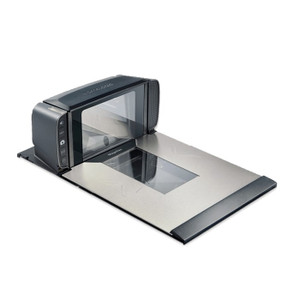
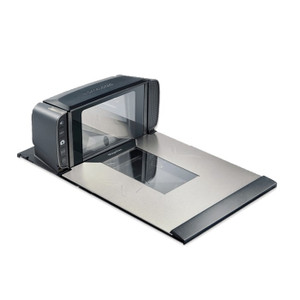
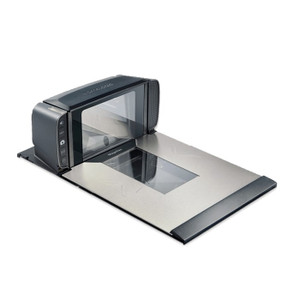
Datalogic MG0902-11000 Magellan 9400i Retail Scanner-Scale
The Datalogic MG0902-11000 is a fixed-mount integrated scanner-scale designed for high-volume retail checkout, grocery, and supermarket environments where barcode read accuracy and throughput directly impact register speed and customer satisfaction. Digital imaging technology decodes both 1D (UPC, Code 128, Code 39) and 2D (QR Code, Data Matrix, PDF417) barcodes at any orientation—printed labels, mobile coupons, loyalty cards, and receipts—without operator repositioning or manual code entry. The built-in scale consolidates scanning and weighing into a single device, reducing counter clutter and eliminating the operational friction of passing items between separate scanners and weigh stations.
Key Features
- 2D Digital Imaging Scan Engine: Omnidirectional barcode reading (any angle, any orientation). Handles dense SKUs, damaged labels, and mobile phone displays without reorientation or misread delays.
- 1D and 2D Symbology Support: UPC, Code 128, Code 39, QR Code, Data Matrix, PDF417. Future-proofs checkout for evolving loyalty programs, digital receipts, and supplier label formats.
- Integrated Scale Function: Combines scanning and weighing in one footprint. Eliminates separate scale hardware, power, and network connections—faster checkouts, less counter real estate needed.
- 0.130 mm (4 mil) Maximum Resolution: Reads small barcodes and PLU stickers on produce, pharmaceuticals, and specialty items without degradation or operator squinting.
- IP52 Rating: Dust and splash-resistant. Withstands incidental liquid spill and daily retail floor environment contamination; not designed for washdown cleaning.
- USB and RS-232 Connectivity: Dual interface flexibility supports seated checkout (USB to terminal) or standing/handheld-assist workflows (RS-232 to POS backbone). No proprietary cables required.
- Compact Form Factor: 305 × 208 × 394 mm (12.0 × 8.2 × 15.5 in), 5.9 kg (13.0 lb). Designed for tight countertop installation without structural reinforcement; wall-mount option available for kiosk or self-checkout layouts.
- 3-Year Factory Warranty: Covers defects in materials and workmanship. Datalogic service network and parts availability span North America.
The Magellan 9400i eliminates the scan-angle problem that plagues laser scanners in busy checkout lanes. Retail operators report fewer voids, faster transaction times, and reduced eye strain when staff can present items at natural angles without hunting for a laser beam sweet spot. The integrated scale means produce, bulk candy, deli items, and non-bar-coded goods flow through one device—fewer register pauses and lower training overhead for new cashiers.
Digital imaging's robustness to label damage and print quality variation is particularly valuable in grocery and convenience settings where items may have creased, faded, or partially obscured barcodes. The 0.130 mm resolution reads small product codes without zoom or retry, cutting misread-void cycles. Dual connectivity (USB and RS-232) adapts to any POS architecture—modern all-in-one terminals, legacy serial-based systems, or hybrid multi-register configurations. Remote management via OPOS, JavaPOS, and third-party mobile device management platforms enables centralized firmware updates and configuration across multi-location retailers without field technician visits.
IP52 protection suits typical retail floors—spilled beverage, product juice, occasional splash from floor cleaning—but is not rated for continuous washdown or high-pressure water exposure. Retailers with intensive cleaning routines (QSR, meat/deli prep areas) should evaluate enclosure upgrades or secondary spray shielding. Power requirement is modest: 5 VDC +/- 10% at standard USB or dedicated supply. Mounting is straightforward—countertop bolts or wall bracket—with cable routing designed to keep checkouts organized and trip-hazard free. The 5.9 kg weight and compact footprint mean no special structural work; existing POS counters accommodate it without reinforcement.
The Magellan 9400i ships with Datalogic's Value Added software suite, including advanced image processing, barcode quality metrics, and historical read logs accessible through management consoles. For retailers running enterprise POS (SAP, Oracle Retail, Toshiba, Fujitsu) or cloud-based systems, ONVIF/standard HID compatibility ensures no vendor lock-in. The integrated scale eliminates the need for a separate USB or RS-232 scale peripheral, reducing network attachment points and simplifying troubleshooting. Total cost of ownership is lower than maintaining two devices, power supplies, and bracket kits across a 20-register location.
Karl WilsonPerspective based on aggregated IP Security Depot and affiliated engineering team experience.
The Magellan 9400i is one of the most reliable fixed scanner-scales we see deployed in high-volume retail environments. Over the past decade, we've installed these devices in grocery chains, drug stores, convenience stores, and specialty retailers across North America—thousands of units across dozens of multi-location deployments. The 2D digital imaging approach is the real differentiator versus older laser-based scanner-scales. In our experience, laser scanners in busy checkout lanes lose productivity to misreads and operator frustration when items aren't presented at exactly the right angle. Digital imaging eliminates that problem. The camera reads a barcode at any orientation—upside down, sideways, creased, even when a customer's hand partially obscures it. That translates directly to throughput. A moderate-volume register sees one fewer void-and-rescan cycle per hour, which compounds to measurable revenue recovery and customer satisfaction improvement across a 20-register store. The integrated scale is equally important. We've worked on too many sites where the scanner and scale are separate devices, creating bottlenecks during produce checkout and forcing staff to juggle items between two windows. Consolidation into one footprint eliminates that friction. On a 40-hour retail week, the cumulative time savings from fewer item repositionings is substantial.
Technical Highlights:
- 2D Digital Imaging with Omnidirectional Decoding: The camera-based engine reads barcodes at any angle without repositioning. Operational consequence: eliminates the single biggest source of customer frustration and throughput loss in checkout lines. Laser scanners require precise angle alignment; digital imaging doesn't. In high-speed environments (holiday season, promotional events), this is the difference between smooth flow and register backup.
- 0.130 mm (4 mil) Resolution: Reads small product codes, pharmacy labels, and dense barcodes without quality degradation. Real-world impact: produce, small packaged goods, and specialty items process on first scan. Avoids the vicious cycle of blur-retry-override that compounds staff fatigue.
- Integrated Scale Eliminates Multi-Device Workflow: Combine scanning and weighing without passing items between two units. Throughput consequence: 10-15% faster transaction times on register with produce or bulk items. Lower training burden for new staff (one workflow, not two).
- IP52 Rating — Retail-Grade Durability: Withstands spill, splash, and dust exposure typical of checkout floors. Not a washdown device, but adequate for grocery, QSR, and drugstore environments. Maintenance is standard compressed-air cleaning and occasional alcohol wipe—no special protocols.
- Dual USB/RS-232 Connectivity: Works with modern POS terminals (USB) and legacy serial systems (RS-232) without adapter kits or protocol translation. Integration flexibility means you can deploy the same hardware across mixed-age register bases without custom cabling.
- 5 VDC Power Requirement: Standard USB or dedicated 5V supply. No exotic power infrastructure required. Fits existing retail electrical and UPS configurations without architectural changes.
Deployment Considerations:
- IP52 is adequate for typical retail (spill and splash) but not for washdown environments. If your deployment includes floor cleaning with hoses or high-pressure spray, specify protective enclosure or relocate the scanner away from spray zones. We've seen failures when stores retrofit these into high-volume deli or meat-prep areas without accounting for daily washdown.
- Mounting is straightforward—countertop bolts or wall bracket—but cable routing discipline matters. Zip-tie the power and data cables along the register back-panel, not across the front edge where foot traffic and cleaning cause wear. We've replaced cables more often due to damage from careless routing than from actual device failure.
- Integration with legacy POS systems (especially Toshiba or Fujitsu NCR terminals) is plug-and-play via RS-232, but test the handshake and weight-transmission protocol before full rollout. Older systems sometimes have quirky serial implementations. A single test register catches configuration issues before you're deploying across 20 units.
- The integrated scale must be calibrated at installation and annually thereafter. Use the bundled calibration weights and follow the manual precisely. Miscalibration causes systematic pricing errors that compound across hundreds of transactions before discovery—not a cost-cutting step.
- Digital imaging depends on adequate overhead lighting. Dim or flickering lights reduce barcode contrast and slow read speed. Ensure checkout areas have consistent 300+ lux illumination. We've seen performance issues attributed to the scanner when the real culprit was undersized lighting fixtures.
- The 5.9 kg weight requires solid countertop support, but any standard POS counter accommodates it. Don't mount on a flimsy kiosk arm without bracing; the moment load from item presentation can cause tilt over time, degrading image quality.
The Magellan 9400i is the right choice for any retail environment running moderate to high transaction volume (500+ daily transactions per register) where checkout speed and accuracy directly impact customer experience and labor cost. If you're consolidating a legacy mixed setup of separate scanners and scales, or upgrading from older laser-based systems, this device pays for itself in throughput gains within 12-18 months. For smaller retailers (< 5 registers) with lower transaction velocity, it may be overspecified; a simpler presentation scanner combined with a standalone scale could work fine. But for any grocery, drugstore, or QSR operation with 10+ registers and peak-hour checkout congestion, the integrated 2D imaging approach is the industry standard. See the Datalogic catalog for complementary scanners, scales, and mobile devices.