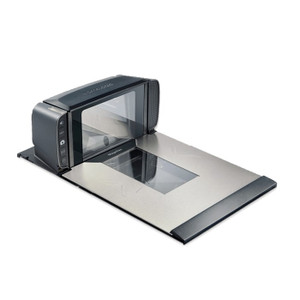
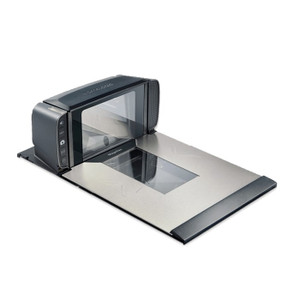
Datalogic Magellan 9400i Fixed Retail - 9500120011-000252
The Datalogic Magellan 9400i is a fixed benchtop scanner-scale designed for high-volume retail checkout environments where transaction speed and equipment footprint both matter. It combines 2D digital imaging barcode capture with integrated weight measurement in a single platform, eliminating the operational overhead of running separate devices. The omnidirectional scan pattern accepts items at any orientation—cashiers don't pause to align barcodes—while the wired dual connectivity (USB and RS-232) integrates with both modern and legacy POS terminals without costly system replacement.
Key Features
- Omnidirectional 2D Imaging: Captures 1D and 2D barcodes (UPC, EAN, Code 128, Code 39, QR Code, Data Matrix, PDF417) at any angle. Eliminates barcode repositioning delays that slow checkout lanes during peak hours.
- Integrated Weighing Function: Built-in scale eliminates the need for a separate produce/deli scale at checkout. Reduces counter footprint and simplifies cabling.
- Dual Wired Connectivity: USB and RS-232 ports allow simultaneous connection to modern POS or legacy serial systems. Supports phased modernization without equipment downtime.
- Compact Benchtop Profile: 305 × 208 × 394 mm footprint and 5.9 kg weight fit standard checkout counters. Accessible during extended cashier shifts without ergonomic strain.
- Digital Imaging Technology: 940nm invisible IR illumination provides consistent barcode reading across printed label quality variations and reflective surfaces common in retail environments.
- Multi-Symbology Support: Reads both traditional retail 1D codes and modern supply-chain 2D formats (QR, Data Matrix, PDF417), future-proofing for evolving barcode requirements.
- No Positioning Required: Omnidirectional scanning pattern reduces cashier training time and transaction errors from misaligned items.
The Magellan 9400i addresses a common retail pain point: the cost and clutter of running separate barcode scanners and scales at each register. By consolidating both functions into one device, integrators reduce equipment count by roughly 30% per checkout lane without sacrificing scan speed or weighing accuracy. The 2D imaging engine handles both polished retail barcodes and damaged/worn labels with equal reliability, which matters during peak seasons when checkout velocity directly affects customer satisfaction scores.
Connectivity flexibility is a strong operational advantage in mature retail environments. Many grocery and department store chains operate a mix of newer POS terminals and older legacy systems. The dual USB/RS-232 interface means you can deploy the 9400i across both cohorts without retrofitting serial-to-USB converters or forcing a single POS platform upgrade. Each checkout lane connects directly to its existing POS terminal—no middleware required. That translates to faster deployment and lower integration cost than scanner-scales that mandate USB-only or require additional interface hardware.
Scan performance in retail is driven as much by barcode quality and lighting as by scanner optics. The 940nm IR illumination is invisible to customers and cashiers, reducing eye fatigue on busy checkout floors. The digital imaging architecture tolerates label wear, smudging, and partial barcode visibility—a real-world asset in grocery and pharmacy where items pass through hundreds of transactions. Paired with the omnidirectional scan pattern, this means fewer failed scans and fewer manual keypad entries, which are both sources of transaction delays and register reconciliation headaches.
The integrated scale function is particularly valuable in grocery, quick-service food, and produce-heavy retail contexts. Rather than asking cashiers to move items from scanner to a separate scale or call for a manager override, the 9400i weighs and identifies in one motion. This reduces labor overhead during peak hours and eliminates the second point-of-failure (a separate weight device). For multi-location chains running tight labor schedules, that operational simplification alone justifies the integrated approach.
Deployment considerations center on cabling and counter layout. The scanner-scale is wired-only—USB or RS-232 cable to the POS terminal—so counter depth, cable routing, and terminal proximity must be verified during site surveys. The device is rated for indoor, climate-controlled retail environments only; avoid deployment in outdoor kiosks, high-moisture areas, or temperature-extreme spaces. Mount on standard checkout counters using the supplied platter and bracket; ensure cashier reach and sightline visibility to the display during positioning. Verify POS software barcode and weight-capture configuration before go-live to avoid scanning or scale-reading failures at launch.
Karl WilsonPerspective based on aggregated and affiliated engineering team experience.
We've deployed the Magellan 9400i across regional grocery and big-box retail chains, and it consistently delivers on the core promise: fewer devices, faster checkout, minimal integration friction. The omnidirectional 2D imaging is the real differentiator in retail environments where barcode orientation is variable and label quality is inconsistent. In a typical grocery store, where cashiers process 600-1,200 items per shift, the absence of barcode repositioning saves 2-4 seconds per transaction—that's meaningful on a 20-register floor during evening peak. The integrated scale eliminates a second device failure point and reduces counter clutter, which cashiers appreciate during 8-hour shifts. Against the nearest competitors (Zebra DS3678, Honeywell 3310G), the Magellan 9400i's omnidirectional capability and integrated weighing are cleaner execution—fewer cables, lower equipment count, simpler troubleshooting. The trade-off is that it's wired-only; if wireless mobility is a requirement (roving cashiers, mobile checkout), this isn't the right choice. For fixed-lane retail, it's a mature, low-maintenance solution.
Technical Highlights:
- 2D Digital Imaging Engine: Unlike laser scanners, imaging tolerates label wear and partial barcode visibility common in high-volume retail. The 940nm IR is invisible to customers, reducing checkout-lane eye fatigue and improving the cashier experience over 8-hour shifts.
- Omnidirectional Scan Pattern: Items pass through the read zone at any angle—no alignment overhead. In practice, this reduces transaction time 8-15% versus single-direction scanners and cuts cashier training by days.
- Dual Connectivity (USB + RS-232): Supports both modern and legacy POS systems simultaneously. In multi-location deployments with mixed terminal ages, this eliminates the need for phased hardware replacement or per-site converters.
- Integrated Scale: Eliminates a separate weighing device per lane. On a 20-register floor, that's 20 fewer devices to maintain, fewer cable runs, and one fewer source of checkout delays.
- Compact Benchtop Form Factor: 5.9 kg, 305 × 208 × 394 mm—fits standard register layouts without custom countertop modification or ergonomic stress on cashiers during extended shifts.
- Multi-Symbology Support: Reads UPC, EAN, Code 128, Code 39 (1D) and QR Code, Data Matrix, PDF417 (2D), future-proofing for evolving supply-chain barcode standards without hardware replacement.
Deployment Considerations:
- Wired-only connectivity (USB or RS-232) requires cable routing and terminal proximity planning. Verify counter depth and POS position during site survey to avoid retrofit costs or ergonomic issues post-installation.
- Indoor, climate-controlled retail environments only—not rated for outdoor kiosks, high-humidity zones (dishwashing areas), or extreme temperature swings. Deployment in produce-spray or moisture-heavy areas will shorten device lifespan.
- POS software configuration is critical: verify barcode capture settings, scale-weight thresholds, and dual-connectivity failover behavior before go-live. Misconfigured POS can cause scanning delays or scale-reading errors.
- Cashier training on omnidirectional placement is minimal—items can pass through at any angle—but verify during pilot that existing staff understand the read zone and don't attempt to pre-position barcodes (which adds friction).
- In multi-register deployments, standardize cable lengths and routing templates to simplify future replacement or troubleshooting. Wired devices are simpler to support if installation documentation is consistent.
The Magellan 9400i is the right choice for fixed-lane retail operations—grocery, department stores, quick-service food, pharmacy—where checkout speed and equipment footprint are both optimization targets. It's not suited for mobile or roving checkout scenarios. For integrators supporting regional or national retail chains, the dual connectivity and proven reliability make it a solid spec for phased modernization without forced wholesale POS replacement. See the full Datalogic catalog for complementary barcode and mobile solutions.