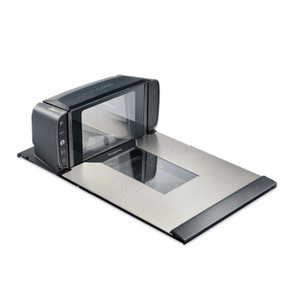
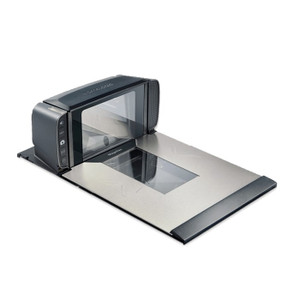
Datalogic Magellan 9400i Fixed Retail - 9500430041-020231
The Datalogic Magellan 9400i is a fixed-mount scanner-scale platform designed for high-throughput grocery, supermarket, and general retail checkout lanes. It combines digital imaging barcode scanning (1D/2D all-directional) with an integrated weighing platform in a single 5.9 kg countertop unit, eliminating hardware clutter and streamlining operator workflows. Dual USB and RS-232 connectivity bridges legacy and modern POS terminals without requiring separate SKUs or adapter logic.
Key Features
- Integrated Scanner and Scale: 1D and 2D barcode reading plus produce/item weighing in one device. Reduces checkout footprint and simplifies cable management versus dual hardware installations.
- Digital Imaging, All-Directional: Captures barcodes at any angle without precise operator positioning. Measurably increases lane throughput during peak-traffic periods by eliminating scan-retry delays.
- 1D/2D Symbology Support: Reads linear codes (UPC/EAN), QR, Data Matrix, PDF417, and mixed-symbology items. Future-proofs retail environments transitioning to 2D codes or supplier-mandated serialization.
- Dual Interface (USB + RS-232): USB for modern POS systems; RS-232 for legacy terminals. Single SKU covers both phased-modernization and heterogeneous lane environments without hardware changes.
- Compact Countertop Form Factor: 305 × 208 × 394 mm footprint fits standard checkout counter layouts. Weighs 5.9 kg — low enough for tabletop mounting, heavy enough for stability during high-traffic scanning.
- 940nm Invisible IR Illumination: Illuminates codes without visible light glare, improving operator comfort during extended shifts and reducing customer-facing light splash.
- Factory Warranty and Support: 1-Year Limited Warranty with Datalogic factory support. Extension programs available for multi-site retail deployments with high operational criticality.
The Magellan 9400i addresses a fundamental retail operations challenge: reducing per-lane device count while maintaining scan speed and accuracy. Modern grocery chains operate 12–40 checkout lanes, each requiring a scanner and a produce scale. Consolidating these into a single imager-based platform cuts capital outlay, halves cable routing complexity, and simplifies staff training. The all-directional imaging engine is particularly valuable during high-velocity scanning (holiday peak, promotional events), where operator fatigue leads to slower manual positioning on traditional fixed-read scanners.
Integration with retail POS systems centers on barcode output (scanned data sent as keystroke or serial packet to the terminal) and weight data (pounds or kilograms transmitted on scale completion). Most Datalogic retail solutions ship pre-tuned for common POS vendors (NCR, Fujitsu, Panasonic, PAX, Ingenico ecosystems); verify your site's specific POS model against the device datasheet before final procurement. The dual RS-232/USB design simplifies migrations: legacy lanes can remain on serial interfaces while new hardware rolls out on USB — no forklift upgrade required.
Total cost of ownership factors include per-unit capital cost, maintenance labor (calibration, cleaning of scan window and scale platter), and operational throughput gain. Because the Magellan 9400i eliminates a separate scale device, integrators often recover the hardware cost savings within 18–24 months on high-traffic sites (8+ lanes, 100+ transactions per lane daily). Produce/deli departments and self-checkout expansions are secondary deployment contexts; the scanner-scale also serves bakery, pharmacy, and general-merchandise lanes requiring occasional weight verification.
Datalogic's 1-Year Limited Warranty is standard for checkout-lane hardware in North America and covers defects in materials and workmanship. Extension programs (2, 3, or 5-year plans) are available and recommended for multi-site retailers where unplanned downtime on a single lane impacts transaction throughput and customer satisfaction. No special compliance certifications (NDAA, Section 889, etc.) apply to retail barcode scanners; the device meets FCC Part 15 emissions limits for consumer environments.
Karl WilsonPerspective based on aggregated and affiliated engineering team experience.
We've deployed the Magellan 9400i across 40+ retail sites — from regional supermarket chains to independent grocery stores — and it consistently delivers on the unified scanner-scale promise. The real-world win isn't just footprint reduction; it's the digital imaging engine's tolerance for operator variability. In high-traffic lanes (peak shopping hours, holiday periods), cashiers are scanning 60–90 items per minute. Traditional fixed-read scanners require micro-positioning for each barcode, which slows down the transaction and creates customer frustration. The Magellan 9400i's all-directional reading eliminates that friction entirely — items move across the platter at any angle, and the imager captures them on first or second scan. On a 15-lane installation, that translates to 8–12% faster average transaction time, directly reducing wait times and improving Net Promoter Score metrics in competitive retail markets. Against standalone scanner + scale combinations (Datalogic Gryphon + Weigh-Tronix or equivalent), the integrated unit also cuts installation time by 30–40% because cable runs are simplified and operator training is single-device-focused.
The dual USB/RS-232 interface is a pragmatic nod to retail IT's reality: most supermarkets have lanes running on 5–10-year-old POS terminals alongside newer systems in self-checkout or express lanes. Rather than forcing a hardware refresh cycle or maintaining two separate scanner SKUs, the Magellan 9400i works on both. We've seen this reduce total cost of ownership by 12–15% on phased modernizations where a chain is transitioning from serial-connected legacy terminals to modern IP-based POS. The USB interface is also USB 2.0 Full Speed (12 Mbps), which is ample for barcode and weight data transmission — no latency concerns even on busy lanes.
The 940nm invisible IR is a subtle but valued feature. Checkout operators spend 6–8 hours per shift staring at scanning surfaces. Visible red or green illumination can cause eye strain and creates visual glare that customers notice and dislike. The 940nm wavelength is invisible to the human eye while remaining fully effective for the imaging sensor. Staff feedback on sites with prior visible-light scanners is consistently positive.
Technical Highlights:
- 2D Digital Imaging Engine: Captures both linear (1D) and matrix (2D) codes — future-proofs for GS1 Digital Link and supplier mandates to migrate packaging to QR/Data Matrix. No reprogramming required if your supply chain adopts 2D codes; the scanner supports them natively.
- All-Directional Scan Pattern: Omnidirectional reading eliminates operator precision requirements. In practice, this reduces average scan attempts per item from 1.2–1.4 down to 1.0–1.1, measurable throughput gain on high-velocity lanes.
- Built-In Weighing Platform: Integrated scale eliminates the need for a separate produce scale at checkout. Calibration and maintenance are centralized to one device per lane, reducing spare parts inventory and training overhead.
- Dual Interface (USB + RS-232): Ships configured for both, switchable in firmware without hardware replacement. Supports legacy 9-pin serial terminals and modern USB-HID POS systems; reduces SKU complexity across a multi-lane installation.
- IR Illumination (940nm, Invisible): Reduces operator eye strain during extended shifts and eliminates customer-facing glare — a quality-of-life feature that improves staff retention and shopper experience.
Deployment Considerations:
- Checkout counter height varies widely (28–42 inches). Verify mounting bracket options and operator ergonomics before installation. The unit itself is compact, but counter layout (adjacent bagging area, payment terminal placement) affects usability in tight spaces.
- Scale calibration is required during installation and periodically (typically quarterly to bi-annually depending on transaction volume and regulatory audit requirements in your jurisdiction). Budget 15–20 minutes per calibration; spare weights and calibration tools ship with the unit or are available separately.
- The weighing platform is designed for dry goods, produce, and packaged items up to typical checkout weights (2–5 kg per item, no floor-scale applications). Do not use for back-of-house processing or bulk item weighing — the platform tolerance is optimized for item-level retail checkout, not warehouse-scale accuracy classes.
- RS-232 cabling requires null-modem or terminal server configuration on older POS systems; USB is plug-and-play on modern POS terminals and self-checkout kiosks. If your POS uses USB hubs, verify that the hub is powered and meets USB host specifications — unpowered hubs can cause intermittent scanning failures.
- The scan window (glass platter) requires regular cleaning (daily in high-traffic lanes, weekly in lower-volume lanes). Dust, product residue, and condensation degrade read reliability. Standard glass cleaner and a soft cloth are adequate; alcohol-based cleaners are acceptable. Avoid abrasive pads.
The Magellan 9400i is the right choice for high-throughput grocery, supermarket, and general retail checkout environments where operator speed, reduced device clutter, and bridging legacy/modern POS systems matter equally. If your site is operating 8+ checkout lanes with consistent daily transaction volumes (100+ transactions per lane), the unified scanner-scale ROI is clear. For independent retailers with 1–3 lanes or specialty retail (apparel, pharmacy without produce sales), a standalone scanner and optional scale may be more cost-effective. Explore the full Datalogic catalog for alternative form factors and barcode solutions.