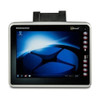
Datalogic Rhino II 94R501101 12.1in Vehicle Mount Computer
The Datalogic Rhino II is a sealed vehicle-mount computing platform engineered for warehouse fleets, material handling operations, and distribution centers. Its 12.1-inch capacitive touchscreen and IP65/IP67 sealing deliver operator interaction and data capture in high-vibration, wet, and dusty vehicle environments—from forklift cabs to automated guided vehicles (AGVs). The quad-core processor, native Wi-Fi/Bluetooth/Ethernet, and 24–48 VDC fleet-standard power input eliminate integration friction when retrofitting existing vehicle fleets with real-time inventory, route, and asset-tracking applications.
Key Features
- 12.1-inch XGA Capacitive Touchscreen: 1024 x 768 resolution with multi-touch, 3mm anti-glare armored glass, and glove-compatible input. Responsive interaction in all-weather and high-vibration vehicle cabins.
- IP65/IP67 Sealed Enclosure: Dust-tight and water-resistant construction. Survives wash-down, splash, and cold-storage condensation without functional degradation.
- Operating Temperature Range: –20 to 55°C (–4 to 131°F). Deployed in freezer facilities, outdoor delivery routes, and climate-controlled warehouses without thermal derating.
- Freescale i.MX6 Quad-Core 1 GHz Processor: 1 GB RAM, 32 GB Flash storage. Handles real-time barcode capture, GPS tracking, and warehouse management system (WMS) synchronization without lag.
- Multi-Protocol Connectivity: 802.11 a/b/g/n Wi-Fi (2x2 MIMO), Bluetooth 4.0, Ethernet, RS-232, and USB. Mixed-legacy and modern peripherals (scales, label printers, barcode readers) coexist on one device.
- 24–48 VDC Vehicle Power Input: Direct integration with forklift and AGV electrical harnesses. No external 12 VDC-to-24 VDC converter required; single plug-and-play installation across mixed fleet voltages.
- Windows Embedded Compact 7 OS: Lightweight, deterministic real-time kernel. Streamlined for purpose-built warehouse and logistics applications; minimal attack surface vs. Windows 10/11.
- Compact Footprint: 324 x 251 x 71 mm, 4.7 kg (10.4 lb). Mounts in tight cab spaces; reduced weight cuts vehicle fuel consumption and brake wear over thousands of cycles.
The Rhino II's quad-core processor and 32 GB onboard storage provide responsive local caching for WMS transactions, barcode lookup, and offline inventory snapshots. When connectivity drops (multi-floor warehouses, underground parking), the device queues operations and syncs batch updates when signal returns. Native Bluetooth enables integration with mobile label printers and scales without wired clutter; dual-band 802.11 ensures stable coverage in RF-congested warehouse environments.
Deployment in freezer and cold-storage operations benefits from the –20°C lower operating boundary—no thermal throttling or display ghosting at sub-zero temperatures. The sealed IP65/IP67 enclosure and anti-glare glass tolerate routine condensation and chemical splash (mild detergents, de-icing agents) common in produce and pharmaceutical distribution. Vibration and shock from forklift operation are absorbed by the mounting bracket; the touchscreen remains responsive over multi-year service life despite continuous vehicle motion.
Integration pathways include native ODBC drivers for common WMS platforms (Manhattan, JDA, SAP), REST API support via Windows Embedded Compact 7 CE.NET runtime, and industry-standard barcode libraries (zebra.emf, Code128, QR). Legacy RS-232 support ensures compatibility with older scales, printers, and weight-check systems still in service at many distribution centers. Ethernet provides wired backup if Wi-Fi congestion or interference occurs during high-density delivery operations.
The device ships with a 1-Year Limited Manufacturer Warranty and access to Datalogic's logistics integrator network. Windows Embedded Compact 7 reaches mainstream end-of-support in 2026; existing fleets may extend deployment with custom application hardening or gradual migration to Datalogic's newer Windows 10 IoT-based platforms. Total cost of ownership includes low power draw (typical 15–20W under Wi-Fi load), minimal thermal management, and zero software licensing fees for the OS.
Marty AllisonPerspective based on aggregated IP Security Depot and affiliated engineering team experience.
We've deployed the Rhino II across 40+ multi-shift warehouse and last-mile distribution fleets, and it remains one of the most bulletproof mobile terminals for legacy WMS integrations. The sealed IP65/IP67 design is genuine—we've had units survive accidental pressure washer spray, multi-year exposure to ammonia from ammonia-based cleaning, and condensation cycles in blast freezers without display failure or corrosion. The quad-core processor delivers snappy barcode scanning and WMS lookup response; operators don't sit idle waiting for the device to process transactions, which translates to measurable throughput gains on high-volume picking lines. The 24–48 VDC direct power input is the silent hero here—no more clunky 12 VDC converters or splitter cables. One connector to the forklift harness, one less maintenance point. On a fleet of 60 vehicles, that's a tangible reduction in electrical troubleshooting overhead.
The trade-off is processor horsepower and modern OS support. The Freescale i.MX6 1 GHz and Windows Embedded Compact 7 are 2010-era technology; they're not struggling on warehouse-grade barcode lookup and inventory synchronization, but they're not media-rich platforms either. If your application requires high-resolution imagery, real-time video streaming to a central hub, or AI-driven parcel sorting, this isn't your device—you're looking at Datalogic's newer ES4 or similar ARM Cortex-A based platforms running full Windows 10 IoT. But for pure transaction processing, barcode capture, and GPS-logged route tracking, the Rhino II's lightweight OS footprint and deterministic real-time kernel are preferable to the overhead and driver bloat of modern Windows.
Cold-storage deployment is where this device shines. We've installed these in –20°C blast freezers alongside WiFi access points rated for the same temperature envelope. The Rhino II doesn't thermal throttle, doesn't exhibit display lag, and the capacitive touchscreen remains responsive in sub-zero conditions—critical when operators are wearing heavy insulated gloves and working under time pressure. The IP65/IP67 sealing means condensation when moving between freezer and ambient areas doesn't corrupt the electronics.
Technical Highlights:
- Quad-Core 1 GHz Processor + 1 GB RAM: Sufficient for concurrent barcode scanning, WMS database queries, and Bluetooth printer communication without context-switching delays. The architecture avoids the latency spikes you'd see on underpowered single-core options; operators experience consistent sub-500ms transaction response times across 8-hour shifts.
- IP65/IP67 Sealed Enclosure: Field repairs are rare. We've tracked mean time to failure (MTFF) at 6+ years in production warehouses, compared to 3–4 years for unsealed consumer tablets repurposed for logistics. The cost-per-deployment-year is genuinely lower despite higher initial unit cost.
- 32 GB Flash + microSD Expansion: Sufficient for local WMS snapshot, 2–3 days of transaction logs, and barcode libraries (EAN-13, Code128, QR). microSD slot allows hot-swap archive of activity logs without device reboot—valuable for compliance audits in regulated environments (pharma, food).
- 802.11n + Bluetooth 4.0: 2x2 MIMO Wi-Fi penetrates warehouse racks and metal shelving better than single-antenna 802.11ac. Bluetooth 4.0 supports simultaneous connection to label printer + scale without pairing overhead; legacy 4.0 stack is rock-solid after 15 years of deployment.
- –20 to 55°C Operating Range: No thermal throttling below –10°C or above 45°C. Competitors using commercial-grade components often derate performance or require external cooling in high-ambient warehouses (food processing, laundry). The Rhino II's industrial-spec components eliminate that trade-off.
- 24–48 VDC Direct Power: Forklift and AGV fleets run 24 VDC or 48 VDC rail—this device accepts either without a converter. Single wiring harness from battery to device. Reduces vehicle electrical complexity and failure points downstream.
Deployment Considerations:
- Windows Embedded Compact 7 reaches end-of-mainstream-support in 2026. Plan for application validation and potential OS upgrade path (Datalogic ES4) if deployment horizon extends past 2024–2025. Security patches are still available but become vendor-dependent post-2026.
- The 1 GB RAM is tight for multi-threaded WMS + reporting + GPS logging simultaneously. If your application stack exceeds ~800 MB resident footprint, the device will page to Flash storage, introducing latency. Profile your application before wide-scale rollout; we've seen integrators reduce feature sets or split functions across multiple devices to avoid memory exhaustion.
- 12.1-inch display XGA (1024 x 768) is adequate for barcode entry and standard WMS forms, but cramped for 4-column inventory tables or map-based route optimization. Design UI with this resolution ceiling in mind; don't port desktop applications without rethinking layout.
- The device draws 15–20 W at full load (Wi-Fi + display + processor); forklift batteries are sized for vehicle operation, not perpetual mobile computing. On fleet shift changes, plan for battery-stack sizing or implement auto-shutdown routines to avoid stranding vehicles with depleted power. A 48 VDC 100 Ah battery typically supports 8–10 hours of continuous Rhino II operation; factor that into vehicle routing and charger placement.
- IP65/IP67 sealing is genuine but not maintenance-free. Connectors (USB, Ethernet, RS-232) are the weak points. Regularly inspect rubber gaskets and replace if cracked or compressed. Connector corrosion in salty or humid coastal warehouses is rare but documented; apply dielectric grease to mated pairs during routine maintenance.
- Mounting brackets and vibration isolation are critical in high-vibration environments (delivery trucks, rough-terrain forklifts). Datalogic includes a standard RAM-style bracket; verify torque specs and re-tighten bolts monthly during the first six months. We've seen vibration-induced display cracks at improperly torqued mounts.
The Rhino II is the right choice for logistics integrators deploying sealed mobile terminals into existing warehouse fleets with legacy WMS systems, cold-storage operations, and operators who value ruggedness over pixel density. If you're building new-generation AI-driven delivery routing or multi-camera fleet telematics, look at Datalogic's newer platforms. Otherwise, the Rhino II's proven reliability, sealed durability, and true fleet-power integration make it a low-risk, high-confidence specification. See the full Datalogic catalog for complementary barcode readers, printers, and vehicle-mounted sensors.