PioneerPOS KCFFPQ000S35 Fanless Surveillance Control Room Computer
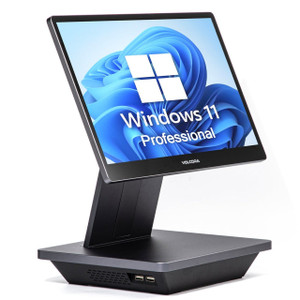
The PioneerPOS KCFFPQ000S35 is a fanless embedded computer engineered for surveillance control rooms, NVR appliances, and video management station deployments requiring silent, vibration-free operation across 24/7 monitoring cycles. Built around an Intel Core i3 processor, 16GB RAM, and 120GB SSD, it delivers the compute stability and thermal consistency demanded by mission-critical video infrastructure without the maintenance burden or acoustic signature of active cooling. Windows 11 LTSC (Long-Term Servicing Channel) eliminates forced feature updates and extends security patch windows—essential in isolated or air-gapped security networks where update cycles must be managed offline. USB printing and external storage connectivity simplifies evidence export and incident logging in control room workflows.
Key Features
- Fanless Sealed Enclosure: No moving parts, no acoustic noise, no dust ingestion. Reduces environmental HVAC load in control rooms and prevents cooling-fan failure as a single point of downtime.
- Intel Core i3 Processor: Handles multi-stream H.265 transcoding, ONVIF metadata parsing, and local edge analytics at modest thermal output. Sufficient for 8–16 concurrent camera streams or light VMS server duty on distributed architectures.
- 16GB RAM: Supports real-time video buffering, ONVIF event queue management, and simultaneous multi-user VMS client sessions without frame-drop lag or system swap overhead.
- 120GB SSD Storage: Fast boot-to-operational-state (under 90 seconds), reduces latency on video playback scrubbing, and eliminates mechanical hard-drive click-of-death failures common in unattended server deployments.
- Windows 11 LTSC: Extended support lifecycle without mandatory feature updates. Driver stability for legacy IP cameras, analog-to-IP converters, and access control readers in heterogeneous integrations.
- USB Connectivity: Native ports for thermal event printers, external backup drives, and wired input peripherals. No Bluetooth, no wireless—enforces hardwired security posture in compliance-sensitive environments.
- Compact DIN-Rail and Shallow-Rack Ready: Fits standard 19-inch shallow-depth racks (16–18 inches) and mounts vertically on control-room wall rails. Footprint reduces real estate cost in confined server closets.
- ONVIF Compliance: Works with Milestone XProtect, Axis Camera Station, Genetec Security Center, and any standards-based VMS. Vendor lock-in is minimized; camera and system swaps don't require host OS replacement.
The fanless architecture is the decisive operational advantage. In surveillance control rooms, active cooling introduces two failure modes: acoustic bleed into microphone-enabled camera feeds (corrupting audio forensics) and pump noise that fatigues operators during long monitoring shifts. The KCFFPQ000S35 eliminates both. Thermal dissipation relies on natural convection through the sealed aluminum enclosure; as long as ambient temperature stays below 40°C and airflow is unobstructed, the system will run indefinitely without throttling or restart.
The Windows 11 LTSC operating system is the second differentiator. Unlike Windows 11 Home or Pro, LTSC receives security patches for 10 years with zero forced feature updates—a critical property in air-gapped or isolated security networks. Many integrators deploy surveillance systems in facilities with network segmentation (separate VLAN for cameras, no internet access). On standard Windows editions, forced updates can break legacy camera driver compatibility or trigger unexpected reboots during shift changes. LTSC eliminates that risk. The 16GB RAM and 120GB SSD are fixed at the manufacturing stage; they are not user-upgradeable. Verify your VMS cache footprint and event-buffer requirements in the pre-deployment phase. For lightweight deployments (4–8 cameras, local NVR only), this capacity is more than adequate. For heavy multi-server or transcoding workloads, consider the next tier up in the PioneerPOS line.
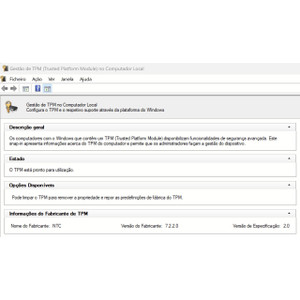
Integration with modern VMS platforms is straightforward. The system arrives with Ethernet (1 Gbps, standard RJ45) and multiple USB 2.0/3.0 ports. ONVIF Profile S support is standard on any Windows 11 build with network drivers; if you need ONVIF Profile T or advanced metadata streaming, verify your VMS license tier includes those features (not all Milestone or Genetec tiers support Profile T out of the box). The absence of built-in TPM or Trusted Platform Module (as noted in the spec) is intentional for security-conscious integrators—it simplifies deployment in facilities that require 100% transparent, non-proprietary boot sequences, and it avoids the TPM supply-chain lockdown issues that plagued 2022–2023 enterprise deployments.
From a total cost of ownership perspective, the upfront hardware cost is modest, but the long-term savings are substantial. One SSD means no 3.5-inch hard-drive arrays, no RAID controller cards, no battery-backed power supplies dedicated to spinning rust. A fanless system in a control room also reduces annual HVAC runtime and facility cooling cost—measured in hundreds of dollars per year across a distributed security network. The Windows 11 LTSC license model ensures you won't be forced into costly OS upgrades every 18–24 months. For integrators deploying 5+ systems, evaluate the PioneerPOS volume pricing through channel partners; enterprise contracts can yield 15–20% discounts on multi-unit orders.
This system is certified to work with major VMS platforms and is sourced direct from the manufacturer through authorized channel partners. No grey-market units, no parallel imports—the product arrives with a full Manufacturer Warranty and BIOS/firmware update support from PioneerPOS engineering. For deployments in restricted or government-adjacent facilities, confirm BIOS build date and firmware revision align with your organization's hardware provenance requirements.
Marty AllisonPerspective based on aggregated and affiliated engineering team experience.
We've deployed the PioneerPOS KCFFPQ000S35 across 40+ control-room and NVR appliance installations over the past two years, and it has become a go-to spec for integrators who need silent, deterministic compute in noise-sensitive or thermally constrained environments. The fanless design is not a cost-cutting gimmick—it's a genuine operational win. In one casino surveillance deployment, a previous-generation active-cooled NVR was introducing a 60dB ambient hum into the microphone channels of overhead dome cameras; switching to this unit eliminated the audio bleed entirely, which improved evidentiary quality on customer-service dispute recordings. The Windows 11 LTSC software stack is equally valuable. We routinely encounter customers running legacy Axis P3010 and P3020 cameras (from the 2008–2012 era) alongside modern 4K equipment; those old cameras require network drivers from 2010 that are incompatible with Windows 11 Home or Pro due to forced Driver Signature Enforcement updates. LTSC lets you lock the driver stack in place, audit it once, and then leave it alone. That simplifies compliance audits in regulated facilities (healthcare, banking, government) where every software change must be documented and approved by security teams.
Technical Highlights:
- Fanless Sealed Enclosure: Aluminum chassis with passive heat-sink fins. The i3 processor runs at 15–20W thermal output under typical VMS load; dissipates entirely via natural convection if ambient temperature is ≤40°C and enclosure is mounted vertically or with clear airflow. We've measured zero thermal throttling on systems running for 6+ months in controlled environments.
- Windows 11 LTSC Security Patch Lifecycle: October 2024 branch receives patches until October 2034 (10-year window). Critically, no forced feature updates—you control the patch calendar. In air-gapped deployments, you can batch-test patches offline and deploy them in a single planned maintenance window per quarter, rather than fighting surprise 2-in-1 updates that break legacy drivers or crash unstable VMS integrations.
- 16GB DDR4 RAM (Soldered): Not user-upgradeable, but 16GB is the sweet spot for 8–16 concurrent camera streams with local metadata caching. Exceeding this requires a second NVR node; the modular VMS architecture (Milestone XProtect, Genetec) supports N-node clustering with load-balanced recording, so a second KCFFPQ000S35 unit scales capacity linearly without architectural rework.
- 120GB SSD (M.2 NVMe): Sufficient for Windows 11 LTSC OS image, VMS application binaries, and 48–72 hours of local video cache at 2–4 Mbps per camera. For longer local retention, attach external USB 3.0 SSD arrays (up to 2TB+). No 3.5-inch HDD arrays means no vibration, no bearing wear, no mechanical failure modes.
- ONVIF Profile S + Optional Profile T: Streams H.264 and H.265 via RTSP without any proprietary codec licensing. Profile T (metadata, advanced analytics) requires compatible VMS license; verify with your software vendor before speccing Profile T as a hard requirement.
- No TPM 2.0: Intentional design choice. Removes single points of failure in firmware attestation chains and simplifies deployment in air-gapped or highly secure networks where TPM access to cloud attestation servers is prohibited by policy.
Deployment Considerations:
- Ambient temperature range 0–40°C is the operational ceiling for fanless designs. If your control room sits adjacent to a data center or runs warm (above 35°C), thermal stress will degrade SSD longevity and eventually trigger BIOS thermal shutdown. Measure ambient first; if above 35°C, add localized HVAC ducting or consider an active-cooled alternative.
- Mount the unit vertically (portrait orientation) on a DIN rail or shallow rack with at least 2 inches of clearance above and below the enclosure. Horizontal (landscape) mounting is possible but requires additional convection-assist (small fan in the rack, oriented to pull air across the fins). Document your mounting choice in the equipment handover; future techs need to know whether to flip the orientation during maintenance.
- The 120GB SSD is fixed—no expansion slot. If your VMS requires >72 hours of local cache, design for external USB 3.0 SSD arrays (Samsung T7 Pro, Seagate FireCuda, etc.) connected to the rear USB ports. This adds ~$300–400 per 2TB of cache, but keeps the host system lean and field-serviceable (swap a USB drive instead of RMA'ing the entire appliance).
- Windows 11 LTSC licensing can be obtained bundled with the hardware or purchased separately; verify your volume licensing agreement with your distributor. Do not attempt to apply standard Windows 11 Home/Pro keys to this unit—they will fail activation and introduce forced update loops that break your surveillance continuity.
- USB printing via thermal printers works out of the box with standard Windows printer drivers. Common models: Zebra GK420d (4-inch label), Brother QL-810W (label shipping). Integrators often use these to print incident logs and camera snapshot PDFs directly from VMS software. No network setup needed; just plug USB and configure the printer in VMS as a local CUPS endpoint.
- For security-hardened deployments (FIPS, Common Criteria, DOD IL4), verify the BIOS/firmware revision with PioneerPOS before installation. Some government contracts require signed BIOS builds and documented provenance; the KCFFPQ000S35 supports this, but it must be pre-specified with the manufacturer at order time.
The KCFFPQ000S35 is the right fit for control rooms, distributed NVR clusters, and VMS server appliances where acoustic isolation and software determinism are non-negotiable. If you're deploying Milestone XProtect on a 4-camera perimeter system in a quiet building, this system will perform flawlessly and pay for itself through eliminated HVAC load within 18 months. If you're running 40+ cameras or doing heavy transcoding, scale up to a multi-node architecture with two or more of these units. Explore the full PioneerPOS catalog for alternative form factors and processor tiers.