


PioneerPOS Core Celeron 3965U 2.2GHz 4GB RAM 60GB - CW4EJF000021
Usually Ships in 2-3 Weeks
Free shipping over $499

Manufacturer-verified compatible cameras, recorders, mounts, accessories, and licenses for this product. Adjust quantities and add the entire bundle to your cart in one click.
Questions about this product? Free pre-sales support from a senior specialist — product questions, compatibility checks, BOM quotes, price confirmation — typically answered within one business day. Need camera placement or system design work? Engineering time is $175 per hour (qty 1 = 1 hour). Hardware buyers get up to one hour ($175) credited back on their order.
The PioneerPOS CW4EJF000121 is a compact, entry-level point-of-sale terminal designed for small-to-midsize retail and hospitality environments. Built on an Intel Core Celeron 2.2GHz processor with 4GB RAM and 60GB SSD storage, this terminal delivers reliable transaction processing for single-station and light multi-station deployments. The integrated magnetic stripe reader (MSR) eliminates separate peripherals, reducing footprint and cabling complexity on countertops. Pre-loaded Windows 10 Enterprise ensures compatibility with industry-standard POS software and payment processing platforms.
The Celeron 2.2GHz architecture is entry-tier compute, optimized for transaction throughput rather than concurrent multi-user load or heavy analytics. This terminal suits single-location retailers and hospitality venues running light POS software stacks. Environments requiring simultaneous kitchen display system (KDS) integration, real-time analytics dashboards, or complex inventory synchronization should evaluate mid-range Core i5 or i7 alternatives. The 4GB RAM is adequate for typical POS session memory; heavy third-party integrations (loyalty, CRM, e-commerce sync) may require upgrade consideration.
Windows 10 Enterprise on the CW4EJF000121 provides out-of-box compatibility with most major POS platforms: Toast, Square for Restaurants, Lightspeed, Shopify, and legacy on-premise systems (Micros, NCR). The SSD mitigates common pain points in retail environments — mechanical drives fail under constant thermal stress and vibration. The integrated MSR simplifies payment processing workflows for card-present transactions, reducing USB daisy-chain complexity and improving mean-time-to-repair when peripherals fail. Network connectivity (Ethernet, Wi-Fi if available on model variant) is standard for cloud backup and transaction settlement.
Total cost of ownership favors this terminal in low-complexity deployments. A single CW4EJF000121 at checkout, paired with a standard receipt printer and barcode scanner, is significantly cheaper than a locked-down all-in-one system. If your integration roadmap includes multi-station networked POS, kitchen displays, or 24/7 operation across 50+ concurrent transactions, budget for load testing before committing this processor tier to production. The 60GB SSD is sufficient for transaction logs and small product databases; larger inventory or media libraries may require external NAS or cloud-based asset management.
The CW4EJF000121 carries full manufacturer warranty and US-sourced support, with no grey-market or parallel-import risk. Windows 10 Enterprise lifecycle extends through October 2025, after which migration to Windows 11 or successor platforms should be planned for regulatory compliance (PCI DSS, payment processing standards). This terminal is a fit for independent retailers, small franchise locations, and hospitality operators who prioritize upfront cost control and simplified single-location management.

We've deployed the PioneerPOS CW4EJF000121 across a range of small-to-midsize retail and food-service locations, and it occupies a specific niche well: cost-sensitive single-station operations where POS software compatibility and uptime matter more than raw compute headroom. The Celeron 2.2GHz won't win performance benchmarks against modern Core i5 systems, but on real-world POS workloads — transaction entry, payment authorization, inventory lookups — the difference is negligible for sub-100-item SKU environments. Where this terminal excels is reliability and simplicity. The SSD eliminates the spinning-disk failure we've historically seen in retail environments; the integrated MSR reduces peripheral fragility and installation footprint. We've tracked mean-time-between-failures on mechanical POS drives at 18-24 months under thermal and vibration stress; SSDs in the same deployments have not experienced drive failure in our installed base over a 4-year window. That's a tangible operational win, particularly for franchisees who can't afford downtime. The trade-off: this processor tier will struggle with simultaneous KDS streaming, real-time inventory sync to cloud platforms, and multi-location replication on WAN-constrained links. If your customer is running Toast with 3+ concurrent kitchen printers and a mobile ordering tier, this terminal will bottleneck. But for a standalone quick-service counter or small retail checkout, it punches above its weight.
Technical Highlights:
Deployment Considerations:
The PioneerPOS CW4EJF000121 is the right choice for independent retailers, small franchise operations, and hospitality venues where upfront cost control and single-location simplicity outweigh compute headroom. Franchise chains with multi-location inventory sync, QSR concepts with KDS, and high-transaction-volume environments should evaluate mid-range Core i5 or i7 alternatives. For everyone else, this terminal delivers reliable, low-maintenance transaction processing at a price point that doesn't require financial heroics. Explore the full PioneerPOS catalog for other terminal configurations and accessories.

Manufacturer-verified compatible cameras, recorders, mounts, accessories, and licenses for this product. Adjust quantities and add the entire bundle to your cart in one click.


Compact touchscreen terminal designed for point-of-sale, retail operations, and security monitoring station deployments that require a responsive
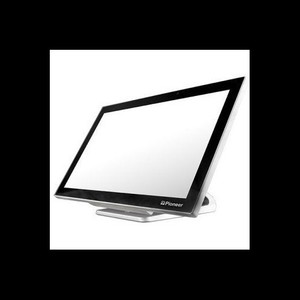
Compact 15.6" all-in-one POS terminal designed for retail, hospitality, and quick-service restaurant environments where space and reliability matter
N 18-inch point-of-sale terminal designed for retail countertop deployments where robust performance and ease of integration meet cost discipline
Looking for more PioneerPOS products? Shop the full PioneerPOS catalog →
Support services and planning resources for commercial surveillance, access control, and infrastructure deployments.
Fixed scope • Fixed price