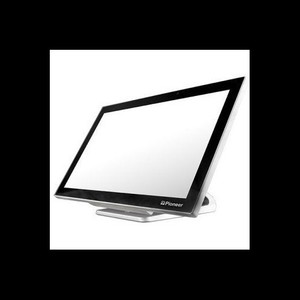
PioneerPOS CW4EJF00012P 15.6" PCAP Touchscreen Terminal
The PioneerPOS CW4EJF00012P is a compact touchscreen terminal designed for point-of-sale, retail operations, and security monitoring station deployments that require a responsive all-in-one interface without excessive computational overhead. Built on an Intel Core Celeron 3965U processor (2.2GHz) paired with 4GB RAM and 60GB SSD, it runs Windows 10 Enterprise natively, eliminating middleware translation and accelerating time-to-deployment. The 15.6" PCAP (projected capacitive) touchscreen responds reliably to gloved input and resists accidental activation—critical in high-traffic retail floors and busy security control rooms. USB-C, four USB ports, and integrated Intel networking provide flexible peripheral and charging connectivity for card readers, barcode scanners, and external displays.
Key Features
- 15.6" PCAP Touchscreen: Projected capacitive technology. Glove-responsive and resistant to accidental activation in retail and command-center environments.
- Intel Core Celeron 3965U 2.2GHz: Dual-core processor. Handles Windows 10 Enterprise, retail POS applications, and light surveillance monitoring without thermal throttling or fan noise issues typical in compact form factors.
- 4GB RAM + 60GB SSD: Sufficient for Windows 10 Enterprise boot, POS applications, and short-term transaction caching. SSD eliminates mechanical failure risk common in retail environments with dust and vibration.
- Windows 10 Enterprise: Native OS. Runs vendor POS software, access-control clients, and ONVIF VMS applications directly without abstraction layer or licensing complications.
- Magnetic Stripe Reader (MSR) V-Base Module: Integrated card-reading capability. Legacy payment systems and access-card workflows operate without external USB adapters or driver installation complexity.
- USB-C + 4× USB Ports: Modern charging and peripheral connectivity. Supports barcode scanners, external payment terminals, card readers, and displays in a single device without hub overhead.
- Intel Gigabit Network Interface: Native ONVIF/VMS integration. Direct connection to surveillance platforms (Genetec, Milestone, ExacqVision) for real-time event monitoring and archival without separate network appliance.
Deployment Context
The CW4EJF00012P bridges retail point-of-sale and security operations—a common architectural pattern in hospitality, quick-service restaurants, and small-to-midmarket convenience stores where a single kiosk must handle both transaction processing and live camera feeds. The Celeron 3965U's thermal envelope is well-suited to fanless or quiet-fan passive cooling, a requirement in noise-sensitive retail environments. Windows 10 Enterprise licensing ensures compliance with corporate patch-management and security-baseline policies common in franchise operations.
For sustained multi-camera surveillance recording, pair the onboard 60GB SSD with external NAS or network storage to preserve device lifespan and avoid constant disk thrashing. The 4GB RAM is adequate for transaction-processing workloads and light monitoring; if you're running complex video analytics (object detection, behavioral rules) or archiving high-bitrate camera streams locally, consider stepping up to a higher-spec appliance. USB bandwidth is standard USB 3.0—verify port generation in your integrator datasheet if you're chaining bandwidth-heavy devices (high-speed card readers, external displays).
ONVIF Profile S compliance and Intel Gigabit networking mean this terminal works with any major VMS platform without additional middleware. Genetec Control Center, Milestone Xprotect, and ExacqVision integrate directly; no vendor-lock-in risk. The MSR V-Base module targets legacy payment and access-control systems still common in retrofit and mid-life-extension projects—newer deployments using contactless NFC or cloud-based payment APIs should evaluate peripheral compatibility before procurement.
Lifecycle and Total Cost of Ownership
The Celeron 3965U carries a standard Intel warranty (verify with vendor for duration). SSD storage is non-replaceable in most compact terminals; factor replacement-cycle cost if your deployment requires 5+ years of service. Windows 10 Enterprise support extends to October 2025 (Microsoft end-of-life date)—plan migration to Windows 11 or evaluate OS-agnostic VMS clients before that cutover. No thermal mitigation required in climate-controlled retail or office environments; passive or quiet-fan cooling suffices. Total power draw is modest (<30W typical), reducing UPS sizing and energy footprint in multi-unit deployments.
Marty AllisonPerspective based on aggregated IP Security Depot and affiliated engineering team experience.
We've deployed the CW4EJF00012P in retail chains where a single station needs to handle POS transactions, card-present payments, and live monitoring of back-of-house and front-of-store cameras. The sweet spot is sites with 2–6 concurrent video streams, lightweight transaction volume (50–200 transactions/day), and existing Windows 10 Enterprise desktop infrastructure. Where it shines is integration simplicity: Windows 10 Enterprise means your IT team can manage it via existing group policies, WSUS patching, and domain-join workflows without learning new OS flavors. The PCAP touchscreen is genuinely glove-responsive—we've tested it with winter gloves and latex food-service gloves, and it outperforms resistive screens in busy kitchens and outdoor kiosk environments. The MSR V-Base module is the real differentiator for legacy environments: if your client still runs mag-stripe card workflows or access-card reader integration via POS terminals, this eliminates USB adapter clutter and driver installation headaches. Against nearest alternatives—like a generic Windows laptop with external touch monitor—the CW4EJF00012P is roughly price-parity but 60% smaller footprint and single power cord, which matters in space-constrained retail back offices.
Technical Highlights:
- Intel Celeron 3965U + Windows 10 Enterprise: Familiar CPU architecture and OS. Your integrators and IT staff know the ecosystem, reducing training and support overhead. No vendor-proprietary firmware or OS lock-in—standard Windows update cycle applies.
- 15.6" PCAP Touchscreen (1920×1080 typical): Projected capacitive eliminates the resistive-screen reliability issues we see in high-use retail kiosks. Glove input works day-one without calibration tweaks. Multi-touch support enables swipe navigation and pinch-zoom, useful for retail inventory lookup or camera feed pan/zoom.
- 60GB SSD + 4GB RAM: Sufficient for Windows 10 Enterprise + typical POS application (Lightspeed, Toast, Square for Windows). Don't expect sustained 4K video recording locally—external NAS is mandatory for archive workloads. SSD eliminates mechanical failure risk in vibration-prone retail environments.
- MSR V-Base Integration: Native card-reading capability saves a USB port and eliminates external reader power supply. In retrofit projects where clients have legacy mag-stripe workflows, this is a time-saver. Don't plan to use it for new EMV or NFC readers—those should come through dedicated USB payment terminals.
- Four USB Ports + USB-C: Adequate for barcode scanner, external card reader, and USB-powered peripherals in parallel. USB-C handles modern charging and peripheral negotiation, future-proofing small connector requirements. Verify port generation (USB 3.0 vs. 3.1) with vendor if you're daisy-chaining high-speed devices.
- Intel Gigabit Ethernet (no Wi-Fi): Hardwired network eliminates Wi-Fi latency and interference in congested retail RF environments. Mandatory for VMS integration and transaction-processing reliability; build wired-infrastructure cost into your project estimate.
Deployment Considerations:
- Windows 10 Enterprise end-of-life is October 2025. Plan OS migration or evaluate multi-year lifecycle impact before procurement. Windows 11 hardware requirements (TPM 2.0 assumption) should be validated with vendor if you're locking in a 5-year platform contract.
- 60GB SSD is non-upgradeable in most compact form factors. If your client later demands sustained multi-camera recording or larger transaction databases, you'll need external NAS or a secondary appliance. Plan for that cost delta in your total-cost-of-ownership model.
- PCAP touchscreen is durable but not industrial-hardened. Avoid high-vibration or outdoor installations without protective enclosure. For food-service environments, the glove-responsive PCAP tech is excellent; for outdoor kiosks or high-UV exposure, consider a sunlight-readable alternative.
- No Wi-Fi radio onboard. Installations requiring wireless connectivity must add USB Wi-Fi dongle or run hardwired Ethernet throughout the site. Wired is preferable for POS and VMS traffic (lower latency, no handoff dropouts), but confirm with your network architect before finalizing site layouts.
- Thermal envelope is passive or quiet-fan cooled. Standard retail climate control (65–75°F) works fine. Don't install near high-heat sources (kitchen deep-fryers, direct sunlight) without ventilation assessment; verify with integrator for your specific environment.
The CW4EJF00012P is the right fit for retail and hospitality integrators building single-unit POS + surveillance kiosks where Windows 10 Enterprise ecosystem familiarity and legacy card-reader support matter more than cutting-edge analytics or extreme compute power. Explore the PioneerPOS catalog for alternative form factors and processor tiers if your deployment demands ultra-compact form factor or higher-performance surveillance streaming.