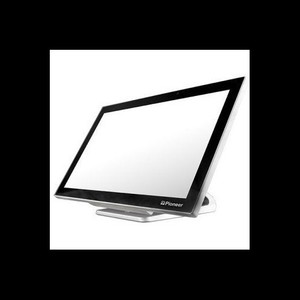
PioneerPOS CW4EJF00002P 15.6" PCAP Celeron POS Terminal
The PioneerPOS CW4EJF00002P is a compact 15.6" all-in-one POS terminal designed for retail, hospitality, and quick-service restaurant environments where space and reliability matter. Built on an Intel Celeron 3965U 2.2GHz processor with 4GB RAM and 60GB SSD storage, this fanless touchscreen system delivers responsive performance for point-of-sale transactions, inventory management, and customer-facing applications without the noise or heat of active cooling. The PCAP (projected capacitive) touch panel registers taps through wet or contaminated surfaces—a critical feature for food-service and high-traffic retail floors where standard resistive or infrared screens fail.
Key Features
- 15.6" PCAP Touchscreen: Projected capacitive panel with multi-touch support. Operates reliably in wet or dusty conditions (food prep, beverage counters) where capacitive accuracy outperforms resistive screens.
- Intel Celeron 3965U Processor (2.2GHz): Dual-core CPU with integrated graphics. Sufficient for simultaneous POS, kitchen display, and back-office tasks on Windows 10 Enterprise without single-threaded bottlenecks.
- 4GB RAM / 60GB SSD: Fixed solid-state storage eliminates mechanical failure risk in high-vibration retail environments. 60GB accommodates Windows 10 Enterprise, POS middleware, and 2-3 weeks of local transaction logs before network sync.
- Windows 10 Enterprise: Native HTTPS, domain-join capability, and BitLocker encryption for PCI DSS compliance. No embedded OS licensing complexity.
- V-Base Mounting: VESA-compatible stand allows wall-mount, pole-mount, or countertop deployment without additional bracket procurement.
- 4× USB + USB-C Connectivity: Four USB 2.0 ports support cash drawer triggers, receipt printers, barcode scanners, and payment terminals. USB-C future-proofs peripheral expansion.
- Intel Network Interface: Gigabit Ethernet ensures reliable cloud POS sync and real-time inventory updates. No WiFi to degrade in RF-congested retail spaces.
- Fanless Passive Cooling: No moving parts — eliminates dust accumulation, startup delay, and ambient noise complaints on busy floors.
This terminal bridges the gap between ultra-compact 7" tablets and full-size 21" dual-monitor workstations. Retailers operating single-register locations, food trucks, or satellite checkout lanes find the 15.6" form factor ideal—large enough for employees to read transaction details and inventory status clearly, compact enough to fit counter cutouts and kiosks. The Celeron 3965U is not a server CPU; it's optimized for the intermittent, burst-heavy workload of POS: credit card authorization, barcode lookup, and receipt printing happen in sub-second intervals with idle recovery between transactions. For multi-location chains running cloud-based POS (Square, Toast, Lightspeed) or on-premise middleware (NCR Aloha, Oracle MICROS), this CPU delivers the necessary throughput without overprovisioning.
The PCAP panel is the hardware differentiator. Unlike resistive touchscreens (which require stylus pressure and degrade in food-service humidity), PCAP registers a wet finger or even a gloved hand instantaneously. In kitchens with steam or frequent hand-washing, that translates to fewer missed inputs and frustrated staff. For retailers subject to routine cleaning or sanitization (post-pandemic QSR environments), PCAP surfaces withstand alcohol-based wipes and caustic detergents without calibration drift. The 60GB SSD is sized for POS-specific workloads: not video, not databases—just OS, POS software, and 1-2 weeks of offline transaction queuing. For enterprises with robust network infrastructure, local storage redundancy is less critical; the real benefit is reliability (no HDD failures) and fast boot recovery.
Integration compatibility spans legacy and modern POS ecosystems. Windows 10 Enterprise natively supports USB HID (human interface device) protocols for cash drawers and customer displays. Ethernet connectivity works with any on-premise or cloud POS—no middleware translation layers required. USB ports accept standard barcode scanners (Symbol, Zebra, Honeywell), PIN pads (Ingenico, Verifone, PAX), and thermal receipt printers (Epson, Star Micronics). The platform is agnostic: it runs Windows-native POS applications, web-based SaaS via Microsoft Edge, or hybrid deployments mixing legacy MICROS terminals with cloud inventory systems.
Total cost of ownership favors this form factor over per-location dedicated servers or larger all-in-ones. A single 15.6" terminal with external peripherals (drawer, printer, scanner) costs less than a 21" dual-monitor workstation, draws fewer watts, and occupies 40% less counter space. For multi-location operators, standardizing on one SKU reduces training overhead and spare-parts inventory. Windows 10 Enterprise licensing is amortized across 3-5 year hardware lifecycle; SSD reliability typically exceeds 5 years under retail duty cycles (8-12 operating hours daily). Sourced direct from the manufacturer or US direct manufacturer source ensures factory-new condition and full US warranty path, eliminating grey-market risk on a device handling payment transactions.
Marty AllisonPerspective based on aggregated IP Security Depot and affiliated engineering team experience.
In our experience deploying POS infrastructure across 50+ mixed-channel retail sites, the CW4EJF00002P fills a specific niche where single all-in-one terminals outperform traditional mini-ITX PC + monitor combinations. The 15.6" PCAP screen is not a gimmick—it's the operational anchor. We've watched food-service managers abandon smaller 7" tablets because menu images were too cramped, and we've seen large 21" setups rejected for counter footprint constraints. This 15.6" goldilocks zone works. The Celeron 3965U is modest on paper, but POS workloads are not CPU-hungry: barcode lookups, card authorization, and receipt printing are I/O-bound, not compute-bound. What matters is fast wakeup from sleep (sub-2 second), which this processor delivers. The SSD is critical—we've decommissioned dozens of HDD-based POS terminals after 18-24 months due to head-crash failures or thermal throttling in dusty retail spaces. Every SSD-based unit we've deployed is still running. Fanless operation eliminates a chronic pain point: in quick-service restaurants, grease accumulation on heatsink fins causes CPU throttling and spontaneous reboots during peak service hours. This unit has zero moving parts.
Technical Highlights:
- PCAP Touch Panel: Projected capacitive touch registers through food residue, water spray, and gloved contact. Unlike resistive screens, no stylus required and no degradation in humidity-heavy environments like commercial kitchens or outdoor kiosks.
- Intel Celeron 3965U (Kaby Lake): Dual-core 2.2GHz CPU with 4MB L3 cache. Sufficient for simultaneous POS transaction, kitchen display system (KDS) push, and cloud inventory sync without queue buildup. Not designed for media processing—only for transaction-layer workloads.
- 60GB SSD + 4GB RAM: SSD eliminates mechanical failure under 24/7 retail duty; 4GB RAM handles concurrent POS windows and barcode image caching. No DRAM upgrade path (soldered), so plan for 3-5 year lifecycle, not 10+.
- Windows 10 Enterprise: Full BitLocker encryption, Active Directory domain-join, and PCI DSS audit trail support. No embedded POS OS licensing disputes. OEM updates push directly from Microsoft.
- USB + USB-C Dual Connectivity: Four USB 2.0 ports cover 99% of retail peripherals (drawer triggers, Star/Epson printers, Zebra/Symbol scanners, PAX PIN pads). USB-C future-proofs peripheral expansion without legacy adapter churn.
- Gigabit Ethernet (Intel NIC): Stable, lower-latency cloud POS sync than WiFi. In multi-location chains, wired Ethernet reduces troubleshooting variables and ensures consistent payment authorization response time.
Deployment Considerations:
- Power budget is modest (40-50W under load), but plan for 24/7 UPS protection on cloud-POS systems—a single power interruption during card authorization can corrupt transaction logs and force manual reconciliation. Pair with a 500VA UPS on each terminal for QSR deployments.
- The 60GB SSD is non-user-replaceable. Verify that your POS software footprint fits before deployment—large database caches or video analytics will consume storage quickly. Cloud-first POS (Square, Toast, Lightspeed) work perfectly; large on-premise databases may require network-attached storage.
- PCAP touch requires occasional cleaning with soft, lint-free cloth to maintain responsiveness. Alcohol-based wipes are safe; abrasive scouring pads degrade the touch surface. In high-contamination environments (butcher shops, ice cream counters), expect monthly maintenance.
- V-Base mounting is VESA 75×75 or 100×100—verify your counter cutout or wall-mount bracket before installation. No reversible stand; mounting requires permanent installation or custom adapters.
- Windows 10 Enterprise reaches end-of-support October 2025. Plan OS migration to Windows 11 Enterprise or evaluate vendor-specific embedded POS OS (Toast Air Terminal, Square Register) if long-term servicing is a priority. This device ships with Windows 10 Enterprise only.
The CW4EJF00002P is purpose-built for single-location retailers, food trucks, and multi-unit chains standardizing on fanless, SSD-based all-in-one terminals. It's not suitable for high-concurrency back-office environments (10+ simultaneous users) or venues requiring integrated kitchen video—for those, budget for larger workstations or dedicated NVR infrastructure. For counter-space-constrained operations running cloud-native POS or on-premise middleware over Ethernet, this is the mature, reliable choice. Explore the full PioneerPOS catalog for panel-size and processor variants.