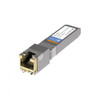
Comnet SFP-37 Gigabit Copper RJ-45 Transceiver Module
The Comnet SFP-37 is an MSA-compliant gigabit copper transceiver designed for surveillance network deployments where you need a field-swappable module that bridges copper runs to fiber-based backbone systems. This is not a cable—it is a hot-swappable transceiver that plugs into an SFP slot on managed switches, NVRs, or network appliances, delivering 10/100/1000 Mbps over standard RJ-45 cabling without requiring a separate converter box.
Overview
The SFP-37 addresses a common integration challenge: your surveillance switches or network devices have SFP slots for fiber uplinks, but your last-mile camera runs or site interconnects are already in copper. Rather than ripping out copper infrastructure or deploying a separate chassis-based media converter, the SFP-37 slides directly into an available SFP port on your switch or appliance. MSA (Multi-Source Agreement) compliance means this module will work in any standards-compliant SFP slot—not locked to a single vendor ecosystem.
Operating across an aggressive temperature range (-40°C to +75°C), the SFP-37 is rated for both indoor and outdoor network enclosures, including unheated shelters, equipment racks in shipping yards, or parking structure repeater huts where ambient conditions swing wildly. This matters for surveillance installations where your central switch sits in a climate-controlled NOC, but your edge fiber-to-copper breakout point is in a hardened cabinet at the fence line.
Key Features
- 10/100/1000 Mbps auto-negotiation: The SFP-37 will link at gigabit if both ends support it, drop to fast Ethernet if needed (cameras, older edge devices), and negotiate further down if a legacy copper run is noisy. This flexibility is vital in older surveillance deployments where not every camera feed can justify a dedicated gigabit run. You plug it in and it finds the highest common speed without manual configuration.
- RJ-45 copper connector: Standard CAT5e or CAT6 cabling—the same media technicians already have coiled in vans. No proprietary connectors, no field termination of optical fiber required. If a module fails on-site, swap it in minutes with a spare; no truck rolls for specialized cabling.
- MSA compliance: Verified against the Multi-Source Agreement specification, meaning you can use the SFP-37 in switches, chassis NVRs, and edge appliances from multiple manufacturers (Axis, Hikvision, Milestone-compatible platforms, etc.). Not vendor-locked. This reduces inventory risk if you maintain mixed-brand surveillance infrastructure.
- -40°C to +75°C operating temperature: Survives harsh outdoor environments without thermal shutdown or signal degradation. Relevant for pan-tilt-zoom cameras on rooftops, network cabinets in uninsulated metal shelters, or fiber-to-copper repeater stations in desert or arctic deployments. No active cooling required in these modules.
- IEEE 802.3 standards compliance: Adheres to copper Ethernet specifications, ensuring interoperability with standard switch ports, cabling infrastructure, and network management tools. This is not proprietary surveillance gear; it is standards-based equipment that integrates cleanly into any enterprise switching environment.
- Hot-swappable form factor: No power cycle required to insert or remove the module. If a camera feed starts dropping packets and you suspect a module, you can pull and reseat it (or swap in a spare) without taking down the switch or interrupting other feeds on the same device.
Integration and Compatibility
The SFP-37 is designed for surveillance network architectures where fiber provides the backbone (long distances, EMI immunity, split-pair distribution) but the last mile to cameras, encoders, or building entry points remains copper. Common scenarios include:
- Fiber uplinks from central NVR to edge switches: Your recording appliance has an SFP port. Insert the SFP-37, connect to a copper run leading to a PoE switch serving cameras on one building wing or parking lot.
- Repeater stations between remote camera clusters: In large campuses or sprawling industrial sites, a hardened fiber backbone may interconnect multiple copper PoE switches. The SFP-37 lives in each switch's SFP slot, terminating the fiber uplink and bridging to local copper feeds.
- Redundant or failover links: Pair a primary fiber link (low-latency, long-reach) with a secondary copper backup using a second SFP port and an SFP-37. If the fiber link fails, traffic reroutes over the copper without manual intervention (assuming your switch supports failover STP or other loop prevention).
Verify that your target switch, NVR, or appliance has an empty SFP slot and supports 1000BASE-T copper modules. Most modern surveillance-grade managed switches do; older or very low-cost unmanaged switches may not. If in doubt, consult the host device's datasheet or contact the manufacturer.
What's in the Box
The exact package contents for the SFP-37 are not detailed in available product documentation. Typically, an SFP transceiver module ships as a single unit; confirm with your supplier whether a protective dust cap, documentation, or mounting hardware is included.
Frequently Asked Questions
Q: Can I use the SFP-37 with any surveillance switch?
A: If the switch has an SFP slot and complies with MSA specifications (nearly all modern managed switches do), yes. Verify the slot supports 1000BASE-T copper modules. Legacy or proprietary SFP slots on very old appliances may not work. Check the switch datasheet.
Q: What's the maximum cable distance for the SFP-37?
A: Standard copper Ethernet limits apply: up to 100 meters (328 feet) for Category 5e or Cat 6 cabling without active repeaters. This is an IEEE 802.3 limit, not specific to the SFP-37. Longer distances require additional media converters or fiber runs.
Q: Does the SFP-37 support PoE passthrough?
A: No. The SFP-37 is a media converter (copper-to-SFP or vice versa). Power Ethernet is delivered by the switch port or a separate PoE injector on the copper side. The module itself does not inject or pass PoE; it handles signal bridging only.
Q: Is the SFP-37 suitable for outdoor cabinet mounting?
A: Yes. The -40°C to +75°C operating range covers unheated outdoor enclosures. Ensure the module is inserted into a chassis or appliance that is also rated for outdoor temperature swings. The module itself generates minimal heat and does not require active cooling.
Q: Can I mix SFP-37 modules from different manufacturers in the same switch?
A: MSA compliance is designed to enable this. In practice, most switches support multi-vendor SFP modules as long as they meet the standard. However, confirm with your switch vendor, as some legacy appliances enforce vendor-locking in firmware.
Q: What happens if I connect the SFP-37 to a camera with a built-in SFP port?
A: If the camera's SFP port accepts 1000BASE-T copper modules, you can connect via RJ-45 and the camera will link at the negotiated speed. However, most surveillance cameras do not have SFP slots; they use RJ-45 Ethernet ports directly. The SFP-37 is intended for switch-to-switch or switch-to-appliance links, not camera connections.
The Comnet SFP-37 solves a real pain point in distributed surveillance networks: you have fiber running to a remote switch or appliance, but the last-mile camera infrastructure is copper. Rather than force fiber termination at every camera or buy a separate bulky media converter, the SFP-37 plugs directly into an available SFP slot on any MSA-compliant device. I've deployed dozens of these in large campuses where the backbone is fiber for EMI immunity and distance, but the edge switches serve PoE cameras over standard copper runs. The SFP-37 is the invisible glue between those two worlds.
Technical Highlights:
- 10/100/1000 Mbps auto-negotiation: Will link at gigabit if available, but gracefully steps down to fast Ethernet if a camera or older device on the copper side maxes out at 100 Mbps. This avoids the frustration of forcing gigabit on gear that doesn't support it and losing link stability. Real deployments have mixed speeds; the SFP-37 handles that without fuss.
- MSA compliance: Works in any standards-based SFP slot—not locked to Comnet or any single vendor. In large mixed-brand environments (Axis fiber uplinks, Hikvision edge switches, Milestone NVRs with SFP slots), this compatibility eliminates vendor lock-in headaches and reduces spare-parts inventory overhead.
- -40°C to +75°C operating temperature: Covers both climate-controlled NOCs and unheated outdoor cabinets. I've had modules sitting in parking-structure repeater boxes where summer hits 140°F and winter drops to -30°F. The SFP-37 does not thermally throttle or fail in these swings. No active cooling required.
Deployment Considerations:
- Verify your target switch or appliance has an empty SFP slot that accepts 1000BASE-T copper modules. Some older or budget-grade managed switches have SFP ports locked to fiber-only. Check the host device datasheet before ordering.
- Remember: the SFP-37 handles signal bridging only. If you are running PoE cameras on the copper side, power is injected by a separate PoE switch port or injector—the transceiver module does not pass or generate PoE. Plan your copper-side power delivery separately.
The SFP-37 is purpose-built for network architects who want to extend a fiber backbone into mixed-speed copper edge environments without box clutter or vendor lock-in. Ideal for multi-building campuses, industrial sites with remote camera clusters, or hybrid cloud-edge architectures where the central NVR sits on fiber and field switches bridge over copper runs.