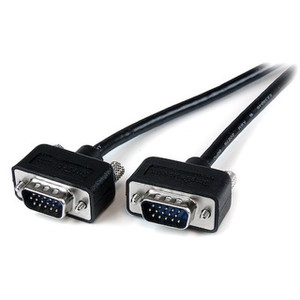
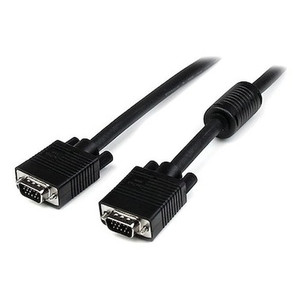
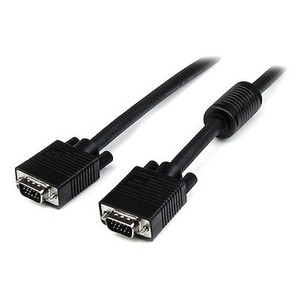
StarTech MXT101MMHQ10 10 ft VGA Monitor Cable
Overview
The StarTech MXT101MMHQ10 is a 10-foot (3.0 m) male-to-male VGA cable built around 75-ohm coaxial construction and a dual-layer aluminum-mylar foil plus braided shield — the kind of electrical discipline that separates a cable you forget about from one that introduces ghost images and signal noise into your display chain. If you're running a VGA monitor connection at a workstation, digital signage display, or video wall controller in a commercial environment, this is the cable to specify rather than a commodity patch lead.
Explore the full StarTech connectivity catalog for compatible KVM switches, display adapters, and signal extenders, or browse our cables and adapters category for companion runs.
Key Features
- 75-Ohm Impedance-Matched Coaxial Construction: VGA signals are analog — impedance mismatches introduce reflections that show up as ghosting or soft edges on the display. A 75-ohm matched cable keeps the signal clean from pin to pin, which matters especially at higher resolutions where timing margins are tighter.
- Aluminum-Mylar Foil + Braided Shield: The dual-layer shielding approach addresses two distinct noise problems simultaneously. The foil layer blocks high-frequency radiated noise (EMI from nearby power cables, HVAC inverters, or switching supplies), while the braid layer provides a low-impedance path to ground for lower-frequency interference. If your installation runs cable near power conduit — common in commercial builds — this combination matters.
- Single Ferrite Core: One ferrite choke is built into the cable assembly. Ferrites suppress conducted high-frequency noise that travels along the cable itself, reducing the risk of interference artifacts that can appear as rolling bars or flicker on the connected monitor. One ferrite is standard for a 10-foot run at VGA frequencies.
- 28 AWG Wire Gauge: At 28 AWG, the cable balances flexibility with the current-carrying and signal integrity requirements of a 10-foot VGA run. Heavier gauge would be stiffer with marginal benefit at this length; lighter gauge increases resistive loss — 28 AWG is the right call here.
- CMG Fire Rating (UL2919): This cable meets the UL2919 standard and carries a CMG (Communications Multipurpose General) fire rating, which means it's rated for in-wall and above-ceiling routing in commercial buildings without requiring metal conduit in many jurisdictions. Verify with your local AHJ, but CMG satisfies most commercial plenum-adjacent applications that don't require CMP-rated cable.
- PVC Jacket, 0–60°C Operating Range: The PVC outer jacket is durable under normal commercial environmental conditions. The 0–60°C operating temperature covers server rooms, conference rooms, and equipment closets without issue. Storage down to -20°C means the cable won't be damaged during cold-weather shipping or warehouse staging.
- Compact Connector Profile (1.3 in / 34 mm max): The connector hood measures no more than 1.3 inches at its widest point. In rack-mounted video distribution panels or tight equipment bays where multiple VGA ports sit close together, a bulky connector can physically block an adjacent port. This dimension is worth checking against your equipment's port spacing before ordering.
- 10.0 ft (3.0 m) Cable Length: Long enough to route from a floor-mounted PC or media player to a desk-height monitor with cable management slack, or from a rack shelf to a nearby display — without introducing the signal degradation risk that longer passive VGA runs carry.
Integration and Compatibility
The MXT101MMHQ10 terminates in standard 15-pin high-density D-Sub (HD-15) VGA connectors on both ends, which fits any VGA-equipped monitor, projector, KVM switch, video splitter, or PC graphics output. No drivers, no firmware — it's a passive analog cable. If your source or display has moved to DisplayPort or HDMI and you need to bridge to a legacy VGA monitor, pair this cable with a display adapter on the source side rather than forcing a signal conversion at the panel. For longer runs beyond 10 feet where signal quality degrades, consider a VGA signal extender rather than a longer passive cable. If you're also evaluating KVM switch configurations for multi-monitor workstations, this cable length is well-suited to a standard under-desk KVM installation.
Frequently Asked Questions
Q: What is the maximum resolution supported by the MXT101MMHQ10?
A: StarTech does not publish a maximum resolution spec in the available evidence for this cable. VGA is an analog standard; practical resolution limits depend on the source device, the monitor, and cable quality. The 75-ohm construction and dual-layer shielding are designed to maintain signal integrity at higher VGA resolutions, but verify your source and display compatibility independently.
Q: Is the MXT101MMHQ10 rated for in-wall installation?
A: The cable carries a CMG (Communications Multipurpose General) fire rating under UL2919, which qualifies it for in-wall and above-ceiling routing in many commercial building applications. However, CMG is not the same as CMP (plenum-rated). If your installation runs through a plenum air-handling space, a CMP-rated cable is required. Confirm requirements with your local authority having jurisdiction (AHJ).
Q: Does the MXT101MMHQ10 carry audio signals?
A: No. VGA is a video-only standard — it carries no audio. If your application requires audio alongside video, you'll need a separate audio cable or a digital interface such as HDMI or DisplayPort that carries both.
Q: What shielding does this cable use, and why does it matter?
A: The MXT101MMHQ10 uses a dual-layer shield: aluminum-mylar foil combined with a braided shield. The foil addresses high-frequency EMI, while the braid provides a low-impedance ground path for lower-frequency interference. In commercial environments where VGA cable runs near power conduit or switching power supplies, this combination reduces the risk of noise artifacts on the display.
Q: What operating conditions is this cable rated for?
A: The cable is rated for 0–60°C operating temperature and 0–80% relative humidity (non-condensing). Storage temperature range is -20 to 80°C. These ratings cover standard commercial indoor environments including equipment rooms and office spaces.
Q: What does the ferrite on this cable do?
A: The single ferrite core built into the MXT101MMHQ10 suppresses conducted high-frequency noise traveling along the cable. This reduces the chance of interference-related display artifacts such as flickering or rolling bars, particularly when the cable runs near other electronic equipment.
The spec that catches my attention on the MXT101MMHQ10 is the dual-layer shielding — aluminum-mylar foil combined with a braid — not because it's unusual in isolation, but because most commodity VGA cables use foil-only construction. In a tidy conference room with clean power, the difference is invisible. In a commercial equipment room where VGA cable shares a conduit run with 120V power feeds or sits near a switching power supply, that braid is the difference between a clean image and one with interference artifacts you'll spend an afternoon chasing.
Technical Highlights:
- 75-Ohm Impedance Matching: Analog video signals are impedance-sensitive. A 75-ohm matched cable at 10 feet keeps reflections below the threshold where ghosting becomes visible — relevant at higher VGA resolutions where timing margins tighten.
- CMG / UL2919 Rating: Qualifies for in-wall routing in most commercial builds without conduit. If your AV installation involves any cable concealment behind walls or above drop ceilings, this rating simplifies the sign-off conversation with the building's facilities team.
- 28 AWG / 375g Assembly: At 13.2 oz and 10 feet, the cable has enough mass to stay put during routing without being stiff enough to stress the VGA connector on a graphics card or monitor panel — a real concern with heavier-gauge assemblies.
Deployment Considerations:
- The 1.3-inch (34mm) maximum connector dimension is worth measuring against your equipment before ordering — rack-mounted distribution panels with closely spaced VGA ports can be physically blocked by wider connector hoods, and you won't know until you're on-site.
- CMG fire rating does not satisfy plenum (CMP) requirements. If any portion of the cable path passes through an air-handling plenum, this cable cannot be used without conduit in that segment. Verify with your AHJ before rough-in.
This cable is the right specification for a commercial conference room, training facility, or control room workstation where VGA is still in use and cable runs pass near other electrical infrastructure — exactly the scenario where the dual-layer shielding and UL2919 rating earn their place in the bill of materials.