
Hanwha SMT-2731PV vs Speco Technologies PVM27: Specification Comparison
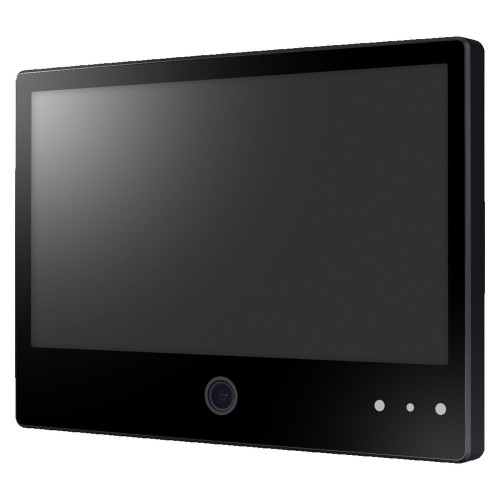
Both the Hanwha SMT-2731PV and the Speco Technologies PVM27 are 27-inch public-view monitors (PVMs) combining a full-HD display with an integrated IP camera, targeting retail, lobby, and loss-prevention deployments where a single unit replaces a separate monitor and camera. The comparison covers display and imaging performance, power and environmental suitability, and network integration and analytics capability — the three axes that most directly affect installation design and long-term operational value for this product class.
In This Guide
- How do the display quality and integrated camera specs compare between the SMT-2731PV and PVM27?
- Which unit is easier to deploy from a power and environmental standpoint?
- How do the two units differ in VMS integration, onboard analytics, and cybersecurity features?
- Which should you choose: the SMT-2731PV or the PVM27?
- Side-by-Side Specs
- FAQ
How do the display quality and integrated camera specs compare between the SMT-2731PV and PVM27?
The SMT-2731PV specifies a 27-inch 1920×1080 panel with 300 cd/m² brightness, a 1000:1 contrast ratio, 178°/178° horizontal/vertical viewing angles, a 14 ms response time, and a rated panel life of 30,000 hours. Its integrated camera uses a 1/2.8-inch 2MP CMOS sensor with a minimum illumination of 0.03 Lux (F1.6, 1/30 sec), 120 dB WDR, and a maximum frame rate of 30 fps. The Speco PVM27 is also a 27-inch unit; however, its datasheet does not publish brightness (cd/m²), contrast ratio, viewing angle, response time, or panel-life figures. Its integrated camera uses a 1/3-inch CMOS sensor rated at 5MP IP plus a secondary 2MP TVI channel — pixel count is higher than the Hanwha, but minimum illumination, WDR dB rating, and frame rate are not specified in the provided data, preventing a direct low-light or dynamic-range comparison.
For display-critical environments where operators view the monitor at wide angles or under ambient light, the SMT-2731PV provides verifiable panel specifications. For applications where raw camera resolution is the priority, the PVM27's 5MP IP sensor offers a higher nominal pixel count, though real-world low-light performance cannot be confirmed from available specs.
Which unit is easier to deploy from a power and environmental standpoint?
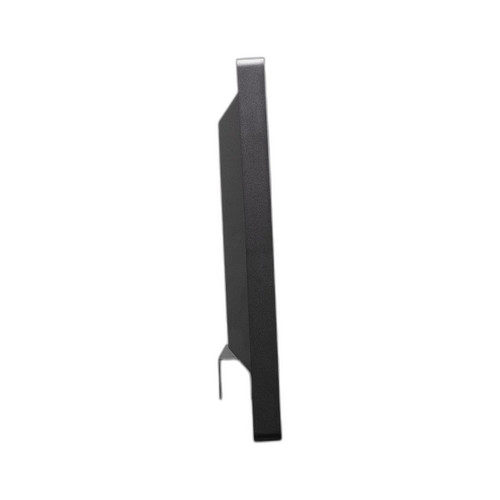
The SMT-2731PV accepts DC 24V or PoE++ (802.3bt) at 31W, enabling single-cable PoE++ deployment directly from a compliant switch without a local power supply. It is rated for 0°C to +40°C operating temperature and 10%–80% non-condensing humidity, and weighs 8.5 kg. VESA mounting is supported at 100×100 mm, 200×100 mm, and 200×200 mm patterns.
The PVM27 is powered by DC 12V (with AC/DC adapter compatibility noted in marketing copy, though adapter specs are not published in the provided datasheet fields). It operates from 0°C to 50°C — a 10-degree wider upper thermal range than the SMT-2731PV — and weighs 28.2 lb (approximately 12.8 kg), which is notably heavier. VESA mount pattern, power consumption in watts, and humidity rating are not specified for the PVM27 in the provided data.
For new structured-cabling installations, the SMT-2731PV's PoE++ support simplifies runs and eliminates a local power brick. The PVM27's broader temperature ceiling may be relevant for unconditioned spaces such as warehouses or loading docks, though installers should verify thermal derating in the absence of a published wattage figure.
How do the two units differ in VMS integration, onboard analytics, and cybersecurity features?
The SMT-2731PV supports ONVIF Profiles S, G, T, and M plus Hanwha's SUNAPI (HTTP API), H.265/H.264/MJPEG compression with WiseStream III smart codec, 802.1X network authentication (EAP-TLS, EAP-LEAP, EAP-PEAP MSCHAPv2), HTTPS/SRTP/WSS secure communication, AES encryption, secure boot, signed firmware, firmware encryption, and SD card partition encryption. Onboard analytics include AI-based person and face detection, object detection, virtual line crossing, intrusion area, motion detection with 8-zone 8-point polygonal configuration, and business-intelligence functions (people counting, queue management, heatmaps). Privacy masking supports 32 zones. Edge storage is MicroSD/SDHC/SDXC up to 256 GB.
The PVM27 supports ONVIF Profile S only and H.265/H.264 compression. It offers True WDR and Day/Night mode; no additional analytics, privacy masking, or smart-codec features are specified in the provided data. Cybersecurity provisions — secure boot, firmware signing, encryption, 802.1X — are not listed. Edge storage is microSD with a stated maximum of 1TB, which is four times the SMT-2731PV's 256 GB ceiling.
Deployments requiring deep VMS interoperability, AI-driven analytics without a separate analytics server, or layered cybersecurity compliance will find the SMT-2731PV's feature set more complete from available specifications. The PVM27's 1TB microSD ceiling is an advantage for continuous local recording without NVR infrastructure, but the absence of published security feature specs is a gap installers should resolve with Speco directly before deployment in sensitive environments.
Which should you choose: the SMT-2731PV or the PVM27?
Our take: The SMT-2731PV is the stronger choice when the deployment prioritizes verifiable panel performance, PoE++ single-cable installation, AI-edge analytics, and cybersecurity compliance. On display specs, the Hanwha publishes 300 cd/m² brightness, 178°/178° viewing angles, and a 1000:1 contrast ratio; the PVM27 does not provide equivalent panel figures. On power, the SMT-2731PV's 802.3bt PoE++ at 31W eliminates a local power supply; the PVM27 requires DC 12V with no wattage figure published. On analytics and security, the SMT-2731PV delivers ONVIF Profiles S/G/T/M, AI person and face detection, eight-zone polygonal motion detection, WiseStream III, 802.1X, AES encryption, and secure boot — none of which are confirmed in the PVM27's available specifications. The PVM27's 5MP IP sensor and 1TB microSD ceiling are legitimate advantages for resolution-focused or continuous-record use cases, and its 50°C upper operating temperature extends deployment into warmer unconditioned spaces. Choose the PVM27 only after obtaining and reviewing its full datasheet to verify missing display, power, and security specifications.
Side-by-Side Comparison
Spec-for-spec, from manufacturer data.
| Specification | Hanwha SMT-2731PV | Speco Technologies PVM27 |
|---|---|---|
| Display Size | 27 inch | 27 inch |
| Native Resolution | 1920×1080 | Not specified |
| Panel Brightness | 300 cd/m² | Not specified |
| Contrast Ratio | 1000:1 | Not specified |
| Viewing Angle (H/V) | 178° / 178° | Not specified |
| Response Time | 14 ms | Not specified |
| Panel Life | 30,000 hours | Not specified |
| Integrated Camera Resolution | 2MP (1/2.8" CMOS) | 5MP IP + 2MP TVI (1/3" CMOS) |
| Minimum Illumination | 0.03 Lux (F1.6, 1/30 sec) | Not specified |
| Wide Dynamic Range | 120 dB (WDR) | True WDR (dB not specified) |
| Power Input | DC 24V or PoE++ (802.3bt), 31W | DC 12V (wattage not specified) |
| Operating Temperature | 0°C to +40°C | 0°C to +50°C |
| Edge Storage Max | MicroSD up to 256 GB | MicroSD up to 1TB |
| ONVIF Profiles | S, G, T, M | Profile S only |
| Onboard AI Analytics | Person/face detection, object detection, line crossing, intrusion, people counting, queue, heatmaps | Not specified |
| Cybersecurity Features | Secure boot, signed firmware, AES encryption, 802.1X, HTTPS/SRTP/WSS, SD card encryption | Not specified |
| Weight | 8.5 kg | 28.2 lb (~12.8 kg) |
| Housing Color | Black / White | White |
Frequently Asked Questions
Which should you choose: the SMT-2731PV or the PVM27?
The SMT-2731PV is the stronger choice when the deployment prioritizes verifiable panel performance, PoE++ single-cable installation, AI-edge analytics, and cybersecurity compliance. On display specs, the Hanwha publishes 300 cd/m² brightness, 178°/178° viewing angles, and a 1000:1 contrast ratio; the PVM27 does not provide equivalent panel figures. On power, the SMT-2731PV's 802.3bt PoE++ at 31W eliminates a local power supply; the PVM27 requires DC 12V with no wattage figure published. On analytics and security, the SMT-2731PV delivers ONVIF Profiles S/G/T/M, AI person and face detection, eight-zone polygonal motion detection, WiseStream III, 802.1X, AES encryption, and secure boot — none of which are confirmed in the PVM27's available specifications. The PVM27's 5MP IP sensor and 1TB microSD ceiling are legitimate advantages for resolution-focused or continuous-record use cases, and its 50°C upper operating temperature extends deployment into warmer unconditioned spaces. Choose the PVM27 only after obtaining and reviewing its full datasheet to verify missing display, power, and security specifications.
Can either unit be powered over a single Ethernet cable?
Only the Hanwha SMT-2731PV supports PoE++, specifically IEEE 802.3bt, drawing 31W — so yes, a single Cat cable from a compliant PoE++ switch powers and connects it with no local power supply. The Speco PVM27 uses DC 12V; Ethernet connectivity is listed but PoE support is not specified in the provided data, so a separate power run should be assumed unless confirmed with Speco.
Which monitor's built-in camera has higher resolution — the SMT-2731PV or the PVM27?
The PVM27 specifies a 5MP IP camera plus a secondary 2MP TVI channel, giving it a higher nominal pixel count than the SMT-2731PV's single 2MP camera. However, minimum illumination, dynamic range (dB), and frame rate are not published for the PVM27, so a complete low-light or fast-motion comparison cannot be made from available specifications alone.
Does either unit support onboard AI analytics without an external server?
Yes — the Hanwha SMT-2731PV includes onboard AI analytics covering person detection, face detection, object detection, virtual line crossing, intrusion area detection, people counting, queue management, and heatmaps, all processed at the edge. The Speco PVM27's provided specifications do not list any onboard analytics beyond True WDR and Day/Night mode; buyers requiring analytics should confirm with Speco whether any edge-processing features are available.
Get a Second Opinion on Your Camera Choice
Share your site layout, coverage goals, and budget. Our team will validate the camera selection, flag anything we would change, and recommend products that match the use case.