
Hanwha SMT-2731PV vs Hanwha SMT-2721PVW: Specification Comparison
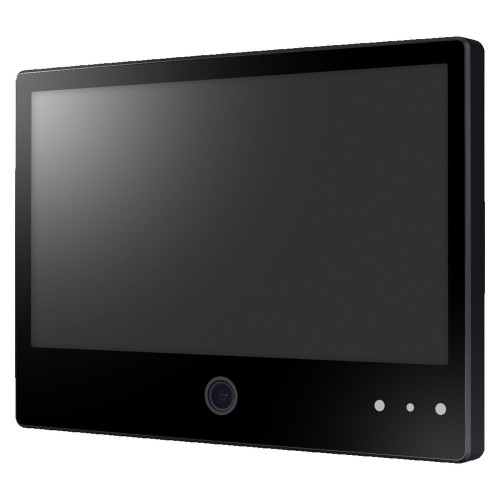
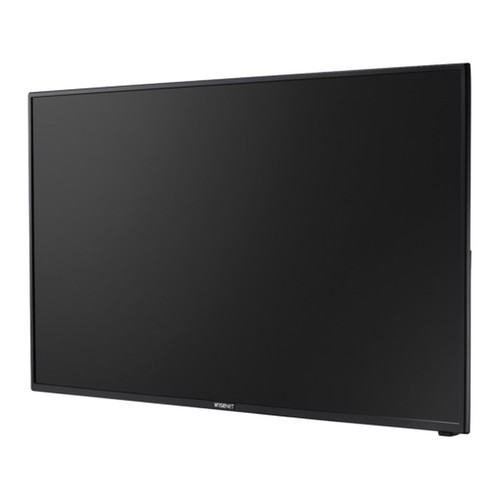
Both the SMT-2731PV and SMT-2721PVW are Hanwha 27-inch AI Public View Monitors — all-in-one surveillance display units combining a full HD LED panel with a built-in network camera and edge analytics, intended for retail loss-prevention, lobby monitoring, and similar deterrent-display applications. A buyer choosing between them is selecting within the same product family and form factor. The comparison below is driven by display and camera performance, power and installation requirements, and integration depth — the three axes that matter most for a PVM deployment.
In This Guide
- How do the display quality and built-in camera specs compare between the SMT-2731PV and SMT-2721PVW?
- What are the power, storage, and physical installation differences between the two monitors?
- Which monitor offers deeper analytics, integration, and cybersecurity capabilities?
- Which should you choose: the SMT-2731PV or the SMT-2721PVW?
- Side-by-Side Specs
- FAQ
How do the display quality and built-in camera specs compare between the SMT-2731PV and SMT-2721PVW?
For the SMT-2731PV, Hanwha publishes a complete display specification: 27-inch panel, 1920×1080 resolution, 300 cd/m² brightness, 1000:1 contrast ratio, 178°/178° horizontal/vertical viewing angles, 16.7 million colors, and a 14 ms response time. Panel life is rated at 30,000 hours. The built-in camera is a 1/2.8-inch 2 MP CMOS sensor capable of 30 fps with a minimum illumination of 0.03 Lux (F1.6, 1/30 sec), backed by 120 dB WDR (SSDR), BLC, and SSNR V / WiseNR II noise reduction. Digital PTZ, flip/mirror/hallway-view rotation, and LDC are all confirmed.
For the SMT-2721PVW, none of those display panel figures — brightness, contrast ratio, viewing angle, response time, or panel life — appear in the provided specifications. The camera sensor size, resolution, frame rate, minimum illumination, WDR rating, and noise-reduction designation are likewise absent. The specs confirm the form factor is a 27-inch monitor with dual HDMI inputs, H.265/H.264/MJPEG compression, ONVIF Profile S/G/T/M, and SUNAPI, but the underlying hardware numbers are not documented in the available data. Buyers requiring verified photometric or imaging performance figures for the SMT-2721PVW will need to consult Hanwha's official datasheet directly.
What are the power, storage, and physical installation differences between the two monitors?
Both units share the same physical footprint: 619 mm (W) × 405 mm (H) × 58 mm (D) and 8.5 kg, and both accept HPoE / PoE++ (IEEE 802.3bt) as a power source. The SMT-2731PV additionally lists DC 24 V as an alternative input and specifies 31 W power consumption. Neither of those figures is provided for the SMT-2721PVW.
Edge storage is confirmed on both: each has a single Micro SD/SDHC/SDXC card slot. The SMT-2731PV explicitly states a 256 GB maximum capacity and specifies encrypted SD card partition storage as a security feature. The SMT-2721PVW confirms the slot exists but does not state a maximum supported capacity in the provided specs.
The SMT-2731PV documents VESA mount compatibility at 100×100 mm, 200×100 mm, and 200×200 mm patterns, and lists VESA DPM power-management compliance. VESA mounting dimensions and DPM compliance are not stated for the SMT-2721PVW. The SMT-2721PVW package contents are documented (monitor, remote controller with battery, power inverter harness, alarm terminal block, quick-start guide); equivalent accessory information is not listed for the SMT-2731PV. Both units carry a black cabinet with white housing color per their respective specs.
Which monitor offers deeper analytics, integration, and cybersecurity capabilities?
The SMT-2731PV carries an extensively documented analytics and integration stack. Camera-side AI analytics include motion detection (8 zones, 8-point polygonal), object detection, virtual line/area intrusion, person/face detection, people counting, queue management, and heatmaps. Network integration covers ONVIF Profile S/G/T/M and SUNAPI (HTTP API), with WiseStream III smart codec for bandwidth efficiency. The unit has 1 RJ-45 10/100BASE-T Ethernet port, 1 alarm input and 1 alarm output, and supports email, FTP, SD, NAS, and HTTP alarm notifications. Memory is specified at 2 GB RAM / 1 GB Flash.
The SMT-2721PVW confirms ONVIF Profile S/G/T/M and SUNAPI, and states AI-enabled analytics are present, but does not enumerate specific analytics functions (zone count, people counting, heatmaps, etc.) in the provided data. Alarm I/O count, Ethernet spec, smart codec designation, and onboard memory are not stated.
On cybersecurity, the SMT-2731PV documents secure boot, signed firmware, firmware encryption, Digest Authentication, brute-force attack prevention, 802.1X (EAP-TLS / EAP-LEAP / EAP-PEAP MSCHAPv2), HTTPS/SRTP/WSS, IP-based access control, AES encryption, ZIP compression, user/system/event audit logging, Hanwha Private Root CA device certificates, and SD card partition encryption. None of these cybersecurity capabilities are enumerated in the SMT-2721PVW's provided specifications, though the platform family typically includes them — buyers should verify against Hanwha's official SMT-2721PVW datasheet before making security-posture decisions.
Which should you choose: the SMT-2731PV or the SMT-2721PVW?
Our take: The SMT-2731PV is the stronger documented choice when verifiable display, camera, and cybersecurity specifications are required at the point of product selection. The SMT-2731PV provides concrete figures across every decision-relevant dimension: 300 cd/m² brightness vs. no brightness figure for the SMT-2721PVW; 0.03 Lux minimum illumination with 120 dB WDR vs. no camera sensitivity data for the SMT-2721PVW; and a fully enumerated cybersecurity stack (secure boot, 802.1X, AES, device certificates) vs. no security spec detail for the SMT-2721PVW. Both units share the same chassis size, weight, and PoE++ power type. The SMT-2721PVW may be equivalent in hardware — it is from the same Hanwha PVM family — but the available specifications do not substantiate that equivalence. For projects where IT security compliance documentation or camera-performance thresholds must be spec-matched to a design, the SMT-2731PV is the only model with sufficient published data to support that process. Confirm SMT-2721PVW specs against Hanwha's current datasheet before substituting.
Side-by-Side Comparison
Spec-for-spec, from manufacturer data.
| Specification | Hanwha SMT-2731PV | Hanwha SMT-2721PVW |
|---|---|---|
| Display Size | 27 inch | 27 inch |
| Resolution | 1920×1080 | — |
| Brightness | 300 cd/m² | — |
| Contrast Ratio | 1000:1 | — |
| Viewing Angle (H/V) | 178°/178° | — |
| Response Time | 14 ms | — |
| Panel Life | 30,000 hours | — |
| Camera Sensor | 1/2.8" 2MP CMOS | — |
| Min. Illumination | 0.03 Lux (F1.6, 1/30 sec) | — |
| Wide Dynamic Range | 120 dB | — |
| Power Input | DC 24V / HPoE 802.3bt | HPoE 802.3bt |
| Power Consumption | 31 W | — |
| Edge Storage | MicroSD up to 256 GB | MicroSD (capacity not stated) |
| VESA Mount | 100×100, 200×100, 200×200 mm | — |
| Alarm I/O | 1 input / 1 output | — |
| ONVIF / API | Profile S/G/T/M; SUNAPI | Profile S/G/T/M; SUNAPI |
| Analytics | People counting, queue mgmt, heatmaps, object/person/face detection | AI-enabled (specifics not stated) |
| Cybersecurity | Secure boot, 802.1X, AES, device cert, SD encryption | — |
| Dimensions (WxHxD) | 619 × 405 × 58 mm | 619 × 405 × 58 mm |
| Weight | 8.5 kg | 8.5 kg |
| Housing Color | Black cabinet / White | White |
| Warranty | — | 5 years |
Frequently Asked Questions
Which should you choose: the SMT-2731PV or the SMT-2721PVW?
The SMT-2731PV is the stronger documented choice when verifiable display, camera, and cybersecurity specifications are required at the point of product selection. The SMT-2731PV provides concrete figures across every decision-relevant dimension: 300 cd/m² brightness vs. no brightness figure for the SMT-2721PVW; 0.03 Lux minimum illumination with 120 dB WDR vs. no camera sensitivity data for the SMT-2721PVW; and a fully enumerated cybersecurity stack (secure boot, 802.1X, AES, device certificates) vs. no security spec detail for the SMT-2721PVW. Both units share the same chassis size, weight, and PoE++ power type. The SMT-2721PVW may be equivalent in hardware — it is from the same Hanwha PVM family — but the available specifications do not substantiate that equivalence. For projects where IT security compliance documentation or camera-performance thresholds must be spec-matched to a design, the SMT-2731PV is the only model with sufficient published data to support that process. Confirm SMT-2721PVW specs against Hanwha's current datasheet before substituting.
Do both the SMT-2731PV and SMT-2721PVW support PoE++ so I can run a single cable to the mount?
Yes — both units specify HPoE / IEEE 802.3bt (PoE++) as their network power source, so a single Cat cable can carry data and power to either monitor. The SMT-2731PV additionally lists DC 24 V as an alternative input; the SMT-2721PVW's alternative power options are not stated in the available specs.
Is the built-in camera on the SMT-2731PV or SMT-2721PVW better for low-light retail environments?
Only the SMT-2731PV provides a published minimum illumination figure: 0.03 Lux at F1.6 with 1/30 sec shutter, supported by 120 dB WDR and WiseNR II AI-based noise reduction. The SMT-2721PVW does not include camera sensitivity or WDR data in its available specifications, so a direct low-light comparison cannot be made from the provided specs alone. Consult Hanwha's official SMT-2721PVW datasheet for those figures.
Which monitor is easier to mount — do both support standard VESA patterns?
The SMT-2731PV explicitly documents VESA 100×100 mm, 200×100 mm, and 200×200 mm compatibility. VESA mounting patterns are not stated in the SMT-2721PVW's available specifications. Both units share identical chassis dimensions (619×405×58 mm) and weight (8.5 kg), but installers should verify VESA compatibility for the SMT-2721PVW directly with Hanwha or the product datasheet before specifying mounts.
Get a Second Opinion on Your Camera Choice
Share your site layout, coverage goals, and budget. Our team will validate the camera selection, flag anything we would change, and recommend products that match the use case.