
ACTi E96 vs i-PRO S4156A: Specification Comparison
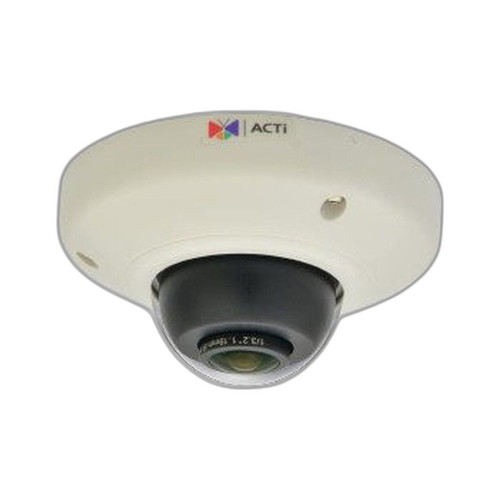
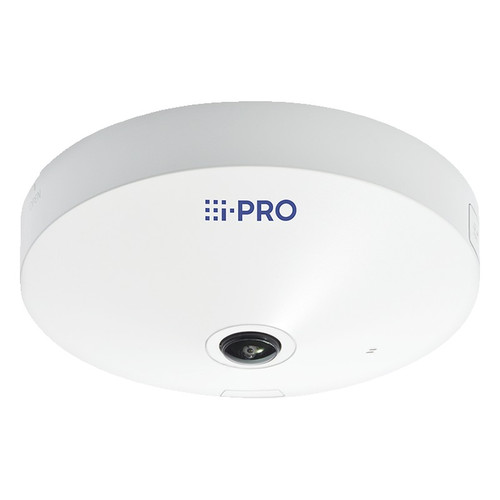
The ACTi E96 and i-PRO WV-S4156A are both 5 MP indoor fisheye dome cameras designed for single-point 360-degree coverage via PoE. The comparison examines how the two models differ in imaging capability, AI analytics depth, audio integration, installation footprint, and VMS compatibility — all decision-relevant factors for integrators evaluating a fisheye unit for lobbies, retail floors, or open-plan offices where minimizing camera count is the priority.
In This Guide
How do the imaging specs compare?
The i-PRO WV-S4156A publishes a full imaging data sheet: a 1/3-type 5 MP CMOS sensor with a 0.84 mm focal-length lens delivering a 186° horizontal and 186° vertical field of view at a native ceiling resolution of 2192×2192 pixels, with an electronic digital zoom selecting ×1, ×2, or ×4. Minimum illumination is specified at 0.15 lx (colour) and 0.10 lx (B&W), and Super Dynamic WDR reaches a maximum of 120 dB when set to level 31. Maximum shutter range runs from 1/10,000 s down to 16/30 s. The ACTi E96 spec sheet lists only '5 MP,' a fixed fisheye lens covering 170–190°, and DNR — no sensor size, no minimum illumination figure, no WDR dB value, and no shutter range are provided in the supplied specifications.
On low-light and dynamic-range capability, the WV-S4156A is the only model with published numbers. The E96's DNR designation confirms digital noise reduction is present, but without a lux figure or WDR rating a side-by-side comparison is not possible from available data. Frame rate for the WV-S4156A is specified at 30 fps; no frame-rate figure is provided for the E96. Both cameras are described as indoor-only with no IR illuminators listed, though the WV-S4156A includes a Day/Night (electrical) switch mode, while the E96 spec explicitly notes 'no IR LEDs.'
What about installation and environment?
Both cameras are rated for indoor use only and accept 802.3af PoE as their power source. The WV-S4156A draws 6.2 W over PoE (PoE Class 0) or accepts DC 12 V at 520 mA as an alternative supply; its operating temperature is specified as −10 °C to +50 °C and humidity 10–90% (non-condensing). Physical dimensions are ø150 mm × 50.5 mm (H), weight approximately 390 g. The E96 is listed at approximately 13 W maximum under 802.3af — notably higher than the WV-S4156A's 6.2 W actual draw — though no body-size, weight, or operating-temperature range is provided in the supplied E96 specifications.
Mounting options listed for the E96 are ceiling and wall. The WV-S4156A supports ceiling and wall mounting and additionally includes a ±5° fixing-angle adjustment (−5°, 0°, +5°), which assists levelling on non-flat surfaces. Neither unit publishes an IP or IK environmental protection rating in the supplied specifications, consistent with their indoor-only classification. No conduit-entry or junction-box compatibility data is provided for either model.
Which fits your VMS and analytics better?
The WV-S4156A carries ONVIF Profiles G, M, S, and T, enabling broad VMS compatibility including event-profile (G) and metadata-profile (M) support. It runs on an Ambarella CV22 SoC and provides on-device AI analytics: AI-VMD, AI People Counting for 360° fisheye, AI Privacy Guard for 360° fisheye, and AI Scene Change Detection — all processed at the edge with no external server required. Video motion detection covers 4 configurable areas; scene change detection covers 1 area. Audio analytics classify gunshot, yell, vehicle horn, and glass break on-device. The camera supports microSD edge storage, H.265/H.264 with CBR/VBR, and JPEG at 10 quality steps. Alarm inputs total three terminals, with one alarm output and one auxiliary output. Built-in audio includes a 3.5 mm stereo mic input with built-in nondirectional electret condenser microphone and a 3.5 mm stereo audio output (600 Ω). Mobile access is documented for iPad/iPhone and Android.
The ACTi E96 is described as 'ONVIF-compatible' in the supplied specifications — no specific ONVIF profile levels (S, G, T, M) are listed. No edge analytics, audio input/output, alarm I/O terminal count, onboard storage capability, or video compression formats beyond the generic 'IP camera' classification are specified in the provided data. Integrators requiring confirmed profile-level ONVIF compliance, edge AI, audio detection, or local storage should obtain the full ACTi E96 data sheet before committing to a deployment.
Which should you choose: the E96 or the S4156A?
Our take: The WV-S4156A is the stronger choice when verified AI analytics, confirmed low-light performance, and multi-profile ONVIF integration are required. Three concrete spec deltas drive this: first, the WV-S4156A publishes minimum illumination of 0.15 lx (colour) / 0.10 lx (B&W) versus no lux figure available for the E96; second, it delivers 120 dB Super Dynamic WDR versus no WDR rating published for the E96; third, it confirms ONVIF Profiles G, M, S, and T plus on-device AI analytics (people counting, AI-VMD, audio classification, privacy guard) that the E96 spec does not document at all. The E96's lower stated PoE draw estimate (~13 W) actually exceeds the WV-S4156A's measured 6.2 W, making the i-PRO unit the lighter load on the PoE budget. The E96 may be a viable lower-cost alternative where edge analytics and audio are unnecessary, but installers should obtain ACTi's full data sheet to confirm sensor, compression, and ONVIF profile details before specifying.
Side-by-Side Comparison
Spec-for-spec, from manufacturer data.
| Specification | ACTi E96 | i-PRO S4156A |
|---|---|---|
| Resolution | 5 MP | 5 MP |
| Image Sensor | — | Approx. 1/3-type 5MP CMOS |
| Lens / Focal Length | Fixed fisheye, 170–190° FOV | Fixed fisheye, 0.84 mm, 186° H × 186° V |
| Native Ceiling Resolution | — | 2192×2192 (Fisheye); 1600×1200 (PTZ mode) |
| Minimum Illumination | — | 0.15 lx (Color), 0.10 lx (B&W) |
| WDR (Dynamic Range) | — | Max. 120 dB (Super Dynamic On, level 31) |
| Max Frame Rate | — | 30 fps |
| IR / Night Vision | No IR LEDs (DNR only) | Day/Night electrical; no IR illuminators listed |
| Video Compression | — | H.265 / H.264 (CBR/VBR); JPEG |
| ONVIF Profiles | ONVIF-compatible (profile levels not specified) | Profiles G, M, S, T |
| Edge Analytics | — | AI-VMD, AI People Counting, AI Privacy Guard, AI Scene Change Detection |
| Audio Classification | — | Gunshot, Yell, Vehicle horn, Glass break |
| Audio I/O | — | 3.5 mm mic input (built-in mic); 3.5 mm audio output (600 Ω) |
| Alarm Terminals | — | Alarm In ×3, Alarm Out ×1, Aux Out ×1 |
| Edge Storage | — | microSD |
| Power Input / PoE Class | PoE 802.3af, approx. 13 W max | PoE 802.3af (Class 0), 6.2 W; or DC 12 V 520 mA |
| Operating Temperature | — | −10 °C to +50 °C (14 °F to 122 °F) |
| Dimensions | — | ø150 mm × 50.5 mm (H) |
| Weight | — | Approx. 390 g (0.86 lbs) |
| Mounting | Ceiling; Wall | Ceiling; Wall (±5° angle adjustment) |
| Safety / EMC Certifications | — | UL 62368-1, c-UL, CE, IEC 62368-1, FCC Part 15 Class A, EN55032 Class B |
| Warranty | — | 5-Year |
| Environment | Indoor | Indoor |
Frequently Asked Questions
Which should you choose: the E96 or the S4156A?
The WV-S4156A is the stronger choice when verified AI analytics, confirmed low-light performance, and multi-profile ONVIF integration are required. Three concrete spec deltas drive this: first, the WV-S4156A publishes minimum illumination of 0.15 lx (colour) / 0.10 lx (B&W) versus no lux figure available for the E96; second, it delivers 120 dB Super Dynamic WDR versus no WDR rating published for the E96; third, it confirms ONVIF Profiles G, M, S, and T plus on-device AI analytics (people counting, AI-VMD, audio classification, privacy guard) that the E96 spec does not document at all. The E96's lower stated PoE draw estimate (~13 W) actually exceeds the WV-S4156A's measured 6.2 W, making the i-PRO unit the lighter load on the PoE budget. The E96 may be a viable lower-cost alternative where edge analytics and audio are unnecessary, but installers should obtain ACTi's full data sheet to confirm sensor, compression, and ONVIF profile details before specifying.
Is the E96 or WV-S4156A better for low-light performance?
Only the WV-S4156A has a published minimum illumination figure — 0.15 lx in colour and 0.10 lx in black-and-white — along with 120 dB Super Dynamic WDR. The ACTi E96 specifications provided include DNR but no lux rating or WDR dB value, so a direct low-light comparison cannot be made from available data. Installers requiring confirmed low-light specs should consult ACTi's full E96 data sheet.
Do both cameras support on-device analytics without an external server?
The i-PRO WV-S4156A includes an Ambarella CV22 SoC running AI-VMD, AI People Counting, AI Privacy Guard, AI Scene Change Detection, and audio classification (gunshot, yell, vehicle horn, glass break) entirely on the camera. The ACTi E96 specifications provided list no edge analytics capability. Integrators requiring server-free analytics should select the WV-S4156A based on published specifications.
Will either camera work with my existing PoE switch without an upgrade?
Both cameras are rated for 802.3af (PoE) — no PoE+ switch is required for either. The WV-S4156A draws 6.2 W actual power consumption (PoE Class 0), well within the 15.4 W 802.3af budget. The E96 is estimated at approximately 13 W maximum, also within the 802.3af ceiling but leaving less headroom. Verify port power availability on your switch for the E96 if other devices share the same power domain.
Get a Second Opinion on Your Camera Choice
Share your site layout, coverage goals, and budget. Our team will validate the camera selection, flag anything we would change, and recommend products that match the use case.