
ACTi A32 vs ACTi A49: Specification Comparison
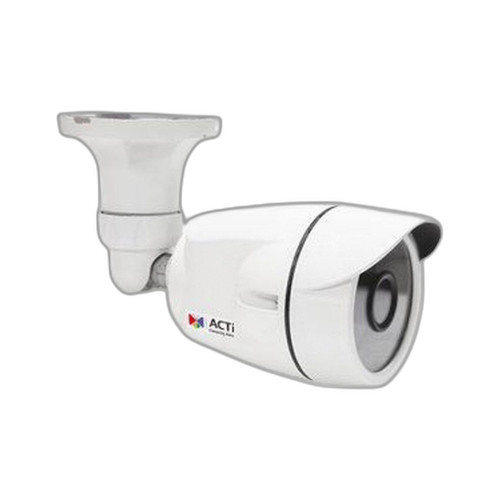
The ACTi A32 and ACTi A49 are both 3MP fixed bullet cameras from the same manufacturer, targeting different deployment environments within the same resolution class. The A32 is positioned as a compact indoor/transitional unit emphasizing low-light performance and WDR, while the A49 is a ruggedized outdoor zoom bullet with a varifocal lens, impact rating, and extended temperature tolerance. Buyers choosing between them are typically weighing low-light sensitivity and simplicity against optical zoom flexibility and outdoor resilience.
In This Guide
How do the imaging specs compare?
Both cameras deliver 3MP resolution, but their imaging architectures diverge significantly. The A49 specifies a 1/2.8-inch sensor, a minimum illumination of 0.05 lux color / 0.005 lux B/W at F1.4 with AGC on, an IR range of 30m via adaptive IR LED, and a maximum frame rate of 30 fps. It also carries Extreme WDR rated at 142dB with H.265/H.264/MJPEG compression. The A32 lists no sensor size, no minimum illumination figure, and no explicit IR range in its provided specifications; it describes its low-light capability only qualitatively as 'Superior Low Light Sensitivity' with Day/Night switching and 'Advanced WDR'—a lower-rated WDR tier than the A49's Extreme WDR (142dB).
On optics, the A49 offers a 2.8–12mm varifocal lens with 4.3x optical zoom (one spec field lists 3x, another 4.3x—buyers should confirm with ACTi), giving installers post-mount framing flexibility without a PTZ mechanism. The A32 provides no lens focal length in the supplied specifications, making a direct optical comparison impossible from the data at hand. The A49's quantified imaging specs—sensor size, lux rating, IR distance, WDR dB value, compression codecs, and frame rate—are materially more complete than the A32's.
What about installation and environment?
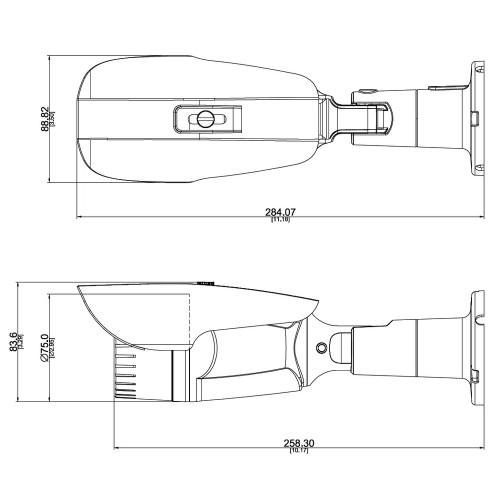
The A49 carries explicit environmental ratings: IP66 (dust-tight, jet-water resistant), IK10 (impact-resistant metal casing), NEMA 4X, and an operating temperature range of -30°C to 50°C (-22°F to 122°F). It weighs 694g (1.53 lb) and measures 80mm × 258.30mm. It supports dual power inputs—PoE Class 3 (IEEE 802.3af, 13W) and DC 12V (adapter not included)—with an RJ-45 pigtail connector on a 10/100 Base-T Ethernet port. Specified mount types include pole and rack.
The A32 lists no IP rating, no IK rating, no operating temperature range, no weight, and no dimensions in the provided specifications. Its mounting options are listed as wall and ceiling, and it is powered solely via PoE (802.3af/at). The absence of environmental ratings for the A32 means it cannot be spec-verified for outdoor or high-impact installations. Installers must treat the A32 as unrated for outdoor use based on the available data.
Which fits your VMS and analytics better?
Both cameras are ONVIF-compliant. The A49 specifies ONVIF Profile S and Profile T, enabling standardized media, PTZ-control (Profile T adds H.265 and metadata streaming), and event handling on any compatible VMS. The A32 lists ONVIF compliance but does not specify which profiles are supported in the provided data.
The A49 includes on-board edge analytics: VMD (Video Motion Detection) and People Counting are explicitly listed. The A32 lists no analytics capabilities in its specifications. Neither camera lists audio input/output or on-board SD card storage in the provided specifications, so neither can be confirmed for those features from the data at hand.
Which should you choose: the A32 or the A49?
Our take: The A49 is the stronger choice when the deployment is outdoors, requires optical zoom, or demands verified environmental durability. The A49's 142dB Extreme WDR outclasses the A32's unquantified 'Advanced WDR,' its 0.05 lux / 0.005 lux B/W minimum illumination is a concrete low-light benchmark the A32 does not provide, and its IP66/IK10/NEMA 4X ratings plus -30°C to 50°C operating range make it spec-verifiable for harsh exterior installations where the A32 is not. The 4.3x optical zoom (2.8–12mm) adds post-mount framing flexibility without PTZ cost. The A32 may suit cost-sensitive, lower-risk indoor applications where wall/ceiling mounting, simpler PoE wiring, and ONVIF compatibility are sufficient—but its specification gaps (no IP rating, no lux figure, no lens data, no ONVIF profiles) prevent a confident apples-to-apples endorsement. Specify the A49 for any outdoor or mixed-lighting perimeter use case.
Side-by-Side Comparison
Spec-for-spec, from manufacturer data.
| Specification | ACTi A32 | ACTi A49 |
|---|---|---|
| Resolution | 3 MP | 3 MP |
| Image Sensor Size | — | 1/2.8 inch |
| Lens / Focal Length | — | 2.8–12mm (4.3x optical zoom) |
| Min Illumination | — | 0.05 lux color / 0.005 lux B/W @ F1.4 (AGC on) |
| IR Range | — | 30m (adaptive IR LED) |
| WDR | Advanced WDR (dB not specified) | Extreme WDR (142dB) |
| Max Frame Rate | — | 30 fps |
| Video Compression | — | H.265; H.264 (Baseline/Main/High); MJPEG |
| IP Rating | — | IP66 |
| IK / Impact Rating | — | IK10 (metal casing) |
| Additional Environmental | — | NEMA 4X |
| Operating Temperature | — | -30°C to 50°C (-22°F to 122°F) |
| Power Input | PoE (802.3af/at) | PoE Class 3 (802.3af, 13W); DC 12V (adapter not included) |
| ONVIF | Compliant (profiles not specified) | Profile S; Profile T |
| Edge Analytics | — | VMD; People Counting |
| Weight | — | 694g (1.53 lb) |
| Dimensions | — | 80mm × 258.30mm (3.149" × 10.169") |
| Certifications | — | CE; FCC; EAC; IP66; NEMA 4X; IK10 |
Frequently Asked Questions
Which should you choose: the A32 or the A49?
The A49 is the stronger choice when the deployment is outdoors, requires optical zoom, or demands verified environmental durability. The A49's 142dB Extreme WDR outclasses the A32's unquantified 'Advanced WDR,' its 0.05 lux / 0.005 lux B/W minimum illumination is a concrete low-light benchmark the A32 does not provide, and its IP66/IK10/NEMA 4X ratings plus -30°C to 50°C operating range make it spec-verifiable for harsh exterior installations where the A32 is not. The 4.3x optical zoom (2.8–12mm) adds post-mount framing flexibility without PTZ cost. The A32 may suit cost-sensitive, lower-risk indoor applications where wall/ceiling mounting, simpler PoE wiring, and ONVIF compatibility are sufficient—but its specification gaps (no IP rating, no lux figure, no lens data, no ONVIF profiles) prevent a confident apples-to-apples endorsement. Specify the A49 for any outdoor or mixed-lighting perimeter use case.
Is the A32 or A49 better for low-light performance?
Based on available specifications, the A49 provides concrete low-light data: 0.05 lux color and 0.005 lux B/W at F1.4 with AGC on, plus a 30m adaptive IR LED range. The A32 describes its low-light capability only as 'Superior Low Light Sensitivity' with Day/Night switching—no lux figure or IR range is listed in the provided specs. Buyers who need a verified low-light threshold should specify the A49.
Can the A32 be used outdoors?
The provided specifications for the A32 list no IP rating, no IK rating, and no operating temperature range. It cannot be confirmed as rated for outdoor use from the available data. The A49, by contrast, carries IP66, IK10, NEMA 4X, and a -30°C to 50°C operating range, making it the verifiable outdoor choice between the two.
Does the A49's optical zoom replace the need for a PTZ camera?
For fixed-angle scenes where the installer needs framing flexibility at commissioning time, the A49's 2.8–12mm varifocal lens (4.3x optical zoom per one spec field) allows the coverage angle to be set during installation without repositioning the camera. It does not provide remote pan/tilt/zoom control during operation. If real-time operator-directed zoom or pan is required, a PTZ camera would be necessary.
Get a Second Opinion on Your Camera Choice
Share your site layout, coverage goals, and budget. Our team will validate the camera selection, flag anything we would change, and recommend products that match the use case.