Comelit UT9305M Empty Glass Module Housing
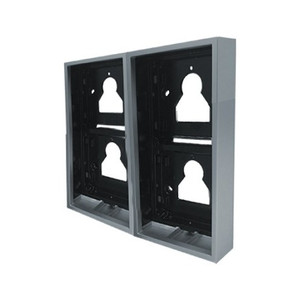
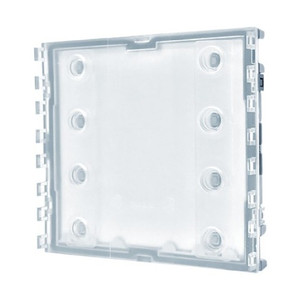
The Comelit UT9305M is an empty glass module designed to house third-party camera electronics within a protective enclosure. It functions as a mounting and protection platform for integrators who need to standardize on Comelit system architectures while leveraging existing or compatible third-party imaging sensors. The UT9305M accepts 4MP sensor configurations and delivers power via PoE+ (802.3at), eliminating the need for separate power infrastructure on individual cameras.
Key Features
- PoE+ Power Delivery (802.3at): Draws up to 30W maximum, meaning a single PoE+ switch port supplies both power and network connectivity — no auxiliary power supplies or conduit runs required at the camera location. Reduces installation time and cabling complexity, especially in retrofit scenarios.
- 4MP Sensor Accommodation: Engineered to house 4MP imaging electronics, delivering sufficient resolution for face identification at typical office or warehouse entrance distances (15–25 ft) and general-area surveillance where 2560 × 1920 detail is adequate.
- Third-Party Integration: Designed as a standardized housing accessory for mixed-vendor environments. Allows integrators to maintain Comelit system integration points while using compatible third-party camera boards or sensor assemblies, reducing vendor lock-in on the imaging element itself.
- Protective Enclosure Design: Houses camera electronics in a dedicated module, protecting sensitive components from dust, light interference, and minor physical impact — relevant for warehouse, light-industrial, and indoor commercial deployments where environmental controls are moderate.
- Comelit System Standardization: Integrates into the broader Comelit IP camera ecosystem, enabling consistent PoE power budgeting, firmware management, and network provisioning across multiple camera types within a single deployment.
- Flexible Deployment: Supports mixed-camera architectures where some locations require specific optical or thermal characteristics from third-party vendors, while the overall system remains standardized on Comelit network and power infrastructure.
When to Choose This Module
The UT9305M makes sense when you have a specific third-party 4MP sensor or camera board that delivers a feature (optical zoom, thermal capability, or specialty codec support) not available in native Comelit lines, but you want to deploy it within a standardized Comelit PoE+ and management framework. It is not a general-purpose universal housing — compatibility requires verification with the specific camera or sensor electronics you intend to integrate.
Integration and Deployment Considerations
Because the UT9305M is a housing module rather than a complete camera, integration success depends entirely on mechanical fit and electrical compatibility between the third-party electronics and the module's internal form factor. Before committing to a purchase, confirm with the manufacturer of both the housing and the camera board or sensor assembly that they will mate correctly. PoE+ power is abundant for most compact imaging modules (25–30W covers most fixed 4MP boards), but verify the specific device's power signature. Installation in a network video recorder system requires ONVIF Profile S support or manufacturer-confirmed driver integration — the module itself does not guarantee compatibility with all NVR platforms.
When Not to Choose the UT9305M
If you need a complete, pre-integrated camera with factory calibration and warranty, look instead at Comelit's native camera lines. If your third-party sensor requires more than 30W or uses non-standard lens mounts, this housing will not accommodate it. If you are uncertain about the mechanical or electrical fit of your chosen third-party electronics, contact the sensor or board manufacturer before proceeding — retrofitting or troubleshooting failed integrations is costly and time-consuming.
Frequently Asked Questions
Q: Does the UT9305M work with any 4MP camera board?
A: No. The UT9305M is designed for 4MP configurations, but mechanical fit, lens mount, and power connector compatibility depend on the specific third-party electronics you intend to use. Always verify with the sensor or board manufacturer before purchase.
Q: What is the maximum power draw the UT9305M can deliver?
A: The module receives up to 30W via PoE+ (802.3at). Most compact 4MP camera boards operate within 15–25W, so verify your specific component's power consumption before installation.
Q: Is the UT9305M ONVIF-compliant?
A: The housing itself does not enforce ONVIF compliance; ONVIF support depends on the firmware and electronics of the third-party camera board you integrate. Confirm Profile S or T compliance with the sensor manufacturer.
Q: Can I use the UT9305M with a network video recorder?
A: Yes, provided the third-party camera electronics inside support standard streaming protocols (RTSP, ONVIF) and the NVR firmware recognizes the video codec and resolution. Not all NVRs auto-detect third-party cameras — integration may require manual configuration or driver installation.
Q: What cooling or thermal management does the UT9305M provide?
A: The housing offers passive protection from direct sunlight and dust but does not include active cooling. For indoor, climate-controlled environments (warehouses, offices), this is adequate. Outdoor or high-heat applications may require additional thermal management or sensor derating.
Q: Is there a warranty on the UT9305M?
A: Warranty terms are manufacturer-specific and depend on the vendor. Contact the distributor or Comelit support for coverage details; housing and third-party electronics warranties are typically separate.
Ted PerryPerspective based on aggregated IP Security Depot and affiliated engineering team experience.
The Comelit UT9305M is a pragmatic choice for integrators managing mixed-vendor environments where standardization on PoE+ infrastructure is non-negotiable but imaging requirements pull toward third-party sensors or boards. The key appeal is power simplicity — PoE+ (802.3at) eliminates separate supplies and reduces installation footprint, especially valuable in retrofit scenarios where running new power is expensive or impossible.
Technical Highlights:
- PoE+ Power Budget (30W max): Covers most compact 4MP boards without auxiliary supplies, but verify your specific component — undersized or overestimated power consumption is the most common integration failure.
- 4MP Sensor Envelope: Sufficient for identification-range surveillance (15–25 ft), general warehouse overheads, and indoor access-point monitoring. Not a replacement for high-resolution perimeter or long-throw applications.
- Third-Party Electronics Compatibility: The housing does not guarantee mechanical or electrical fit — you own the integration risk. Lens mounts, connector pinouts, and form factors vary widely among sensor manufacturers.
Deployment Considerations:
- Mechanical fit verification is non-negotiable before purchase; retrofitting a incompatible board into a housing is expensive and defeats the time savings PoE+ promises.
- ONVIF and NVR driver support depend entirely on the third-party electronics, not the housing. Budget integration and testing time if your NVR does not ship with pre-loaded profiles for the camera board you select.
- Passive thermal management is adequate indoors (warehouse, office), but outdoor or high-ambient environments may require supplemental cooling or performance derating in summer.
Best fit: warehouse automation sites and light-industrial deployments where you have a specific third-party 4MP board that delivers a feature (analog video bridge, specialty codec, or OEM integration) not in Comelit's native line, but you want PoE+ power and system-wide standardization. Not a general-purpose universal housing.