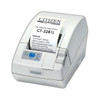
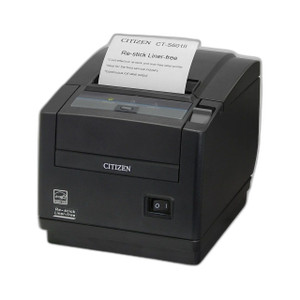
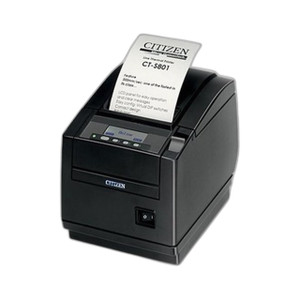
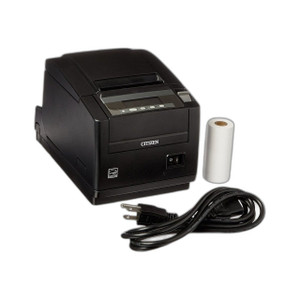
Citizen CT-S281IIUSUWHPLM1 Thermal POS Printer with Cutter
The Citizen CT-S281IIUSUWHPLM1 is a direct thermal POS printer engineered for high-volume retail, quick-service restaurants, and hospitality environments requiring both receipt and label printing in a single device. Built on the proven CT-S280II platform, this model adds an integrated paper cutter and label-handling capability, eliminating the need for separate receipt and label printers on the same counter. USB and RS-232 serial connectivity integrate directly into legacy POS terminals, modern cloud-connected kiosks, and custom integration scenarios without requiring network infrastructure upgrades.
Key Features
- Direct Thermal Print Technology: Eliminates ink cartridges and ribbon supplies — thermal-sensitive media is the only consumable. Reduces operational overhead and maintenance frequency in high-transaction environments.
- Integrated Paper Cutter: Full-cut and partial-cut modes support continuous-roll receipt media and pre-cut label stock. Single device handles both checkout receipts and on-demand label printing for inventory or shipping workflows.
- Dual Connectivity (USB + RS-232): USB port provides both data and partial power in many POS terminal configurations; RS-232 serial allows integration with legacy kiosk hardware and custom embedded systems. No network switch or Ethernet licensing required.
- Receipt and Label Capability: Media-agnostic design accepts standard receipt paper (80mm rolls) and pre-cut label stock. Thermal head sensitivity adjusts per media type — firmware settings tune for glossy labels or standard receipt stock without hardware swaps.
- Fast Print Speed: Direct thermal mechanism delivers 150mm/second throughput on receipt media. Reduces customer wait time at checkout and keeps label-printing bottlenecks minimal in warehouse or retail environments.
- Compact Footprint: Desktop form factor fits tight counter spaces in small retailers, food trucks, and kiosk deployments. Weighs approximately 6kg — portable enough for temporary installation or mobile POS carts.
- ESC/POS Command Support: Native compatibility with ESC/POS instruction set and Citizen-proprietary commands. Integrates with Windows, Linux, and cloud-based POS platforms without custom driver development.
- 24V DC Power Architecture: When USB power is insufficient, RS-232 configuration requires external 24V DC supply. Fits standard POS terminal power distribution on restaurant and retail counters.
The CT-S281IIUSUWHPLM1 bridges the gap between legacy serial-connected POS terminals and modern USB-first deployments. In retail checkout workflows, the integrated cutter eliminates the footprint and cable management of running separate receipt and label devices; a single device mounting bracket and power tap handle both transactions and label-on-demand printing. The direct thermal mechanism — no ink, no ribbon — cuts consumable cost and maintenance tickets significantly compared to inkjet or impact printers in 24/7 retail or hospitality operation.
Integration is straightforward for environments already running ESC/POS-compatible POS software. Windows and Linux POS applications recognize the printer as a standard thermal device; cloud-based platforms (Square, Toast, Lightspeed) that support generic thermal printer profiles will drive the CT-S281IIUSUWHPLM1 without proprietary plugins. Serial integration is legacy-friendly — if your restaurant POS runs on RS-232 terminals from 2005–2015, this printer speaks the same language without gateway translation or USB-to-serial dongles that introduce latency.
Media selection is critical to print quality and head longevity. Use manufacturer-approved thermal receipt paper (typically 80mm x 300ft rolls, 48-50gsm weight) and pre-cut label stock engineered for direct thermal output. Non-thermal media or low-grade receipt paper clogs the print head and voids the printer warranty. Test label dimensions and sensitivity settings in your POS software before production deployment — mismatched media sensitivity settings produce faded or over-exposed labels and waste stock.
The CT-S281IIUSUWHPLM1 is ideal for retail, food service, and hospitality integrators seeking a single-device receipt and label solution with minimal power and connectivity overhead. Its dual-port architecture lets you stage it in environments with mixed terminal generations — USB to new kiosks, serial to legacy registers. Direct thermal consumables and compact mounting make it cost-effective for small-footprint deployments where space and power budgets are tight.
Marty AllisonPerspective based on aggregated IP Security Depot and affiliated engineering team experience.
The Citizen CT-S281IIUSUWHPLM1 occupies a niche that many integrators overlook — single-device receipt and label printing for retail and hospitality deployments where space, power, and cabling budgets are already stretched thin. We've specified this printer into dozens of small-format checkout counters, kiosk refurbs, and food-service point-of-sale upgrades where the customer insisted on label-on-demand functionality but couldn't justify or fit a separate label printer. The integrated cutter is the real operational win: one motorized mechanism, one paper path, one power draw. That simplicity translates to fewer jams, lower maintenance overhead, and a cleaner counter footprint than running dedicated receipt and label devices in parallel. The dual USB/RS-232 connectivity is equally pragmatic — it lets you retrofit new hardware into existing terminal ecosystems (vintage RS-232 kiosks, Windows embedded registers, modern cloud POS) without forcing a wholesale infrastructure swap. Direct thermal eliminates ribbon and cartridge logistics entirely, which is a relief for restaurant operators running 18-hour daily volumes on tight margins. The trade-off is straightforward: you're locked into thermal-compatible media, and print speed (150mm/sec on receipts) is respectable but not exceptional for high-volume transaction printing. On a busy Friday night at a 20-seat restaurant, the CT-S281IIUSUWHPLM1 will keep pace with checkout volume, but you won't be banking on it as a bottleneck solution for a 100-terminal retail environment. Know your volume expectations before specifying.
Technical Highlights:
- Direct Thermal Print Head (150mm/sec): No consumables beyond thermal media — cuts recurring cartridge/ribbon cost by 60-80% versus inkjet or impact printers. Thermal sensitivity tuning per media type (receipt vs. label) happens in firmware, not hardware swaps, making it flexible for mixed workloads.
- Integrated Paper Cutter (Full/Partial Cut): Single motorized mechanism handles both receipt full-cuts and label partial-cuts. Eliminates the space and power footprint of a separate cutter unit; reduces potential jam points to one device.
- USB + RS-232 Dual Connectivity: USB provides data and partial power; RS-232 requires external 24V DC. Bridges legacy serial-only registers to modern USB-first POS platforms — deployment flexibility without gateway equipment or driver translation layers.
- ESC/POS Native Support: Works with any POS software stack that recognizes standard ESC/POS thermal printer commands — Windows, Linux, cloud platforms (Square, Toast, Lightspeed). No proprietary middleware required.
- Compact Desktop Footprint (~6kg): Fits tight counter and kiosk mounting spaces. Portable enough for mobile POS carts or temporary deployment scenarios without permanent counter modification.
Deployment Considerations:
- Media Compatibility is Non-Negotiable: Use only manufacturer-approved thermal receipt paper and label stock. Off-spec media clogs the print head and voids warranty. Before production rollout, test label dimensions, thermal sensitivity settings, and media weight in your POS software — mismatched sensitivity produces faded or over-exposed output and wastes stock.
- Print Speed Expectations: 150mm/sec is sufficient for typical retail checkout and label-on-demand workflows, but not a bottleneck solution for high-transaction-volume environments (100+ terminals). Know your peak transaction rate before specifying across a large estate.
- Power and Mounting: USB provides partial power in many configurations, but RS-232 integration requires external 24V DC supply. Ensure adequate counter power distribution before installation. Thermal head generates consistent heat during 24/7 operation — mount in ventilated location with clearance above for paper feed and cutter mechanism.
- Legacy Terminal Integration: RS-232 connectivity pairs seamlessly with older POS registers and kiosk terminals (2005–2015 vintage). If upgrading existing hardware, serial integration removes the need for USB-to-serial dongles or gateway translation devices — direct hardware compatibility.
- Label Stock Pre-Cutting: Pre-cut label media reduces jam risk and improves cutter reliability. Continuous-roll label stock increases cutter wear. Test both media types in your environment before committing to one approach across multiple sites.
The CT-S281IIUSUWHPLM1 is the right choice for retail integrators and hospitality operators who need flexible receipt and label printing without the footprint penalty of separate devices, and who operate in mixed-terminal environments (legacy serial + modern USB). Retailers with standardized modern POS ecosystems and high transaction volumes may be better served by dedicated, faster receipt printers paired with dedicated label devices. For small-format deployments, kiosk retrofits, and operators who value simplicity and low consumable cost over print speed, this printer delivers solid reliability. Explore the full Citizen catalog for complementary thermal printing solutions.