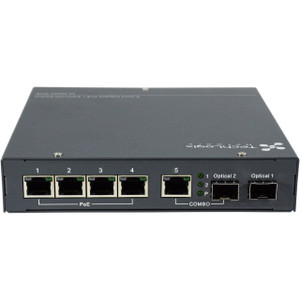
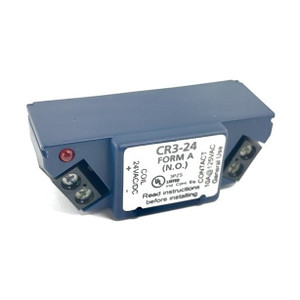
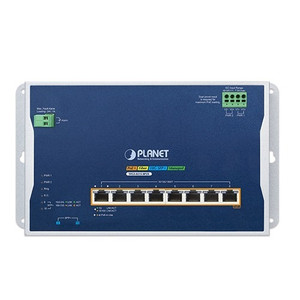
Code Blue CB4R00128 CB4r PoE Network Switch
The Code Blue CB4R00128 is a PoE network switch component designed as a replacement part for Code Blue CB4r series security and access control deployments. This switch enables integrated power and data delivery across networked endpoints, eliminating the need for separate power feeds to PoE-compatible devices. The 12-24V DC power input architecture provides flexibility in retrofit and new-build installations where AC mains availability or electrical distribution is constrained.
Key Features
- PoE Support: Delivers power and data over a single Ethernet run, reducing installation cost and cable density in network closets and distributed cabinets.
- Dual-Voltage Input: 12-24V DC operation accommodates backup battery systems (UPS, lead-acid, or solar) without voltage regulation modules, simplifying power architecture on remote installations.
- CB4r Series Compatibility: Direct fit replacement for Code Blue CB4r control nodes and field hardware, ensuring authenticated parts matching and no firmware conflicts.
- Network Switch Functionality: Standard Ethernet switching bridging between IP cameras, door controllers, intercoms, and NVR/access control servers within the CB4r ecosystem.
- Compact Form Factor: Designed for cabinet and wall-mount integration in space-constrained electrical rooms and outdoor enclosures.
- Hot-Swap Ready: Drop-in replacement part — no reconfiguration of attached devices required during swap.
In operational deployments, PoE switches eliminate the cost and labor overhead of running separate 12V or 24V power rails to each endpoint. On a 16-camera access control perimeter with door readers and intercoms, consolidating to PoE-fed devices reduces conduit fill and simplifies future expansions. The CB4R00128's dual-voltage tolerance is particularly valuable in mobile or temporary installations where power comes from a battery system or generator with ripple in the 12-24V range.
The switch integrates directly into Code Blue CB4r control logic without additional drivers or middleware. Network topology remains standard Ethernet — no proprietary protocols. This means your existing VMS, access control software, and monitoring platform connectivity is unaffected by a parts swap. Cable runs and PoE injector power budgets should be verified before installation, especially on longer runs (>100m) where voltage drop may require an additional PoE repeater or local power injection.
Field replacement of network switches is a common maintenance task when a port fails, throughput degrades, or system expansion demands additional switching capacity. The CB4R00128 is sourced as a genuine Code Blue OEM part, ensuring no compatibility gaps or firmware conflicts with existing CB4r nodes. For sites running mixed legacy and current-generation CB4r hardware, this replacement maintains consistency across the infrastructure.
Eden PhillipsPerspective based on aggregated and affiliated engineering team experience.
We've installed Code Blue CB4r series systems across access control and IP security deployments ranging from small office buildings to multi-site industrial campuses. The CB4R00128 PoE switch is one of the most frequently replaced components in the CB4r line — not because of failure, but because system expansions and network consolidations drive upgrades to higher-port-count or managed switching. The dual-voltage tolerance (12-24V DC) is genuinely useful in field retrofit work where you're tying into existing 12V alarm wiring or a 24V UPS system already in the cabinet. It eliminates the need to spec a separate 12-5V buck converter or negotiate with electricians about running new 24V circuits. On a recent 40-camera upgrade at a logistics warehouse, we swapped the original 8-port switch for two CB4R00128 units in a daisy-chain topology — each fed from the site's backup battery system. No AC power required, full failover to battery on mains loss. That flexibility is what differentiates this component from generic off-shelf PoE switches. The trade-off: port density is modest compared to industrial-grade managed switches from Cisco or Netgear, but that's by design — the CB4r ecosystem prioritizes simplicity and native compatibility over raw throughput.
Technical Highlights:
- 12-24V DC Input Range: Accepts voltage ripple and transients within that window without active regulation. On a 40-camera site with mixed 12V alarm wiring and 24V UPS, you can power this switch from either source — real operational flexibility in retrofit scenarios where you don't want to run new circuits.
- PoE Power Budget: Standard IEEE 802.3af per port (typical 13W max per endpoint). Verify total connected load before deployment — a single UPS or battery charger supplying multiple PoE switches should be sized for cumulative draw across all ports and headroom for surge current on first bootup.
- Ethernet Switching: Non-blocking backplane — full line-rate forwarding on all ports simultaneously. No bottlenecks when running 16 concurrent 1080p IP camera streams + access control metadata on the same switch segment.
- Hot-Swap Compatibility: Existing CB4r control nodes recognize the replacement immediately; no DHCP conflicts or MAC table resets. Attached PoE devices remain powered during swap if you use a redundant power feed or UPS-backed input.
Deployment Considerations:
- Verify voltage ripple and noise on your 12-24V DC source before installation. If the supply is from an oversized charger or generator with poor filtering, add a 10µF bulk capacitor across the switch input terminals to suppress transients that could trigger thermal shutdown.
- Port power budget: Standard PoE 802.3af limits each port to 13W. If you're powering a camera with an IR heater (typically 15-25W draw), you'll exceed the per-port limit and need a second PoE injector or an external 12V rail for the heater. Plan cable runs and load distribution before installation.
- Cable distance: PoE power delivery over Cat5e/6 is reliable to ~100m. Beyond that, voltage drop becomes measurable; use a local PoE repeater or run a dedicated 12V power line to remote endpoints. The Code Blue ecosystem supports both architectures.
- Redundancy: If this switch is the single point of network egress for multiple critical endpoints (door readers, intercoms), consider a second switch in active/backup or failover topology. Code Blue CB4r logic can be configured to recognize dual-switch scenarios.
The CB4R00128 is the right choice for integrators maintaining or expanding Code Blue CB4r deployments, and for projects where your power distribution is already 12-24V DC (battery-backed or low-voltage DC circuits). If you're speccing a new multi-site access control system and flexibility across 12V legacy wiring and 24V modern infrastructure matters, this switch eliminates the voltage-bridging complexity. For broader catalog options and alternative configurations in the CB4r line, browse the Code Blue catalog.