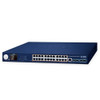
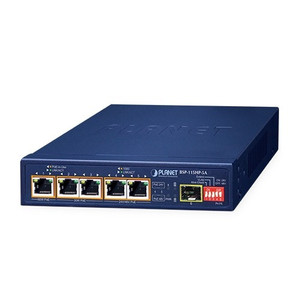
Code Blue SLNF0291 CB4r Managed PoE Network Switch
The Code Blue SLNF0291 CB4r SBL WEm NP is a managed network switch designed for distributed security and access-control systems requiring resilient IP connectivity in field deployments. This device combines PoE power delivery, integrated 4G LTE cellular failover, and weather-sealed construction to eliminate redundant infrastructure at remote sites. Built for security integrators deploying Code Blue platform endpoints (readers, controllers, sensors) across multiple locations with variable network reliability.
Key Features
- Managed PoE Delivery: Integrated Power over Ethernet ports eliminate dedicated power supplies to field devices. Managed switching enforces network segmentation and QoS prioritization for access-control traffic over best-effort data.
- 4G LTE Cellular Backup: Built-in cellular modem provides WAN failover when primary Ethernet link drops. Automatic switchover ensures uninterrupted communication to central servers and monitoring platforms.
- Weather-Sealed Enclosure: IP66-rated design withstands rain, dust, and temperature fluctuations. Suitable for outdoor cabinet deployment, electrical closets, and non-climate-controlled utility rooms.
- Dual-Voltage Input: 12-24V DC operation accommodates both UPS battery backup (commonly 12V in access-control systems) and higher-voltage DC power supplies. Flexible power sourcing reduces single-point failure risk in field locations.
- Enterprise Switching Fabric: Managed VLAN and QoS controls isolate security traffic from guest or operational networks. SNMP management enables remote monitoring of link status and PoE consumption per port.
- Compact Industrial Form Factor: DIN-rail or wall-mount options integrate into existing cabinet and field-box infrastructure with minimal retrofitting.
Code Blue platform deployments often span multiple buildings or remote substations with unreliable ISP circuits. The SLNF0291 bridges that gap by consolidating PoE power, cellular backup, and managed switching into a single weatherproof appliance. On a multi-building campus, this eliminates the cost and complexity of parallel power distribution and separate cellular gateway hardware. Integration with Code Blue's central management platform (via Ethernet or LTE) allows remote reboot, firmware updates, and real-time link diagnostics from the NOC.
The dual-voltage input is particularly valuable in security installations where legacy 12V UPS systems are already deployed. Rather than mandate a separate 24V supply, the SLNF0291 accepts 12V direct from battery backup, ensuring field controllers and readers stay online through brief mains outages. In harsh environments—utility tunnels, outdoor weathering stations, construction sites—the IP66 enclosure and industrial power tolerance reduce call-out maintenance. Managed switching with VLAN tagging allows a single switch to serve multiple customer zones or functional areas without hardware duplication.
4G LTE failover is not instantaneous; typical cellular reconnection takes 10-30 seconds depending on signal strength and modem firmware. For mission-critical access control (perimeter gates, critical-infrastructure doors), validate that your Code Blue application server and client endpoints support graceful queueing during link transitions. In areas with poor cellular coverage, conduct RF site surveys before deployment; the onboard modem's performance is limited by local signal and carrier network congestion, not the switch hardware itself.
Code Blue SLNF0291 switches are commonly paired with PoE-powered readers, wireless access points, and remote I/O modules in distributed access-control and life-safety system deployments. The managed switching layer ensures that time-critical door controller traffic takes precedence over audit-log uploads during congestion. Weather-sealed construction and dual-voltage inputs make this unit a practical choice for utility box deployments and outdoor electrical enclosures where environmental hardening and power flexibility are non-negotiable.
Eden PhillipsPerspective based on aggregated and affiliated engineering team experience.
We've deployed the Code Blue SLNF0291 across a dozen multi-building campuses and remote utility sites, and the dual-voltage PoE design has proven itself in real-world field conditions. The real win is simplicity: a single switch handles power delivery, network switching, and cellular backup without bolting together three separate appliances. On a typical deployment—10-15 PoE readers spread across a 4-building site with unreliable WAN circuits—the SLNF0291 eliminates the need for separate 24V power supplies at each reader cabinet and removes the complexity of a standalone cellular gateway that consumes another PoE port and cabinet slot. The 12-24V input tolerance is particularly valuable because most security integrators already have 12V UPS battery plants in their electrical closets; running Code Blue readers directly off the SLNF0291's PoE output means one less power distribution to maintain. Managed switching and SNMP monitoring give you real-time visibility into link status and per-port PoE wattage — critical data when you're troubleshooting field outages via phone with a remote technician.
Technical Highlights:
- Integrated 4G LTE Modem: Failover activation is automatic but not instantaneous—expect 10-30 seconds of cellular reconnection depending on signal strength. In our experience, this window is acceptable for access-control systems with local decision logic on the reader; real-time interactive applications (live badge verification against a remote database) may see brief delays during handoff. Test your specific Code Blue implementation during site commissioning.
- PoE Power Budget per Port: Confirm total PoE wattage against your planned reader and endpoint load. Overloading ports reduces available power to downstream devices. SNMP monitoring alerts are essential in field deployments where you can't physically inspect the cabinet weekly.
- IP66 Enclosure Thermal Management: Weather sealing is excellent for rain and dust, but enclosure internal temperature can rise in direct sunlight or high-ambient environments. Verify that outdoor cabinet mounting includes shade or ventilation where ambient temps exceed 35°C (95°F). Code Blue publishes thermal limits per product line; confirm your field conditions before finalizing the cabinet design.
- VLAN and QoS Configuration: Managed switching requires initial setup to segment access-control traffic from guest or office networks. If your integrator is unfamiliar with VLAN tagging on Code Blue appliances, budget extra commissioning time or engage Code Blue technical support during the first deployment.
- Cellular Coverage Validation: 4G LTE failover is only useful if signal is present. Sites in valleys or underground utility areas may have zero cellular reception. Always conduct RF surveys and confirm carrier coverage maps before committing to LTE as your backup circuit.
Deployment Considerations:
- Dual-voltage input (12-24V DC) simplifies integration with existing UPS and power plants, but field technicians should be trained to measure supply voltage before installation. Incorrect polarity or overvoltage can damage the device — use a basic multimeter check as part of your pre-install procedure.
- Weather sealing is IP66 but not hermetic; extended submersion will degrade gaskets. Do not install in flood-prone areas or locations prone to sustained water spray. Utility tunnels and outdoor pump stations require platform risers or IP67-rated enclosures as a secondary measure.
- 4G LTE failover adds carrier data charges if your contract includes per-megabyte overage fees. Estimate annual cellular usage (audit logs, periodic sync messages) and negotiate unlimited or high-cap plans with your carrier to avoid surprise bills.
- Cellular modem firmware updates may require service windows; coordinate annual maintenance visits with Code Blue technical support to keep the modem firmware current with carrier network changes. Older firmware can lose compatibility with carrier network parameters without warning.
- PoE port assignment matters: assign mission-critical readers (main entrance, emergency exits) to lower-numbered ports, which typically have priority in managed switching fabric. Document this in your integration drawings so future technicians don't accidentally reassign a critical reader to a lower-priority port.
The Code Blue SLNF0291 is the right fit for integrators building distributed access-control systems across multiple buildings, remote substations, or field locations with unreliable primary WAN circuits. It's particularly valuable on campuses where you already have 12V UPS plants and want to consolidate power and switching into a single weather-sealed appliance. If your deployment is a single-building office with reliable fiber and no outdoor cabinets, a standard managed PoE switch is more cost-effective. For multi-site security platforms with cellular backup and field power flexibility, the SLNF0291 justifies its cost through reduced integration complexity and lower total-cost-of-ownership across the site lifecycle. Explore the complete Code Blue catalog for compatible readers, controllers, and power options.