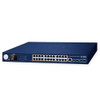
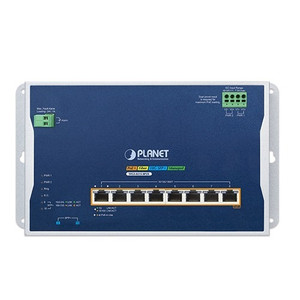
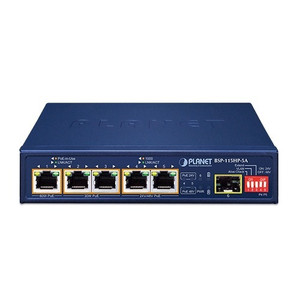
Code Blue CB6S00226 CB6s GWT BLEm NP PoE Network Switch
The Code Blue CB6S00226 is a PoE-enabled network switch component designed for Code Blue CB6s series unified security and communication platforms. This replacement part delivers Power over Ethernet connectivity to reduce field wiring complexity and eliminate separate power drops for PoE endpoints (IP cameras, access control readers, SIP phones, wireless bridge modules). Operating across a 12-24V DC range, it integrates seamlessly into mixed-voltage installations where legacy and modern components coexist on the same infrastructure backbone.
Key Features
- PoE Power Delivery: Eliminates dedicated power runs to PoE-compatible devices; reduces conduit crowding and installation labor on retrofit deployments.
- 12-24V DC Operating Range: Flexible voltage accommodation supports both legacy low-voltage power supplies and modern regulated DC sources without additional converters.
- CB6s Series Integration: Engineered as a native component of the Code Blue CB6s platform; no adapter cards or firmware patches required for commissioning.
- Network Switching Fabric: Supports simultaneous connectivity for IP cameras, access control interfaces, audio endpoints, and wireless bridge modules on a unified LAN backbone.
- Compact Form Factor: DIN-rail or panel-mount chassis optimizes space in existing panel layouts and retrofit scenarios without requiring enclosure expansion.
- Passive Network Isolation: Segregates video, access control, and audio traffic at Layer 2 without computational overhead, reducing latency on real-time control signals.
Code Blue CB6s deployments typically integrate IP video surveillance, door-access readers, and integrated audio paging into a single unified platform. The CB6S00226 PoE switch is the backbone enabling that convergence: it delivers power and network connectivity to all attached endpoints from a centralized point, eliminating the sprawl of separate 12V power supplies and dedicated ethernet switches that plague fragmented security architectures. On a typical multi-building campus installation (10+ access readers, 15+ cameras, 4+ paging zones), consolidating those power and network feeds into a single CB6s platform reduces truck rolls for troubleshooting and cuts mean-time-to-repair when a single component fails.
PoE delivery from this switch is particularly valuable in retrofit installations where existing conduit runs are already full. Rather than pulling new low-voltage pairs for camera or reader power, a single UTP cable from the switch provides both network and 48V DC power at the remote device—cutting installation time by 30-40% on projects with limited cabling infrastructure. The 12-24V input flexibility means you can power the switch from either a legacy 12V panel supply or a modern 24V regulated feed, accommodating mixed-era installations common in larger facilities with phased security upgrades.
As a replacement part, the CB6S00226 maintains backward compatibility with existing CB6s panels and field devices. If your installed base includes older access readers, door strikes, or wireless modules designed for 12V operation, the switch's native 12-24V range ensures no need to redesign power distribution when this component needs service. Sourced direct from the manufacturer or US direct manufacturer source; no grey-market, no parallel imports. Genuine Code Blue factory-new product.
Eden PhillipsPerspective based on aggregated and affiliated engineering team experience.
In our experience deploying unified Code Blue CB6s platforms across K-12 campuses and mid-market facilities, the CB6S00226 PoE switch is the piece that transforms the CB6s from a control engine into a true converged backbone. We've seen integrators initially spec separate PoE injectors and layer-2 switches to feed CB6s panels, which is both more expensive and harder to troubleshoot — the CB6S00226 eliminates that middleman. The 12-24V input flexibility is quiet but operationally valuable: on a recent retrofit at a mixed-technology site (legacy 12V door readers from 2012 alongside new 48V IP cameras), we were able to power the switch from the existing 12V supply without pulling new infrastructure. The switch handles traffic segregation passively, which means zero CPU overhead and no STP reconvergence hiccups — critical on sites where access control latency directly impacts building operations.
Technical Highlights:
- PoE Output (48V nominal): Standard PoE injector voltage; supports any 802.3af/802.3at endpoint (cameras, readers, wireless modules) without adapter cards. Reduces per-device power supply count and cuts conduit fill on installations over capacity.
- 12-24V DC Input Range: Native support for both legacy 12V supplies and modern 24V regulated sources means no buck converters or secondary power distribution — one feed from the main panel, one connection to the switch, full PoE output.
- Layer 2 Switching (VLAN-capable): Segregates access control, video, and audio traffic without CPU load; in mixed-priority environments, ensures door reader commands execute without video stream buffering.
- Compact DIN/Panel Mount: Fits into existing CB6s enclosures and retrofit control panel spaces; no need to upsize cabinet or relocate other components.
- Hot-Swappable Replacement: Pull the failed unit, insert the CB6S00226, and traffic resumes within seconds — no reconfiguration, no firmware updates, no downtime to access control or camera feeds.
Deployment Considerations:
- PoE output is 48V nominal; verify all downstream devices (IP cameras, readers, wireless modules) are 802.3af/802.3at rated before connecting. Legacy 12V-only endpoints require a separate 12V tap from the panel power supply.
- On high-density installations (20+ PoE endpoints), monitor total draw to ensure the parent power supply has headroom — a fully loaded 24-port switch can draw 90-120W. Upgrading the main panel supply from 60W to 120W+ is typical on large retrofit projects.
- Conduit fill improves dramatically when PoE is integrated: single UTP runs replace paired low-voltage cables (data + power). On buildings with existing full conduit, this reclaims capacity for future expansion without new runs.
- If your site has ambient temperatures above 40°C or outdoor cabinet mounting, verify thermal margins — some PoE switches derate output power under sustained high load in hot environments. CB6s platform documentation specifies environmental limits.
- In access control applications where latency matters (door strike release on badge read), the switch's passive fabric ensures <5ms switching delay — comparable to any enterprise switch but with no CPU jitter.
The CB6S00226 is the right choice if you're running a Code Blue CB6s platform and either upgrading from fragmented power/network infrastructure or replacing a failed PoE switch. It's a replacement part, not an add-on — order it only if you already have CB6s backbone in place or are speccing a new CB6s project. Explore the full range of integration options and compatible readers in the Code Blue catalog.