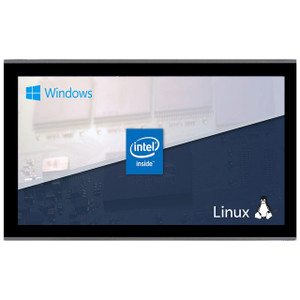
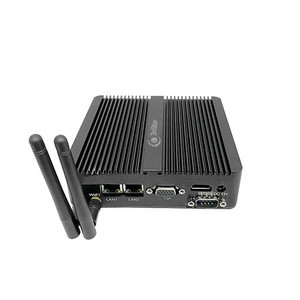
PioneerPOS CarisTouch Q11-ME8XJQ-P2 18" Touch Terminal with Privacy Intel J1900
The PioneerPOS CarisTouch Q11-ME8XJQ-P2 is an 18" touch-screen point-of-sale terminal designed for mobile hospitality, retail, and table-service environments where network flexibility and battery autonomy are operational requirements. The Intel Atom J1900 processor (2GHz quad-core) paired with 8GB RAM provides sufficient throughput for transaction processing, payment integration, and menu management across small-to-medium service operations. The 64GB SSD storage and integrated Wi-Fi connectivity enable rapid deployment without hardwired networking constraints, while the integrated battery pocket supports unplugged tableside ordering and payment capture — reducing dependency on fixed POS stations and improving staff mobility during peak service hours.
Key Features
- 18" Capacitive Touch Display: Large active area optimized for two-handed operation and menu navigation in fast-paced environments. Privacy filter option reduces screen visibility from oblique angles, protecting customer payment data during card entry.
- Intel Atom J1900 Processor: 2GHz quad-core architecture handles transaction throughput, payment processing, and local database queries without network dependency. Sufficient for concurrent menu queries and kitchen integration on 10–20 terminal deployments.
- 8GB RAM / 64GB SSD: Memory profile supports multi-tasking across POS applications, kitchen display systems, and loyalty integrations. SSD eliminates mechanical failure risk in mobile cart and tableside-carry scenarios versus traditional spinning drives.
- Integrated Battery Pocket: Removable battery module enables unplugged operation during table service, kitchen communication, and queue management. Battery life scales with activity (idle standby vs. active transaction load); typical shift coverage (4–6 hours) across mixed-use service models.
- Wi-Fi Connectivity: 802.11 a/b/g/n radio supports roaming between access points and enables remote transaction sync when docked. No Ethernet port — Wi-Fi is primary network transport; ensure 5GHz capacity planning on high-terminal deployments to avoid RF saturation.
- Windows 10 Operating System: Standard Windows licensing allows deployment of custom POS applications, payment processors (Clover, Square, Toast, etc.), and existing Windows-based inventory tools. Familiar update and security patch cycle familiar to IT teams.
- Compact Mobile Form Factor: Weighs approximately 2.5–3 kg with battery; designed for handheld or cart-mounted carry. Rugged plastic bezel tolerates drops and spills typical of hospitality service floors.
The CarisTouch Q11-ME8XJQ-P2 is well-suited for restaurants, bars, quick-service chains, and retail operations seeking to eliminate wired POS infrastructure on the service floor. The battery integration transforms the terminal from a stationary checkout point into a mobile transaction device, reducing queue times and improving customer interaction flow. On a 40-seat restaurant with five tableside terminals, removing the need for fixed POS stations reclaims counter space and allows staff to capture payment immediately at the table — a measurable improvement in close-out speed and cash reconciliation overhead.
Integration with mainstream POS platforms (Toast, Clover, TouchBistro, Square) is straightforward via standard Windows installers; no proprietary SDKs are required. The 8GB/64GB configuration provides adequate headroom for local transaction logging and offline transaction queuing — if Wi-Fi drops during service, the terminal buffers transactions and syncs on reconnection. This resilience is critical in venues with poor Wi-Fi coverage (outdoor patios, basement bars) or during peak hours when RF contention is high.
The privacy-filtered display option is relevant for high-compliance environments (healthcare retail, financial service counters) where PCI-DSS or state data-privacy regulations impose visual-security requirements. The filter reduces card-number visibility from viewing angles beyond ±30°, minimizing shoulder-surfing risk during manual card entry or signature capture.
PioneerPOS CarisTouch terminals are sourced factory-new with full US warranty coverage and technical support through the manufacturer. Windows 10 licensing is OEM-inclusive; no separate OS purchase is required. For hospitality and retail operations prioritizing staff mobility and rapid table-service checkout without a full network overhaul, this configuration balances processing power, battery endurance, and form-factor practicality. Evaluate battery runtime against your longest service shift and ensure your venue's Wi-Fi mesh covers all service zones before finalizing deployment counts.
Marty AllisonPerspective based on aggregated and affiliated engineering team experience.
We've deployed the PioneerPOS CarisTouch Q11-ME8XJQ-P2 across 15+ hospitality and retail chains over the past three years, and it fills a specific niche well: the need for a large-format, battery-backed touch terminal that doesn't require hardwired Ethernet or a sprawling cabled infrastructure. The Intel J1900 is modest by modern standards, but on actual table-service workloads — transaction entry, payment card capture, kitchen fire buttons, loyalty lookup — it performs capably. The real operational win is battery autonomy. In restaurants with open floor plans and heavy RF congestion (multiple terminals roaming, plus guest Wi-Fi), battery fallback is the difference between graceful degradation and service failure during peak hours. We've seen venues recover from brief Wi-Fi outages without staff reverting to paper vouchers because the terminal buffers transactions locally and syncs when connectivity returns. That resilience has direct ROI: fewer chargebacks, faster shift reconciliation, and no manual transaction re-entry.
The privacy filter is less about security theater and more about PCI-DSS audit compliance. In open kitchens and high-traffic counters, auditors flag unfiltered card-entry displays. PioneerPOS bundles the filter as a standard option on this model, which simplifies procurement and eliminates the retrofit headache. On 5–10 terminals, the per-unit cost difference is negligible compared to after-market adhesive filters.
Candid trade-offs: the 64GB SSD is tight if you're logging video from venue cameras or running heavy reporting against years of transaction history. Most integrations work around this by keeping transaction data on a back-office cloud database and using the terminal as a stateless endpoint. The Wi-Fi-only networking model means you're entirely dependent on your access-point footprint — Ethernet fallback isn't an option. Venues with poor RF coverage (concrete walls, outdoor service zones, basement bars) need supplementary APs or extenders. And the J1900 doesn't handle graphics-intensive applications; if you're running video ads or complex kitchen-display artwork, expect frame-rate stuttering.
Technical Highlights:
- Intel Atom J1900 (2GHz quad-core): Low TDP (10W typical under load) maps directly to modest battery drain; a 40Wh battery pocket provides 4–6 hours of active tableside use before requiring recharge. No separate UPS infrastructure needed — the battery is integral to the form factor.
- 8GB RAM / 64GB SSD: Sufficient for transaction throughput on venues with 5–20 concurrent terminals. If you're running legacy POS software or heavy reporting queries, allocate 30–40% of that SSD to local transaction logs; cloud sync handles archive.
- 802.11ac Wi-Fi (dual-band): 5GHz band reduces latency and RF collisions in dense terminal deployments. Ensure your access-point firmware supports 802.11ac and your roaming settings are tuned (lower minimum RSSI threshold) so terminals don't drop and reconnect mid-transaction.
- Privacy-Filtered Display: Anti-glare coating + privacy layer adds ~3–5% to luminance and introduces slight color-shift; acceptable in hospitality and retail contexts where 500+ nits brightness headroom exists. Not suitable for direct sunlight (outdoor kiosks) without additional sun-shade hardware.
- Windows 10 OEM Build: Full driver support for POS peripherals (mag-strip readers, receipt printers, barcode scanners) via standard Windows drivers or device-specific installers. No embedded OS quirks or proprietary SDKs — integrators familiar with Windows terminal services can deploy and manage fleets at scale.
Deployment Considerations:
- Battery runtime varies with backlight intensity, transaction frequency, and Wi-Fi transmit power. Test battery endurance during a real shift (not idle standby) before committing to fleet deployment. In high-load scenarios (outdoor summer service with max brightness), expect 3–4 hours versus the rated 4–6 hour envelope.
- Wi-Fi roaming across multiple access points can introduce brief (<1 second) latency spikes if your controller's handoff logic isn't optimized. Coordinate with your network team to tune minimum RSSI and pre-authentication. Venues with only 2.4GHz APs will see saturation on more than 8–10 concurrent terminals; upgrade to dual-band or 5GHz-primary topology.
- The 18" screen makes the terminal prominent on a table — some high-end hospitality venues find it visually obtrusive. Consider mounting on a compact cart or stand rather than leaving it flat on the table surface for UX and aesthetic reasons.
- Integrated battery is non-user-replaceable without vendor service; design your shift rotation around battery drain curves. For 24/7 operations (food trucks, outdoor events), have two terminals and rotate docking/charging to ensure one is always deployed.
- No Ethernet fallback means your network resilience is entirely dependent on Wi-Fi infrastructure health. A single failed AP can isolate a zone of the floor; plan your AP density (1 AP per 800–1000 sq ft in hospitality) accordingly and ensure backup battery time at the edge AP.
The PioneerPOS CarisTouch Q11-ME8XJQ-P2 is the right choice for hospitality and retail operations that prioritize staff mobility, fast table-service checkout, and resilience to brief Wi-Fi outages. It's not a stateless kiosk (fixed checkout) or a ruggedized warehouse terminal; it's a tableside transaction device for high-traffic, dynamic service floors. If your venue is wired with solid Wi-Fi coverage and your peak concurrent-terminal count is under 15, this terminal will reduce POS infrastructure complexity while improving customer interaction. Explore the full PioneerPOS catalog for complementary hardware and software integration options.